 15 citations
,
August 2022 in “Daehan saengsik uihak hoeji/Clinical and experimental reproductive medicine”
15 citations
,
August 2022 in “Daehan saengsik uihak hoeji/Clinical and experimental reproductive medicine” This pilot study found that intraovarian platelet-rich plasma administration significantly improved the euploidy rate of embryos in infertile women with previous IVF failures.
70 citations
,
November 2020 in “The Ocular Surface” This review discusses the role of organoids and organ chips in advancing ophthalmological research and therapeutic evaluation, but it reports no new clinical findings.
 January 2016 in “Elsevier eBooks”
 This review discusses three aspects of cell fate specification across Metazoa and reports no new experimental results, highlighting the formation of nematode equivalence groups, evolution of echinoderm skeletogenic mesoderm, and adult cell fate regulation.
67 citations
,
June 2019 in “Proceedings of the National Academy of Sciences” This study introduces a method for long-term expansion of adult mouse epidermal stem cells in vitro using an organoid culture system that maintains the basal-apical organization.
 2 citations
,
June 2017 in “Pediatric Dermatology”
2 citations
,
June 2017 in “Pediatric Dermatology” This case report describes a 2-year-old boy in critical condition who developed anagen effluvium, possibly due to hypotension and hypoxia triggering hair follicle apoptosis.
 May 2025 in “The Journal of Rheumatology”
 This case report highlights the importance of trans-esophageal echocardiography in distinguishing Libman-Sacks endocarditis from infective endocarditis in systemic lupus erythematosus patients, guiding appropriate treatment for associated cerebrovascular disease.
1 citations
,
August 2025 in “Frontiers in Bioengineering and Biotechnology” This study found that a 3D wound model, the 3DWoundSE, showed improved responsiveness to injury and cytotoxic stimuli compared to an intact 3D skin equivalent, offering a reproducible and ethical alternative to animal models for early wound response assessment in dermatological research and drug development.
 9 citations
,
January 2020 in “IEEE Access”
9 citations
,
January 2020 in “IEEE Access” This study reports that a robotic and AI-based system successfully analyzes FUE hair transplant procedures, aiding surgeons in planning and assessing operation success through detailed pre-op and post-op evaluations.
42 citations
,
June 2016 in “Developmental Biology” June 2023 in “bioRxiv (Cold Spring Harbor Laboratory)” This study developed new immortalized keratinocyte cell lines lacking COL7A1 using CRISPR/Cas9 technology, providing a valuable model to explore the biology and treatment options for recessive dystrophic epidermolysis bullosa.
January 2026 in “Advanced Healthcare Materials” This study introduces a new multiaxial bioreactor system that uniformly stretches tissue-engineered skin grafts and improves skin tissue maturation through enhanced cellular distribution and environmental monitoring.
 77 citations
,
April 2016 in “Science Advances”
77 citations
,
April 2016 in “Science Advances” Researchers created a fully functional, bioengineered skin system with hair from stem cells that successfully integrated when transplanted into mice.
 1 citations
,
May 2001 in “Proceedings of SPIE, the International Society for Optical Engineering/Proceedings of SPIE”
1 citations
,
May 2001 in “Proceedings of SPIE, the International Society for Optical Engineering/Proceedings of SPIE” This paper presents an RGB video microscopic system to monitor optical properties of hair shafts and follicles in vitro, but reports no new clinical results.
20 citations
,
November 2003 in “American Journal Of Pathology” Fibroblasts from healthy donors can prevent changes seen in recessive epidermolysis bullosa simplex.
January 2013 in “Frontiers in Immunology” This study found that mouse parents with uveitis may increase their offspring's susceptibility to experimental autoimmune uveitis, affecting immune processes and the severity of the condition.
 10 citations
,
February 2023 in “Colloids and surfaces. A, Physicochemical and engineering aspects”
10 citations
,
February 2023 in “Colloids and surfaces. A, Physicochemical and engineering aspects” This study found that a wound dressing made from egg white proteins, polyvinyl alcohol, and 1 mg/ml graphene oxide was most effective in promoting skin wound healing and tissue regeneration.
88 citations
,
December 2003 in “Journal of Biological Chemistry” This study identified epiprofin as a highly tissue-specific nuclear protein that promotes cell proliferation, mainly expressed in the developing teeth, hair follicles, and limbs of embryonic mice.
 26 citations
,
May 2012 in “Pharmaceutical Development and Technology”
26 citations
,
May 2012 in “Pharmaceutical Development and Technology” PEVs effectively deliver minoxidil through skin.
July 2025 in “Journal of Investigative Dermatology” 2 citations
,
August 2022 in “Viruses” This study found that cutaneous squamous cell carcinomas in mice infected with murine papillomavirus preferentially arise from Lgr5+ progenitor cells, while squamous cell dysplasia does not.
 November 2022 in “Journal of Investigative Dermatology”
 This study found that using a home-use LED mask with specific wavelengths improved signs of skin aging in both ex-vivo and clinical settings.
 123 citations
,
November 2012 in “Stem cells”
123 citations
,
November 2012 in “Stem cells” This study reports that miR-302 promotes pluripotency by inhibiting NR2F2 and indirectly regulating OCT4 in stem cells, enhancing reprogramming efficiency when added to traditional factors.
 6 citations
,
July 2018 in “Hair transplant forum international”
6 citations
,
July 2018 in “Hair transplant forum international” This abstract contains author information and a disclosure regarding the Mohebi Inserter for hair transplantation but provides no new clinical research findings.
 August 2020 in “Research Square (Research Square)”
 This study found that nanovesicles derived from ReNcell VM cells promoted hair growth in mice by activating the Wnt/β-catenin signaling pathway, suggesting they may serve as an alternative to extracellular vesicles for hair growth therapy.
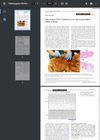 May 2024 in “Animal genetics”
 The researchers investigated a Maine Coon cat with suspected classical Ehlers-Danlos Syndrome and discovered a heterozygous deletion in the COL5A1 gene, underscoring the value of whole-genome sequencing for precise veterinary diagnostics.
23 citations
,
March 2019 in “Gene” In this study, researchers found that the evolutionary and structural features of the oFGF5 gene in sheep may influence hair follicle development and hair growth regulation.
19 citations
,
October 2022 in “The Ocular Surface” 12 citations
,
June 2012 in “Wound Repair and Regeneration” This study found that basal keratinocytes in engineered skin substitutes showed a proliferative phenotype and potential for long-term replication, which may enhance wound healing stability.

This research investigated the role of EphA1 in embryonic and adult tissues, generating mouse models suggesting potential links to skin and colon cancer, sepsis, and post-traumatic injury.
 8 citations
,
April 2023 in “Advanced materials”
8 citations
,
April 2023 in “Advanced materials” In this study, implantable vascularized engineered thrombi using autologous whole blood improved skin wound healing in rats by promoting robust microcapillary networks and accelerating healing processes.