 April 2024 in “Authorea (Authorea)”
 This case report describes a patient with chronic renal failure on hemodialysis who experienced hair depigmentation while taking heptaminol, with the condition reversing after discontinuing the medication; the exact mechanism causing the color change is still unclear.
 1 citations
,
January 2007 in “The Kitakanto Medical Journal”
1 citations
,
January 2007 in “The Kitakanto Medical Journal” This report documents a case where a man survived sub-acute toxicity from an overdose of the anticancer drug UFT due to effective treatment with antibiotics and granulocyte colony-stimulating factor.
6 citations
,
May 2023 in “Molecules” In this study, dry powder inhalers containing Cepharanthine were administered to rats with acute lung injury, significantly reducing pulmonary edema, hemorrhage, and inflammatory markers, suggesting its potential as an effective anti-inflammatory treatment when inhaled directly into the lungs.
 7 citations
,
March 2013 in “Tetrahedron Letters”
7 citations
,
March 2013 in “Tetrahedron Letters” This study reports a new one-pot method for synthesizing chromeno-pyrimidine-N-oxides with high yield from 4-chloro-3-formylcoumarin and aromatic carboximide oximes, confirmed by X-ray analysis.
 2 citations
,
January 2014 in “The Korea Journal of Herbology”
2 citations
,
January 2014 in “The Korea Journal of Herbology” This study found that Polygoni Multiflori Radix (PMR) reduced collagenase and elastase activity after UVB damage in fibroblasts, suggesting potential anti-aging properties for cosmetic use.
 May 2019 in “Asian Journal of Pharmaceutical and Clinical Research”
 This study found that the ethyl acetate and chloroform fractions of Eclipta prostrata Linn. exhibited significant anti-inflammatory activity in a carrageenan-induced paw edema model and showed notable anti-arthritic potential in a formaldehyde-induced arthritis model.
April 2026 in “Trends in Sciences” This study found that Acanthus ebracteatus extract may promote the proliferation of human hair follicle dermal papilla cells and reported that its microemulsion was stable for 12 weeks.
109 citations
,
February 2018 in “CB/Current biology” This study concluded that the receptor-like kinase ERULUS, regulated by auxin, is crucial for modulating cell wall composition and pectin dynamics during root hair growth in Arabidopsis.
 December 2023 in “Journal of ethnopharmacology”
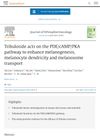
 This study found that tribuloside, a flavonoid from Tribulus terrestris L., enhances melanin production in human melanocytes, zebrafish, and human skin samples without causing toxicity, potentially through inhibiting PDE to increase cAMP levels and promote the melanin biosynthesis pathway.

This study explored the experiences of systemic lupus erythematosus patients receiving Anifrolumab, revealing improvements in self-reported symptoms and daily life impacts alongside decreased disease activity and lowered corticosteroid use.
1 citations
,
January 2013 in “Annals of Dermatology” This case report describes an 11-year-old girl with eosinophilic pustular folliculitis that showed significant improvement with naproxen after being unresponsive to other treatments.
 May 2025 in “International Journal of Molecular Sciences”
 In a mouse study, Fr2 from Platycladus orientalis L. significantly enhanced hair growth, suggesting its potential as a natural therapeutic agent for hair regeneration.
6 citations
,
October 2023 in “Pharmaceuticals” This study found that the extract of Eclipta prostrata L. demonstrated high antioxidant and anti-acetylcholinesterase activities, moderate inhibition of enzymes linked to diabetes, and favorable ADMET properties, suggesting potential cognitive and diabetes management benefits.
8 citations
,
July 2022 in “International Journal of Molecular Sciences” This study found that in estrogen receptor-positive breast cancer cells, 17β-estradiol repressed polyamine oxidase transcription by interacting with AP-1 sites on its promoter.
 June 2024 in “Korean Journal of Pharmacognosy”
 This study found that taxifolin glycosides isolated from Rhododendron mucronulatum showed promise for developing treatments for male pattern hair loss by inhibiting DHT production and enhancing hair growth-promoting factors.
 September 2005 in “Journal of Investigative Dermatology”
 This study found that ferulic acid effectively stabilized vitamins C and E in a topical solution, doubling skin photoprotection against solar-simulated irradiation, which may help in preventing photoaging and skin cancer.
January 2002 in “Chinese Journal of Pharmaceuticals” This study reports the preparation of a key intermediate for finasteride and epristeride with a 69% overall yield from pregnenolone acetate.
58 citations
,
March 2019 in “Frontiers in Pharmacology” This study found that wedelolactone from Eclipta prostrata L. significantly reduced lung inflammation and fibrosis in mice with bleomycin-induced pulmonary fibrosis, suggesting potential therapeutic benefits through AMPK activation.
January 2022 in “Advanced Pharmaceutical Bulletin” This study found that clove oil and LPGSE pretreatment increased finasteride skin permeability, while extending urea pretreatment reduced its penetration.
 9 citations
,
July 2002 in “Journal of the European Academy of Dermatology and Venereology”
9 citations
,
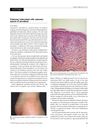
July 2002 in “Journal of the European Academy of Dermatology and Venereology” This article discusses multiple minute digitate hyperkeratosis in a dermatological context and reports no new clinical findings; the authors focus on a descriptive review.
7 citations
,
January 2020 in “Skin Pharmacology and Physiology” In this study using ex vivo porcine ear skin, researchers found that standard nail varnish applied gently creates effective follicular closures, preventing penetration of certain substances like fluorescein sodium salt and caffeine into hair follicles, whereas solvent-free varnish and rapid application techniques were less effective.
 2 citations
,
January 2011
2 citations
,
January 2011 This study developed and validated a UV spectrophotometric method for accurately measuring finasteride and tamsulosin in solutions and tablets, demonstrating good sensitivity and precision.
25 citations
,
April 2008 in “Clinical and experimental dermatology” This case series describes Erythromelanosis follicularis faciei et colli in five Indian patients, suggesting it may be more common than currently reported.
 1 citations
,
February 2023 in “Plant disease”
1 citations
,
February 2023 in “Plant disease” This study reports the first identification of 'Candidatus Phytoplasma aurantifolia' in the invasive weed Eclipta prostrata in Taiwan, linked to symptoms such as branch proliferation and phyllody.
In this study, researchers used an integrated in silico approach to demonstrate that Polygonum multiflorum combats androgenetic alopecia via anthraquinone emodin, which targets PI3K catalytic subunits differently from traditional antiandrogenic treatments, showing potential as a novel therapeutic strategy.
 14 citations
,
July 2012 in “Journal of the American Academy of Dermatology”
14 citations
,
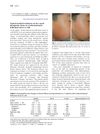
July 2012 in “Journal of the American Academy of Dermatology” This study found that topical tacalcitol improved roughness and scaling in erythromelanosis follicularis faciei et colli, although it was less effective for facial erythema.
 February 2024 in “Journal of Cellular and Molecular Medicine”
 In this study using rat models, researchers developed a Pluronic@F-127 hydrogel to deliver the flavonoid pectolinarin, finding it accelerates wound healing and reduces scar formation by enhancing cell migration, proliferation, and antioxidant activity.
 26 citations
,
March 2015 in “Phytotherapy Research”
26 citations
,
March 2015 in “Phytotherapy Research” This study found that forsythiaside-A, a natural compound from Forsythia suspensa, was more effective than finasteride at preventing apoptosis of hair cells and delaying the catagen phase entry in an androgenic alopecia mouse model.
This study suggests that ethyl acetate extract of Equisetum debile may be effective for functional food and nutraceutical use due to its strong 5α-reductase, IL-6 inhibition, and lipid peroxidation activities without cytotoxic effects.
23 citations
,
October 2008 in “Journal of medicinal chemistry” This study suggests that PF-0998425 is an effective androgen receptor antagonist for sebum control and androgenetic alopecia with rapid metabolism reducing the risk of systemic side effects.