 16 citations
,
September 2018 in “Journal of Molecular Liquids”
16 citations
,
September 2018 in “Journal of Molecular Liquids” This study investigated a nanostructured system using PS-b-PAA diblock copolymer for incorporating the hydrophobic photosensitizer ClAlPc, finding it effective in causing cellular damage in Caco-2 cells under light while demonstrating no cytotoxicity without light, suggesting its potential use in photodynamic therapy.
 10 citations
,
January 2023 in “Molecular and Cellular Biochemistry”
10 citations
,
January 2023 in “Molecular and Cellular Biochemistry” This review discusses the potential therapeutic role of the edible plant Solanum nigrum for managing COVID-19 symptoms and post-COVID complications based on in silico docking and pharmacological studies, but reports no new clinical results.
 December 2023 in “PubMed”
 This study highlights that homemade topical herbal preparations, although popular for their perceived safety, may lead to allergic reactions, notably with Mediterranean herbs, and advises cautious use, particularly for allergy-prone individuals.
 November 2023 in “International journal of Ayurveda and pharma research”
 This study prepared and evaluated a polyherbal hair oil using plant-based ingredients, finding that it met standard parameters and effectively addressed hair problems such as growth and dandruff, with FDA approval for clinical use.

Bee pollen, green tea, essential oils, and various plant extracts improve skin and hair health.
182 citations
,
December 2021 in “Cosmetics” This literature review discusses recent advances in using essential oils and their components in cosmetic products, highlighting their diverse benefits and challenges in formulation due to varying chemical profiles, as well as addressing safety considerations for these natural ingredients.
70 citations
,
May 2023 in “Molecules” This source reviews recent research on Ginkgo biloba, highlighting its medicinal benefits due to compounds in the leaves and concerns over toxic alkylphenols in seeds. It also discusses patents for its food production uses and ongoing studies on toxicity and drug interactions.
47 citations
,
February 2019 in “Asian Journal of Pharmaceutical and Clinical Research” This review discusses the chemical composition and traditional medicinal uses of Eruca sativa, particularly its potential applications in topical preparations for hair growth and treating skin infections, but reports no new clinical results.
27 citations
,
May 2016 in “Integrative Cancer Therapies” In this study, in vitro and in vivo models showed that chrysin enhanced the efficacy of docetaxel and reduced its adverse effects in non–small cell lung cancer treatment.
January 2026 in “Eng—Advances in Engineering” This study developed a biodegradable nonwoven textile using a starch-based biopolymer and fruit extracts, resulting in materials that are stronger, more hydrophilic, and capable of releasing beneficial compounds over 72 hours, positioning them for potential use in medical, healthcare, and cosmetic applications.
May 2026 in “Pharmacy Reports” This systematic review found that while green solvent- and natural excipient-based semisolid formulations often show promising efficacy and safety compared to conventional options, the evidence does not currently establish superior stability, highlighting a need for further research on long-term formulation quality.
December 2022 in “Scientific Reports” This study found that caffeic acid amide derivative, compound 4, effectively inhibited steroid 5α-reductase type 1 in vitro, suggesting potential for development as a treatment for androgenic alopecia.
January 2023 in “Pharmaceutics” In this study, researchers developed a new topical atraric acid formulation, AA-TF#15, which showed a significantly higher drug penetration and increased hair regrowth in mice compared to minoxidil and finasteride treatments, suggesting its potential effectiveness for treating scalp androgenic alopecia.
188 citations
,
February 2023 in “International Journal of Molecular Sciences” This review compiled evidence suggesting that flavonoids may promote skin wound healing due to their anti-inflammatory, angiogenesis, re-epithelialization, and antioxidant properties, while also discussing current limitations and future prospects for these compounds as wound-healing agents.
46 citations
,
April 2021 in “International Journal of Molecular Sciences” This review discusses the potential of curcumin and its formulations to mitigate neuropathic and postoperative pain, highlighting positive outcomes in preclinical and clinical studies but noting the need for further clinical research.
43 citations
,
September 2021 in “Nutrients” This review discusses the vast potential uses of persimmon beyond its dietary benefits, including applications in sustainability and new product development, but reports no new clinical outcomes.
38 citations
,
November 2024 in “Scientific Reports” This study developed electrospun nanofibers containing mupirocin for wound treatment, reporting enhanced antibacterial activity, high water absorption, and accelerated wound healing in a rat model, suggesting potential use for severe skin injuries at risk of infection.
18 citations
,
February 2024 in “ACS Polymers Au” This review highlights silk fibroin and its nanocomposites as promising materials for wound healing, addressing challenges in chronic wound treatment, especially in developing countries, and examines the obstacles in bringing silk-based products to market.
16 citations
,
March 2024 in “International Journal of Molecular Sciences” This review highlights how natural compounds can enhance wound healing by influencing fibroblast behavior and discusses innovative biomimetic engineering and delivery methods. This source emphasizes combining traditional and modern approaches for effective and scar-free healing, while noting challenges in clinical translation.
10 citations
,
August 2024 in “ACS Omega” This review discusses the use of nanomaterials in cosmetics, highlighting their benefits like enhanced stability and skin penetration, while also noting potential health risks and the role of natural ingredients in formulations.
6 citations
,
January 2025 in “Molecules” This review highlights the challenges in developing nano-scale drug delivery systems for natural antioxidants in wound healing, pointing out issues like low solubility and skin permeability, and discusses potential solutions such as combining polymers and lipids to enhance delivery effectiveness.
6 citations
,
May 2024 in “Frontiers in Pharmacology” This review discusses the potential of natural products to induce ferroptosis as a promising therapeutic strategy for non-small cell lung cancer and reports no clinical results; the authors highlight the need for further comprehensive studies.
5 citations
,
November 2022 in “Diversity” This review highlights the potential of indigenous southern African foods rich in phytochemicals and soluble dietary fibers to combat cardiovascular disease in economically disadvantaged urban populations in South Africa by improving dietary diversity and affordability.
 August 2025 in “Biomacromolecules”
 This study presents a novel composite hydrogel dressing with berberine-loaded silk fibroin microspheres and Calotropis gigantea fibers, demonstrating enhanced antibacterial activity, mechanical strength, and wound healing capabilities in treating chronic and infected wounds.
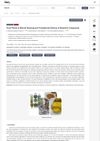
This review highlights the potential of plant-derived natural compounds as biocompatible and biodegradable materials in dermal and transdermal delivery systems, emphasizing their unexplored benefits and detailing recent advances in isolation techniques and drug delivery technologies.
1 citations
,
November 2023 in “Polymers” This review examines how incorporating various polymers and active ingredients into polyurethane dressings can enhance their properties and adaptability for better wound repair and regeneration, suggesting a promising direction for developing advanced functional dressings.
238 citations
,
December 2022 in “Frontiers in Public Health” This review discusses ciprofloxacin resistance mechanisms in bacteria and explores new approaches, such as combining it with other antibacterial agents, to enhance its effectiveness against resistant infections.
8 citations
,
July 2021 in “F1000Research” This review discusses the potential of plant-derived phytochemicals as alternatives to 5-alpha-Reductase inhibitors in treating prostate cancer, highlighting possible benefits like reduced side effects, but it reports no new findings.
July 2021 in “Faculty of 1000 Research Ltd” This review discusses the potential of phytochemicals from plants as alternative treatments for prostate cancer, highlighting their possible benefits over current 5-alpha-Reductase inhibitors, but reports no new findings.
June 2021 in “F1000Research” This review explores plant-derived phytochemicals, such as phytosterols, polyphenols, and fatty acids, for their potential use as alternative treatments for prostate cancer, emphasizing their effects on 5-alpha-Reductase enzyme isozymes. It reports no new clinical results.