 12 citations
,
March 2011 in “Journal of pathology”
12 citations
,
March 2011 in “Journal of pathology” In this study, activation of oncogenic K-ras in a mouse model caused the oral mucosa to rapidly progress from squamous hyperplasia to carcinoma within 14 days, demonstrating its acute sensitivity.
 3 citations
,
April 2021 in “Biomolecules & Therapeutics”
3 citations
,
April 2021 in “Biomolecules & Therapeutics” In a mouse model of chemotherapy-induced alopecia, this study found that enhancing ETV2 expression improved angiogenesis and hair regrowth following 5-fluorouracil treatment.
January 2017 in “Murdoch Research Repository (Murdoch University)” This study identified the novel genetic variant rs143321413 within the EEF2K gene, which may play a role in the development of polycystic ovary syndrome.
17 citations
,
January 2024 in “Burns & Trauma” The researchers reported that exosomes from hypoxic M2 macrophages, enriched with miR-26b-5p, promoted proliferation, migration, and invasion in human keloid fibroblasts through the PTEN-PI3K/AKT pathway, highlighting miR-26b-5p's role in keloid development.
76 citations
,
January 1998 in “Mammalian Genome”  September 2022 in “bioRxiv (Cold Spring Harbor Laboratory)”
 In this study, researchers using live mice observed that oncogenic Kras mutation disrupts hair follicle architecture by sustaining ERK signal activation, which affects stem cell behavior and tissue integrity.
7 citations
,
May 2022 in “Cancers” This study found that UC.145 influences DKK1 methylation and Wnt signaling in gastric cancer, with implications for patient survival and its potential as a predictive biomarker.
4 citations
,
April 2025 in “Antioxidants” This study found that α-ketoglutarate protected dermal papilla cells from oxidative stress by enhancing the Nrf2 pathway and mitigating cell damage through the ERK/Nrf2 axis.
 18 citations
,
February 2015 in “Acta Crystallographica Section D: Structural Biology”
18 citations
,
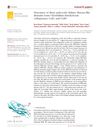
February 2015 in “Acta Crystallographica Section D: Structural Biology” This study reports that Ca 2+ binding alters the dynamics and surface properties of PKD-like domains in Clostridium histolyticum collagenases, enhancing their stability and potentially aiding in collagen-targeting vehicle development.
 2 citations
,
April 2025 in “Cureus”
2 citations
,
April 2025 in “Cureus” In this study, among Indian patients with triple-negative breast cancer, Ki-67 expression levels were high but not significantly associated with treatment response to a neoadjuvant docetaxel-carboplatin regimen, which showed complete clinical, imaging, and pathological response rates of 39.13%, 34.78%, and 47.61%, respectively.
23 citations
,
December 2013 in “Molecular cancer therapeutics” This study found that AR-positive breast cancer cell lines are more sensitive to the dual PI3K/mTOR inhibitor NVP-BEZ235 compared to AR-negative cells.
54 citations
,
May 1994 in “Veterinary Pathology” This study found widespread localization of parathyroid hormone-related protein in normal and cancerous canine tissues, suggesting a potential physiological role as a paracrine or autocrine factor.
January 1997 in “Purdue e-Pubs (Purdue University)” This study suggested that electron spin resonance techniques can potentially measure gamma ray exposure in human hair samples, though variability and time sensitivity pose challenges for accurate dose estimation.
26 citations
,
June 2003 in “PubMed” In this study, severe hair loss occurred in PKC epsilon transgenic mice treated with DFMO during skin tumor prevention, highlighting a link between polyamine biosynthesis, hair follicle maintenance, and metastasis suppression.
28 citations
,
March 1993 in “Journal of Cell Science” In this study, rabbit esophageal epithelial cells were found to produce K4 and K13 keratins in suprabasal cells, forming disulfide-crosslinked dimers that may support the physical stability of the esophageal lining.
 42 citations
,
January 2017 in “Genes”
42 citations
,
January 2017 in “Genes” This study observed that genetic variation in the ovine KRTAP22-1 gene is linked to increased wool yield and decreased fiber curvature in sheep, indicating its potential use in breeding programs.
 9 citations
,
February 2022 in “Nature communications”
9 citations
,
February 2022 in “Nature communications” This study identified KRT82 as a significant Alopecia Areata risk gene, finding that rare damaging variants are linked to elevated immune cell infiltration around hair follicles in affected individuals.
 April 2018 in “D-Scholarship@Pitt (University of Pittsburgh)”
 This study found that keratin-75, discovered in enamel tissue, is secreted by ameloblasts using an unconventional pathway involving the ER-Golgi-Intermediate-Compartment and Golgi, differing from typical cytokeratin localization.
January 2010 in “Chinese Journal of Dermatovenereology of Integrated Traditional and Western Medicine” This study found a novel nonsynonymous genetic variant in the hHb1 gene of a family with monilethrix, which differs from ten previously reported pathogenic mutations.
26 citations
,
February 1998 in “DNA and Cell Biology” This research identified that the constitutive and inducible expression of the Keratin 6 gene in transgenic mice skin is controlled by multiple regulatory elements spread throughout its 5' flanking region.
 July 2022 in “Journal of Investigative Dermatology”
 This study found that the KrasG12D mutation alters ERK signal dynamics in hair follicle stem cells, leading to tissue deformation, and suggests a collective effect of mutant cells is necessary for disruption.
This study found that neutrophil-rich hair follicle inflammation caused by a monoclonal antibody targeting murine EGFR in mice involved TNFα and interleukin-1, suggesting these cytokines play a role in EGFR antibody-induced rashes in cancer patients.
29 citations
,
October 2010 in “Journal of Investigative Dermatology” This research found that activating a KrasG12D mutation in mice led to skin thickening, papillomas, and hair growth issues, suggesting that even rare KRAS mutations can mimic human RAS/MAPK syndrome symptoms.
 24 citations
,
March 2017 in “Archives of Gynecology and Obstetrics”
24 citations
,
March 2017 in “Archives of Gynecology and Obstetrics” The study found that women with hyperandrogenic PCOS have higher levels of AKT1 and AKT2 proteins in their cells, which may lead to cell dysfunction.

This study found that Pygo2 is crucial for early intestinal hyperproliferation induced by stabilized β-catenin, suggesting it as a potential target for therapeutic intervention in cancers with β-catenin mutation.
14 citations
,
April 2016 in “PloS one” This study found that the promoter region of the sheep KRTAP11-1 gene drives specific transcriptional activity in wool follicles, suggesting it may regulate hair keratinocyte specificity.
93 citations
,
July 2006 in “Journal of Investigative Dermatology” This study describes the expression patterns of type I inner root sheath keratin proteins K25–K28 in human hair follicles, highlighting their distinct distribution within different layers.
This study in mice found that a monoclonal antibody targeting EGFR resulted in skin inflammation mediated by TNFα, suggesting potential pathways for addressing EGFR antibody-induced skin rash in cancer patients.
 April 2026 in “Amino Acids”
 This study reviews prior research using transgenic K6/ODC mice and demonstrates that elevated polyamines in epithelial cells contribute significantly to skin tumor development and progression by stimulating proliferation, altering cell signaling and chromatin remodeling, and affecting immune functionality, amongst other mechanisms.
18 citations
,
February 1992 in “Molecular Biology Reports” This study identified and characterized a murine type II hair keratin, demonstrating its presence in specific cells of hair and tongue tissues.