25 citations
,
January 2024 in “Journal of Lipids” This review reports that cubosomes, used as drug nanocarriers in topical treatments, offer potential benefits for managing skin and eye diseases by improving bioadhesion, retention, and sustained release compared to conventional formulations, but also face manufacturing and biological challenges for effective clinical outcomes.
1 citations
,
October 2025 in “Beni-Suef University Journal of Basic and Applied Sciences” This study reviews lipid-based nanocosmeceuticals and reports that they enhance therapeutic effectiveness in dermatological applications by improving skin hydration, reducing wrinkles, and effectively managing conditions like psoriasis and eczema, though further large-scale trials and regulatory alignment are needed for clinical use.
19 citations
,
July 2024 in “Drug Delivery” This review discusses how polymer-based nanocarriers can enhance drug delivery targeting hair follicles for acne treatment, focusing on factors affecting this delivery method, combination technologies to improve follicle targeting, and recent advancements in polymer nanodrug-delivery systems.
 2 citations
,
January 2024 in “Pakistan Journal of Life and Social Sciences (PJLSS)”
2 citations
,
January 2024 in “Pakistan Journal of Life and Social Sciences (PJLSS)” This study examines the use of emulgel-based systems as drug delivery vehicles for hydrophobic medications, noting their potential benefits in dermatological applications due to properties like easy spreadability, non-greasy texture, and prolonged shelf life.
December 2025 in “Processes” This study found that minoxidil had the highest solubility in shea butter, stearic acid, and rosemary oil, suggesting these natural oils may improve drug loading and encapsulation efficiency in lipid nanocarrier formulations for potential hair growth applications.
2 citations
,
June 2017 in “ScienceRise” This study developed a mask-cream containing Sabal palm extract and Sophora japonica tincture for androgenic alopecia prevention and treatment, establishing optimal production techniques using a reverse emulsion method.
61 citations
,
March 2006 in “Colloids and surfaces. B, Biointerfaces” In this study, lecithin/n-propanol/isopropyl myristate/water/tetracaine hydrochloride microemulsion was found to be a safe carrier for transdermal drug delivery in animal models, with analgesic effects on Wistar rats.
365 citations
,
March 2021 in “Frontiers in Bioengineering and Biotechnology” This review discusses the potential of nanocarriers to enhance transdermal drug delivery and the combination of these carriers with physical methods, but it reports no new experimental results.
4 citations
,
May 2025 in “International Journal of Nanotechnology and Nanomedicine” This review highlights recent advances in the design of nanocarrier systems for transdermal drug delivery, detailing their potential to improve treatment precision for dermatologic conditions despite challenges like formulation stability and scalability.
 June 2025 in “International Journal of Latest Technology in Engineering Management & Applied Science”
 This study developed and evaluated a herbal hair oil formulated with plant-derived ingredients, assessing its ability to minimize hair loss, promote scalp wellness, and improve hair texture through in vitro tests, with positive implications for herbal cosmetic product advancements.
July 2026 in “IntechOpen eBooks” This research highlights the crucial roles of B vitamins in metabolism, neurological processes, and DNA functions, and describes emerging therapies that enhance vitamin absorption and therapeutic potential.
 89 citations
,
November 2014 in “International Journal of Nanomedicine”
89 citations
,
November 2014 in “International Journal of Nanomedicine” This study suggests that spironolactone-loaded nanostructured lipid carriers could enhance follicular delivery and offer a more localized treatment for androgenic alopecia, potentially reducing systemic side effects.
 60 citations
,
January 2023 in “Biomaterials Science”
60 citations
,
January 2023 in “Biomaterials Science” This study reviews recent advancements in microneedles made from PLGA, highlighting their use in delivering vaccines, drugs, and proteins through the skin with minimal invasiveness, and discusses the challenges and future potential of these delivery systems.
 17 citations
,
April 2021 in “Biointerface Research in Applied Chemistry”
17 citations
,
April 2021 in “Biointerface Research in Applied Chemistry” This review discusses nanostructured lipid carriers and their potential applications in pharmaceuticals and food, offering no new clinical findings but highlighting recent advancements and patents.
 December 2024 in “International Journal of Drug Delivery Technology”
 This study reports that a novel Nano-Structured Lipid Carrier system for delivering dutasteride may enhance its anticancer effects while reducing systemic side effects in clinical settings.
 32 citations
,
April 2016 in “Aaps Pharmscitech”
32 citations
,
April 2016 in “Aaps Pharmscitech” This study found that nanostructured lipid carriers enhanced the skin penetration and retention of minoxidil compared to solid lipid nanoparticles, suggesting they could be a promising method for topical delivery.
 9 citations
,
November 2009 in “Recent Patents on Drug Delivery & Formulation”
9 citations
,
November 2009 in “Recent Patents on Drug Delivery & Formulation” This review discusses various patent articles on microemulsion carriers in drug delivery systems and reports no new empirical findings.
 21 citations
,
December 2012 in “European journal of pharmaceutics and biopharmaceutics”
21 citations
,
December 2012 in “European journal of pharmaceutics and biopharmaceutics” This study suggests that using particle-bound antiseptics may provide more effective and longer-lasting skin antisepsis compared to their non-particulate forms.
 17 citations
,
October 2016 in “Artificial Cells Nanomedicine and Biotechnology”
17 citations
,
October 2016 in “Artificial Cells Nanomedicine and Biotechnology” This study found that arginine-loaded lipidic nanoparticles improved hair follicle growth in male hamsters more effectively than an aqueous arginine solution.
 15 citations
,
December 2016 in “Advanced Pharmaceutical Bulletin”
15 citations
,
December 2016 in “Advanced Pharmaceutical Bulletin” This study found that N-acetyl-glucosamine-loaded nanostructured lipid carriers showed promise for skin lightening in healthy volunteers by reducing melanin distribution.
 15 citations
,
October 2012 in “InTech eBooks”
15 citations
,
October 2012 in “InTech eBooks” Niosomes are a promising and effective way to deliver drugs through the skin.
 July 2024 in “ADMET & DMPK”
 This review discusses the potential for surface-modified nanostructured lipid carriers to enhance hair regrowth by improving drug absorption and stability, focusing on their use with agents like minoxidil and finasteride for hair loss treatment.
 8 citations
,
September 2023 in “Advanced Pharmaceutical Bulletin”
8 citations
,
September 2023 in “Advanced Pharmaceutical Bulletin” In a double-blind clinical trial, this study found that a gel containing chitosan-coated spironolactone nanoparticles effectively reduced acne lesions over 8 weeks without adverse skin effects, suggesting potential for enhanced acne treatment through targeted skin delivery.
 February 2024 in “International Journal For Multidisciplinary Research”
 This review examines the advances in nanostructured lipid carriers for treating hyperpigmentation but presents no new clinical results; the authors highlight their potential benefits and applications.
 December 2023 in “Journal of materials chemistry. B”
 This study found that a nanoemulsion containing perfluorooctyl bromide effectively increased oxygen levels in an anoxic environment, enhancing hair dermal papilla cell growth and significantly promoting hair organ elongation.
 47 citations
,
April 2017 in “European Journal of Pharmaceutics and Biopharmaceutics”
47 citations
,
April 2017 in “European Journal of Pharmaceutics and Biopharmaceutics” This study found that dutasteride-loaded nanostructured lipid carriers coated with a stearic acid-chitosan oligomer are stable, less cytotoxic, and suitable for topical delivery to promote hair growth.
 59 citations
,
October 2012 in “Pharmaceutical Research”
59 citations
,
October 2012 in “Pharmaceutical Research” This study found that nanostructured lipid carriers with more soybean phosphatidylcholine provided better skin retention and follicular targeting for diphencyprone compared to other formulations and controls.
 1 citations
,
September 2022 in “International Journal of Research Publication and Reviews”
1 citations
,
September 2022 in “International Journal of Research Publication and Reviews” This review discusses how nanotechnology can enhance the efficacy of hair care products by improving the delivery and benefits of active substances and offers insights into potential risks.
 October 2025 in “Asian Journal of Pharmaceutical Research and Development”
 This study reported that phytosome formulations of citrus flavonoids naringenin and naringin showed significantly increased oral bioavailability and plasma drug concentration in rabbits, suggesting that phytosome technology effectively addresses the pharmacokinetic limitations of these compounds.
 March 2024 in “Bioimpacts”
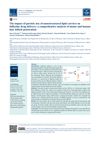
 In this study, curcumin-loaded nanoparticles with a size of 400 nm showed optimal accumulation in human hair follicles after seven days, although mouse models differed significantly in penetration and retention, indicating limitations in their suitability for follicular drug delivery studies.