 August 2024 in “Archives of Dermatological Research”
 This study found that individuals with early-onset androgenetic alopecia showed significant differences in metabolic parameters compared to those with normal-onset alopecia, suggesting a potential link between androgenetic alopecia and metabolic syndrome. However, the nature of this relationship remains uncertain.
 June 2024 in “Research Square (Research Square)”
 In this cross-sectional study, researchers observed that individuals with early-onset androgenetic alopecia showed significant differences in hair growth parameters and metabolic factors compared to those with normal-onset AGA, suggesting a potential association with metabolic syndrome, though more research is needed to clarify this relationship.
 13 citations
,
December 2016 in “Journal of Cosmetic Dermatology”
13 citations
,
December 2016 in “Journal of Cosmetic Dermatology” This study found increased oxidative stress in younger male patients with early-onset androgenetic alopecia compared to healthy peers, suggesting a potential role for antioxidants in their treatment.
December 2022 in “Sri Lanka Journal of Diabetes Endocrinology and Metabolism” This study found a significant association between early onset androgenetic alopecia and metabolic syndrome, with higher prevalence of metabolic risk factors in affected individuals compared to a control group.
April 2021 in “Medical Science and Discovery” This study found that men with early androgenetic alopecia had higher levels of free testosterone, DHEAS, and LH, along with insulin resistance and higher homocysteine levels, suggesting they share risk profiles similar to PCOS in women.
5 citations
,
May 2017 in “International Journal of Research in Dermatology” This study found that early onset of androgenetic alopecia in men is commonly associated with a history of alcohol consumption and paternal inheritance, while smoking was not linked to onset age.
2 citations
,
January 2022 in “Italian journal of dermatology and venereology” This study found that 19.2% of male university students had early-onset androgenetic alopecia, with family history, unhealthy diet, and certain lifestyle factors linked to its increased risk.
 56 citations
,
June 2001 in “European journal of cardiovascular prevention & rehabilitation”
56 citations
,
June 2001 in “European journal of cardiovascular prevention & rehabilitation” This study found that men with early-onset androgenic alopecia have a higher risk of needing coronary revascularization before age 60 compared to those with later onset or no hair loss.
10 citations
,
January 2019 in “Indian Journal of Dermatology” This study found that male patients with early-onset androgenetic alopecia were associated with metabolic syndrome, but not insulin resistance, compared to age-matched controls.
8 citations
,
August 2013 in “PubMed” In this study, early onset androgenic alopecia in Thai men was associated with metabolic syndrome, suggesting that early detection of metabolic syndrome in these individuals may help prevent cardiovascular diseases.
 6 citations
,
March 2020 in “Journal of International Medical Research”
6 citations
,
March 2020 in “Journal of International Medical Research” This study reported that early-onset androgenetic alopecia primarily affects Chinese males aged 21–30, with a high likelihood of paternal inheritance.
4 citations
,
December 2021 in “Pharmacological Reports” This study found that metformin's metabolic benefits, such as reducing fat content and improving insulin sensitivity, were less pronounced in men with early-onset androgenic alopecia compared to those with normal hair growth, possibly due to differences in systemic inflammation and vitamin D status.
 March 2025 in “Archives of Dermatological Research”
 Early-onset hair loss in Egyptian males is linked to genetics, hormones, and lifestyle factors like smoking and diet.
December 2022 in “Biomedicine” This study found that men with early onset androgenetic alopecia often have higher serum uric acid levels and an increased prevalence of hyperuricemia compared to controls.
December 2018 in “Indian Journal of Paediatric Dermatology” This study investigated the association between early-onset androgenetic alopecia and metabolic syndrome, but the abstract does not provide the results or conclusions from the research.
 January 2017 in “The Journal of Korean Medicine Ophthalmology&Otorhinolaryngology&Dermatology”
 This study found that early-onset male androgenetic alopecia is significantly associated with an increased risk of metabolic syndrome.
 June 2016 in “International journal of recent surgical and medical science”
 This study found that early-onset male androgenetic alopecia was associated with a higher prevalence of metabolic syndrome compared to age-matched controls.
January 2016 in “대한피부과학회지” This study observed no significant association between early-onset androgenetic alopecia and medical comorbidities in the Korean population.
January 2012 in “Faculty of Health; Institute of Health and Biomedical Innovation” This study found six new genetic factors linked to early-onset androgenetic alopecia and its association with increased risk of Parkinson's disease and decreased fertility.
 January 2011 in “Journal of biological research”
 This review discusses potential links between early-onset androgenetic alopecia and exposure to endocrine disruptors in adolescents, but reports no clinical results; the authors suggest further investigation.
 January 2025 in “International Journal of Trichology”
 This study reported that among young males with early-onset androgenetic alopecia, there is a high prevalence of metabolic syndrome, particularly in those with severe hair loss, indicating a potential need for early screening and lifestyle changes to reduce cardiovascular risks.
 24 citations
,
January 2015 in “International Journal of Trichology”
24 citations
,
January 2015 in “International Journal of Trichology” This research observed that among young men with androgenic alopecia, there was a significant association with metabolic syndrome compared to healthy controls, suggesting AGA as a potential early marker for metabolic risk.
 87 citations
,
May 2012 in “PLOS Genetics”
87 citations
,
May 2012 in “PLOS Genetics” This study found that early-onset androgenetic alopecia in individuals of European ancestry is significantly associated with increased odds of Parkinson's disease and is influenced by specific genetic loci, including some linked to reduced fertility.
 42 citations
,
January 2011 in “European Journal of Dermatology”
42 citations
,
January 2011 in “European Journal of Dermatology” In this study, higher scores of HOMA-IR and FIRI suggested that male patients with early-onset androgenetic alopecia may have insulin resistance, although no significant differences in metabolic syndrome were found compared to controls.
5 citations
,
February 2021 in “JCPSP. Journal of the College of Physicians & Surgeons Pakistan” This study investigated the relationship between early-onset androgenetic alopecia and metabolic syndrome in younger males, but the abstract does not report specific results.
This review explores the risk factors, associated comorbidities, and psychological impacts of early-onset androgenetic alopecia, highlighting its complexity and potential implications for treatment response and overall health.
 May 2015 in “Scientific journal of Kurdistan University of Medical Sciences”
 Men with early-onset baldness may have a higher risk of heart disease.
 45 citations
,
November 2009 in “British Journal of Dermatology”
45 citations
,
November 2009 in “British Journal of Dermatology” This study found that women with early-onset androgenetic alopecia had higher aldosterone levels and blood pressure, suggesting a possible link to the increased prevalence of hypertension in this group.
 32 citations
,
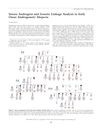
August 1999 in “Journal of Investigative Dermatology”
32 citations
,
August 1999 in “Journal of Investigative Dermatology” This study found that individuals with early onset extensive androgenetic alopecia have an elevated ratio of DHT to testosterone, but no significant genetic linkage to markers on chromosomes 2 or 5 was detected.
 15 citations
,
August 2017 in “Scientific Reports”
15 citations
,
August 2017 in “Scientific Reports” This study found that young men with early-onset androgenetic alopecia have a worse glycolipid profile and hormone pattern similar to women's PCOS, suggesting a possible male PCOS-equivalent syndrome.