42 citations
,
June 2021 in “Pharmaceutics” This review summarizes the use of 3D printing technologies for creating microneedles and evaluates their associated benefits, challenges, and regulatory considerations, but does not present new experimental results.
17 citations
,
May 2021 in “Journal of Cell Science” In this study, the researchers discovered that specific polyamine depletion enhances stemness in hair follicle stem cells through a mechanism independent of mRNA translation.
 11 citations
,
March 2008 in “Experimental Dermatology”
11 citations
,
March 2008 in “Experimental Dermatology” This study identified a thiazolidine dione derivative as a potential inhibitor of 15-PGDH that may enhance prostaglandin activity in hair follicles, suggesting its use to support hair regrowth treatments.
 51 citations
,
August 2013 in “Journal of Investigative Dermatology”
51 citations
,
August 2013 in “Journal of Investigative Dermatology” This study demonstrated that cultured human dermal papilla cells can induce full hair follicle formation when combined with neonatal foreskin keratinocytes in a grafted dermal-epidermal construct on mice.
March 2026 in “ACS Applied Materials & Interfaces” This study introduced an innovative nanozyme system called MCP@G, which was shown to improve diabetic wound healing in rats by alleviating mitochondrial oxidative stress, enhancing fibroblast migration, and promoting blood vessel and hair follicle regeneration, offering a promising approach for treating challenging diabetic wounds.
 October 2022 in “International journal of medical science and clinical research studies”
 In this study, the combination of Poly-D,L-Lactic Acid and Platelet-Rich Plasma was reported to be effective for improving wrinkle severity and skin brightness in a 45-year-old woman.
12 citations
,
February 1986 in “PubMed” This study found that newborn mice given 6-aminonicotinamide developed skin, intestinal, and central nervous system lesions, offering insights into the mechanisms of pellagra.
July 2025 in “Journal of Investigative Dermatology” Nelfb is essential for dermal fat development and survival.
January 2015 in “프로그램북(구 초록집)” This study reports significant hair regrowth in two alopecia areata patients resistant to intralesional corticosteroids after treatment with intralesional polydeoxyribonucleotide.
122 citations
,
December 2022 in “International Journal of Molecular Sciences” In this review, researchers discussed recent advances in nanotechnology for topical skin applications, highlighting how nanocarriers enhance skin penetration and targeting in treatments for diseases like melanoma and psoriasis, while acknowledging that the penetration mechanisms and health impacts of nanoparticles remain not fully understood.
2 citations
,
February 2012 in “PubMed” This study found that Gp₄G increased hair length, papilla cell numbers, and versican deposition in treated animals, potentially through alterations in hair follicle phases and nucleotide concentrations.
 4 citations
,
January 2019 in “Dermatology Online Journal”
4 citations
,
January 2019 in “Dermatology Online Journal” This article discusses the potential of low-dose naltrexone as an adjuvant therapy for trichodynia in alopecias, noting its anti-inflammatory properties and need for further research.
May 2024 in “Journal of the Egyptian Womenʼs Dermatologic Society” This study suggests that DPCP treatment can be effective and safe for severe alopecia areata in children, with maintenance therapy potentially reducing relapse rates.
August 2025 in “Journal of Polymer Science” This review reports that combining adipose-derived stem cells with decellularized extracellular matrix enhances tissue repair by improving scaffold biological activity and promoting angiogenesis, integration, and functional regeneration across various tissues, while addressing challenges in traditional transplantation methods.
2 citations
,
May 2022 in “Journal of Industrial and Engineering Chemistry” This study observed that minoxidil-loaded nanoparticles significantly enhanced skin penetration and hair regrowth in mice within three weeks, without ethanol and propylene glycol, suggesting they are a promising delivery method for treating hair loss.
15 citations
,
August 2023 in “Journal of Nanobiotechnology” This review highlights recent advancements in using nanotechnology for scar prevention and treatment, emphasizing the unique properties of nanomaterials in drug delivery and the challenges that remain in maximizing their potential for effective scar interventions.
 15 citations
,
June 2018 in “Life Sciences”
15 citations
,
June 2018 in “Life Sciences” This study found that Diabetex significantly improved wound healing and reduced fasting blood sugar in diabetic rats, showing potential as a safe and economic treatment strategy for diabetic-resistant wounds.
 5 citations
,
January 2018 in “PubMed”
5 citations
,
January 2018 in “PubMed” In this study, applying a biodegradable microneedle patch after topical steroid application significantly increased steroid penetration and improved treatment outcomes in patients with prurigo nodularis compared to the control.
August 2025 in “OPAL (Open@LaTrobe) (La Trobe University)” This preclinical study found that a machine-learning-driven strategy for fabricating microneedles with optimal hardness and rapid dissolution significantly promoted hair regrowth in androgenetic alopecia mice by activating the Wnt/β-catenin pathway, surpassing the effects of minoxidil.
25 citations
,
February 2021 in “Diabetes” This study found that Dock5 plays a crucial role in keratinocyte function and wound healing, with its expression reduced in diabetic models but improving healing when restored.
2 citations
,
December 2024 in “Journal of Cosmetic Dermatology” In this study, the integration of AI-driven SNP profiling and epigenetic insights in cosmetic dermatology was highlighted as a key development toward personalized skincare, potentially improving treatment effectiveness and reducing side effects.
14 citations
,
August 2021 in “Journal of Pharmaceutical Sciences” This study found that cholesterol- and phospholipid-free multilamellar niosomes improved skin deposition and targeted deeper hair follicles better than hydrophobic PLGA nanoparticles for transdermal drug delivery.
August 2016 in “Anaplastology” This study reports that controlled release PRP therapy using dalteparin and protamine micro-particles may be effective for hair growth and skin rejuvenation in women.
January 2012 in “RepositóriUM (Universidade do Minho)” This study reported that a modified nanoprecipitation protocol can effectively create PLA nanoparticles capable of delivering compounds into hair follicles, with promising potential for hair follicle therapy and cosmetic applications.
 August 2026 in “Clinical Cosmetic and Investigational Dermatology”
 In this study, combining Polynucleotides High Purification Technology with hyaluronic acid significantly reduced atrophic post-acne scar areas and improved Goodman-Baron scores in a majority of treated patients over six months, reaffirming the approach's beneficial effects in a real-world outpatient setting.
 1 citations
,
October 2025 in “Nano Research”
1 citations
,
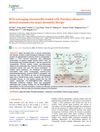
October 2025 in “Nano Research” In this study, researchers developed a dissolvable microneedle patch combining HA-TEMPO and Portulaca oleracea L.-derived nanoparticles, which effectively reduced oxidative stress and inflammation in an atopic dermatitis model while restoring immune balance, suggesting a promising treatment strategy.
 24 citations
,
June 2018 in “Expert Review of Pharmacoeconomics & Outcomes Research”
24 citations
,
June 2018 in “Expert Review of Pharmacoeconomics & Outcomes Research” This review discusses the potential of microneedle arrays for drug delivery and in the cosmetic market, but reports no new clinical results; factors for commercial therapeutic use are explored.
 10 citations
,
May 2016 in “Polymer”
10 citations
,
May 2016 in “Polymer” This study reports that novel core-ABS nanocarriers efficiently loaded with dexamethasone and finasteride show potential for dermal drug delivery, exhibiting non-toxic interactions with human keratinocyte cells and skin penetration.
6 citations
,
January 2020 in “Elsevier eBooks” Nanoparticles could make hair dyes safer by reducing harmful effects.
 4 citations
,
September 2020 in “Annals of Translational Medicine”
4 citations
,
September 2020 in “Annals of Translational Medicine” This study found that concentrated nanofat, used alone or with decellularized nanofat, may enhance hair growth in mice by activating dermal papilla cells and the anagen phase.