January 2024 in “Doria (University of Helsinki)” This study found that in mouse pancreatic β-cells, the disruption of keratin filaments due to a specific mutation in keratin 18 resulted in altered GLUT2 localization, with less GLUT2 present on the plasma membrane compared to cells with normal keratin.
77 citations
,
March 2000 in “Journal of Investigative Dermatology” The research identified six functional hair keratin genes and four pseudogenes, providing insights into hair formation and gene organization.
13 citations
,
May 2001 in “Current problems in dermatology” Keratin proteins in epithelial cells are dynamic and crucial for cell processes and disease understanding.
 December 2021 in “Trichology and cosmetology:”
 This study demonstrated that a daily oral supplement of 1000 mg Kera-Diet® improved hair and nail conditions in women experiencing acute telogen effluvium and brittle nail syndrome over three months.
31 citations
,
April 2004 in “Journal of Investigative Dermatology” This study found that a newly identified gene, mK17n, may explain the lack of nail issues in mK17 null mice by compensating for mK17's function in the nail bed.
6 citations
,
November 2020 in “bioRxiv (Cold Spring Harbor Laboratory)” In this study, researchers found that the gene Dkk4 influences color pattern formation in domestic cat fetuses, and its mutation is linked to the Ticked pattern type.
 June 2024 in “Frontiers in pharmacology”
 This study found that a 2-deoxy-D-ribose gel stimulated hair follicle growth in mice with androgenic alopecia, showing effects similar to minoxidil without additional benefits from combining the two treatments.
 April 2023 in “The journal of investigative dermatology/Journal of investigative dermatology”
 In this study, researchers found that the loss of SETDB1 in epidermal keratinocytes led to altered chromatin states, increased ERV expression, and activation of immune responses, while inhibiting these effects with certain antiviral drugs reduced skin inflammation and hair loss in a mouse model.
 13 citations
,
March 2021 in “British Journal of Pharmacology”
13 citations
,
March 2021 in “British Journal of Pharmacology” This study found that KY19382 can effectively promote hair regeneration and follicle neogenesis in mice and human hair models by activating Wnt/β-catenin signalling, suggesting potential use for alopecia treatment.
January 2026 in “Microorganisms” In a DNFB-induced mouse model of atopic dermatitis, this study found that both topical and oral formulations of the probiotic Bifidobacterium animalis J12 improved AD symptoms through distinct mechanisms, with topical applications reducing local inflammation and oral administration enhancing gut microbiota and reducing systemic inflammation.
December 2020 in “Faculty Opinions – Post-Publication Peer Review of the Biomedical Literature” The KDM1 gene helps Venus flytraps close by managing potassium ions.
In this study, researchers identified the c.296C>T (p.T99I) variant in the KRT32 gene, which co-segregates with loose anagen hair syndrome, and found it decreases binding affinity to KRT82, potentially weakening hair anchorage.
February 2009 in “Journal of the American Academy of Dermatology” Both skin products were equally effective in improving facial discoloration and skin quality.
October 1990 in “Pediatric Research” This case report details a severe instance of VDR-II where intravenous calcium infusions, administered nightly, successfully improved clinical, radiological, and biochemical signs of rickets without alopecia despite ineffective calcitriol therapy.
January 2009 in “ScholarlyCommons (University of Pennsylvania)” This study provided the first X-ray crystal structure of the mammalian steroid hormone reductase AKR1D1 and identified a disease-related mutant, P133R, which may impact bile acid metabolism and cause clinical symptoms.
 4 citations
,
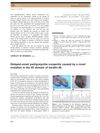
December 2013 in “The Journal of Dermatology”
4 citations
,
December 2013 in “The Journal of Dermatology” This letter to the editor discusses a case of delayed-onset pachyonychia congenita linked to a new mutation in keratin 6b but presents no new research findings.
70 citations
,
December 2008 in “Cancer Research” This study found that activating CXCR2 on ras-transformed keratinocytes promotes migration and tumor development in a mouse skin model.
48 citations
,
February 2010 in “Molecular biology reports” This study found that KAP7.1 and KAP8.2 genes were significantly more expressed in secondary hair follicles than primary follicles, suggesting their role in regulating cashmere fiber diameter.
 March 2025 in “International Journal of Molecular Sciences”
 This study established a Krt24-CreERT2 mouse line targeting outer bulge hair follicle stem cells, finding these cells crucial for hair follicle development and repair, particularly following ionizing radiation exposure.
 21 citations
,
November 2017 in “Scientific Reports”
21 citations
,
November 2017 in “Scientific Reports” This study found that prostaglandin D2 reduced proliferation in bulge resident K15+ stem cells but not in other K15+ progenitor cells, suggesting differential impacts on hair follicle stem cell niches.
81 citations
,
March 1985 in “Journal of Clinical Investigation” This study found that measuring 24-OHase induction by 1,25(OH)2D3 in cultured skin fibroblasts is a sensitive test for detecting genetic defects in the 1,25(OH)2D effector pathway.
47 citations
,
September 2004 in “Journal of Biological Chemistry” This study provides evidence supporting a regulatory relationship between the transcriptional regulator Hoxc13 and Krtap16 genes, which are crucial for proper hair growth in mice.
6 citations
,
April 2005 in “Journal of dermatological science” This study identified the expression sites of five KAP5 genes on human chromosome 11q13.5 in scalp skin sections but did not explore their detailed distribution within hair follicles.
December 2015 in “OPAL (Open@LaTrobe) (La Trobe University)” In human hair follicle keratinocytes, this study found that treatment with the pharmacological inhibitor QLT0267 led to a strong inhibition of proliferation and migration and induced nearly 100% apoptosis.
December 2024 in “Journal of Health and Beauty” In laboratory conditions, this study found that the Dongeui Hot Spring Water Complex, containing sea slug extract, demonstrated enhanced antioxidant activity and promoted hair papilla cell proliferation compared to a control, suggesting potential benefits for scalp health and hair loss prevention.
1 citations
,
May 2024 in “Journal of Dermatological Science” In this study, KC-AD-MSCs were found to increase COL7 deposition and anchoring fibril formation at the dermal-epidermal junction in a RDEB mouse model, suggesting potential for improving skin integrity in recessive dystrophic epidermolysis bullosa patients.
14 citations
,
October 2002 in “Journal of cutaneous pathology” This study found that MAP-2 is intensely expressed in the companion layer of the hair follicle, suggesting its potential importance to follicle integrity and possible involvement in some types of alopecia.
 January 2016 in “Experimental Dermatology”
 This article in Experimental Dermatology does not include an abstract or any new research findings.
 November 2022 in “The journal of investigative dermatology/Journal of investigative dermatology”
 This study found that conditional deletion of CD271 in mouse epidermis led to significant disorganization and increased thickness, suggesting CD271's crucial role in regulating skin differentiation and structure.
15 citations
,
May 2014 in “Journal of Biological Chemistry” In this study, targeting the expression of a keratin KRT5/KRT8 chimeric cDNA in keratin-deficient mice partially restored structural defects in epidermal cells, but did not fully normalize skin health.