This study investigated the epigenetic effects of finasteride on reproductive signaling pathways using Sertoli cell models and found that finasteride exposure led to altered epigenetic profiles in multiple genes, including ESR1 and DNMT3A, indicating potential impacts on reproductive-related pathways.
 135 citations
,
December 2015 in “Expert Opinion on Biological Therapy”
135 citations
,
December 2015 in “Expert Opinion on Biological Therapy” This review synthesizes recent research on exosomes, highlighting their role as key modulators in regenerative outcomes and suggesting they may offer advantages over stem cell-based therapies in process and regulation.
 July 2025 in “World Journal of Stem Cells”
 This review highlights that exosome-based therapies show promise for hair regeneration by modulating signaling pathways and enhancing hair follicle regeneration; however, further clinical research is needed due to variability in methods and limited clinical studies.
 April 2017 in “Journal of Investigative Dermatology”
 This study found that fisetin, a dietary flavonoid, significantly improved psoriasiform skin lesions in mice by promoting cell differentiation, inhibiting proliferation, and modulating inflammatory responses.
 3 citations
,
January 2018 in “Chiang Mai University Journal”
3 citations
,
January 2018 in “Chiang Mai University Journal” This study found that while the EtOAc fraction of Centella asiatica had the highest antioxidant activity, it was toxic to human follicle dermal papilla cells, but the EtOH crude extract promoted hair growth by enhancing VEGF expression.
32 citations
,
July 2018 in “FEBS letters” In this study, researchers identified the CBL1-CIPK26 Ca 2+ sensor-kinase complexes as key modulators of the NADPH oxidase RBOHC crucial for root hair differentiation in plants.

This study found that γδ T cells play a role in regulating stromal behavior, influencing the composition and vascularity of fibrotic tissues during the foreign body response.
65 citations
,
May 2006 in “Journal of Investigative Dermatology” This study found that dexamethasone significantly reduced ERα mRNA levels and increased aromatase mRNA and activity in cultured human hair follicle dermal papilla cells, suggesting a glucocorticoid-dependent mechanism for estradiol action.
 22 citations
,
November 2011 in “Journal of Analytical Toxicology”
22 citations
,
November 2011 in “Journal of Analytical Toxicology” This review discusses the relevance of human androgen receptor action in sports doping and examines the potential of cell-based biological assays for detecting androgenic anabolic steroid use, without presenting new research findings.
 98 citations
,
August 2007 in “PLoS ONE”
98 citations
,
August 2007 in “PLoS ONE” This study found that Myc activation in epidermal stem cells leads to chromatin modifications that promote stem cell exit and differentiation, which can be influenced by HDAC inhibitors like trichostatin A.
 71 citations
,
April 2020 in “Journal of Cosmetic Dermatology”
71 citations
,
April 2020 in “Journal of Cosmetic Dermatology” This article discusses the potential link between genetic variants associated with androgen receptor activity and racial variations in COVID-19 mortality, suggesting a possible role for anti-androgens in treatment, but reports no new clinical findings.
 4 citations
,
September 2020 in “Andrologia”
4 citations
,
September 2020 in “Andrologia” This study found that Origanum vulgare extract improved testicular structure and function in mice against finasteride-induced damage by enhancing antioxidant defense and modulating gene expression related to apoptosis.
 September 2025 in “Clinical Cosmetic and Investigational Dermatology”
 This review highlights that while moderate physical activity benefits skin health by improving circulation and reducing stress, intense exercise or inadequate protective measures can harm the skin, emphasizing the need for sun protection and personalized care.
 April 2018 in “The journal of investigative dermatology/Journal of investigative dermatology”
 This study suggests that miR-486 may protect against alopecia areata by maintaining hair follicle immune privilege and modulating expression of immune-related genes.
 September 2017 in “The journal of investigative dermatology/Journal of investigative dermatology”
 This study found that orally administering the CCR5 inhibitor Maraviroc improved hair loss in 4 out of 5 mice with alopecia areata and also reduced the development of the condition, evidenced by decreased CCR5+ T-cell infiltration in treated mice.
176 citations
,
January 2013 in “Proceedings of the National Academy of Sciences” This study reveals an antagonistic competition between BMP and Wnt signaling within stem cells, influencing their fate towards hair germ characteristics based on the BMP/Wnt activity ratio.
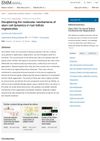
This study reviews the regulatory mechanisms and molecular processes governing stem cell activity in hair follicles, highlighting their roles in hair regeneration and potential implications for treating hair and skin disorders.
 136 citations
,
April 2013 in “Clinical Cancer Research”
136 citations
,
April 2013 in “Clinical Cancer Research” The study found that IPI-926 was well tolerated up to 160 mg once daily for 28-day cycles and showed activity as a single-agent treatment in Hedgehog pathway inhibitor-naïve patients with basal cell carcinoma.
 39 citations
,
September 2017 in “The Open Rheumatology Journal”
39 citations
,
September 2017 in “The Open Rheumatology Journal” This review discusses the role of complement activation in SLE and suggests that while monitoring C3 and C4 remains important, increased levels of cell-bound complement activation products may better indicate disease activity.
 6 citations
,
March 2022 in “PLoS ONE”
6 citations
,
March 2022 in “PLoS ONE” This study suggests that CGE may enhance hair growth by activating β-catenin signaling pathways in human hair dermal papilla cells and promoting the anagen growth phase in mice.
March 2026 in “Wound Repair and Regeneration” In this study, researchers used a mouse model to demonstrate that expression of MARCKSL1 in dendritic cells plays a crucial role in modulating fibrotic responses and scar formation during wound healing, suggesting that targeting this expression could offer new therapeutic strategies for scar prevention.
 December 2025 in “Journal of Education Health and Sport”
 This study reports that LED phototherapy is gaining popularity as a safe and effective non-invasive method for treating various skin conditions, enhancing skin rejuvenation, wound healing, and inflammation modulation, and is increasingly integrated into clinical protocols for conditions like acne vulgaris and signs of aging.
 October 2025 in “Clinical Cosmetic and Investigational Dermatology”
 This study synthesizes knowledge of how dendritic cell signals, epithelial integrins, and fibroblast activity converge on TGF-β1 to maintain or disrupt skin healing, contrasting normal and fibrotic scar formation and suggesting possible integrin and immune-targeted treatments for skin fibrosis.
 April 2018 in “Journal of Investigative Dermatology”
 This study found that the PPAR-γ modulator AGED can reverse epithelial-mesenchymal transition in hair follicles affected by lichen planopilaris ex vivo, suggesting potential for treating scarring alopecias.
This study found that low-level laser therapy may enhance wound healing and reduce pain, swelling, and inflammation by increasing mitochondrial activity and oxidative stress, leading to greater protein synthesis and cell proliferation.
 87 citations
,
September 2019 in “Nature Communications”
87 citations
,
September 2019 in “Nature Communications” In this study, researchers identified that upon tissue injury in a mouse model, epidermal cells at the wound edge convert to an embryonic-like state with SOX11 and SOX4 playing a central role in modulating epidermal development and cell migration genes.
 9 citations
,
February 2014 in “Tissue Engineering and Regenerative Medicine”
9 citations
,
February 2014 in “Tissue Engineering and Regenerative Medicine” This study found that conditioned media from human amniotic fluid-derived stem cells may enhance skin regeneration by promoting cell proliferation and migration, and by modulating gene expressions altered by UV irradiation.
 January 2023 in “Methods in molecular biology”
 This article reviews methods for examining the localization and activity of ROP GTPase, cortical microtubule organization, and F-actin dynamics in plant cell models, but reports no new experimental results.
 113 citations
,
June 2015 in “Stem Cell Research & Therapy”
113 citations
,
June 2015 in “Stem Cell Research & Therapy” This study found that activation or inhibition of Wnt/β-catenin and Notch signaling pathways in rats can alter wound healing, possibly by affecting epidermal stem cell activity and keratinocyte behavior.
 30 citations
,
April 2017 in “European Journal of Cell Biology”
30 citations
,
April 2017 in “European Journal of Cell Biology” This study observed that CIP/KIP proteins play a significant role in regulating cell cycle arrest and differentiation in human hair follicles, supporting hair growth and formation in the anagen phase.