1 citations
,
October 2023 in “European Journal of Dermatology” This study found that combining hair transplantation with platelet-rich plasma treatment significantly improved hair regeneration, reduced hair loss, and minimized skin lesion areas in patients with androgenic alopecia compared to hair transplantation alone, suggesting enhanced treatment efficacy.
 July 2024 in “Clinical Cosmetic and Investigational Dermatology”
 Certain immune cells are linked to non-scarring hair loss, suggesting potential for immune-targeted treatments.
 1 citations
,
October 2024 in “Journal of Clinical Immunology”
1 citations
,
October 2024 in “Journal of Clinical Immunology” This study observed that adult Netherton syndrome patients showed a range of normal to diminished immune responses to polysaccharide, conjugate, and mRNA-based vaccines, with responses generally overlapping those of healthy controls, suggesting no consistent B- or T-cell immunodeficiency in this population.
July 2025 in “Ultrasound in Medicine & Biology” This study found that nanobubble-encapsulated diclofenac with ultrasound-targeted microbubble destruction (DNBs-UTMD) can enhance the anti-tumor efficacy of Doxil® by regulating the tumor immune microenvironment, improving drug uptake, and increasing T cell responses while reducing immune-suppressive cells in the process.
 1 citations
,
December 2004 in “Hepatology”
1 citations
,
December 2004 in “Hepatology” This study found that in lamivudine-resistant hepatitis B patients, tenofovir significantly reduced HBV DNA levels faster and more consistently than adefovir, reaching undetectable levels in all treated patients by 44 weeks.
 27 citations
,
May 2007 in “Archives of dermatological research”
27 citations
,
May 2007 in “Archives of dermatological research” In this study, alopecia areata patients treated with diphencyprone showed a significant increase in CD8 lymphocytes around hair bulbs, which may be associated with hair regrowth.
 11 citations
,
January 2017 in “Oxidative medicine and cellular longevity”
11 citations
,
January 2017 in “Oxidative medicine and cellular longevity” This study found that antroquinonol inhibited CD8+ T cell proliferation and reduced proinflammatory cytokine secretion in vitro, while also ameliorating H2O2-induced depigmentation and resisting reductions in hair follicle length, skin thickness, and tyrosinase expression in mice.
 1 citations
,
January 2021
1 citations
,
January 2021 In this study, CD4+ non-haematopoietic, skin-resident stem cell-like populations were identified in both murine and human epidermis, suggesting they may serve as potential basal cell carcinoma precursors.
 1 citations
,
February 2025 in “Scientific Reports”
1 citations
,
February 2025 in “Scientific Reports” In this study, researchers found that CD4 is expressed on murine K5+ keratinocytes, and its expression is crucial for maintaining epidermal stem cell balance and wound repair capacity, particularly during aging.
 November 2025 in “Clinical Cosmetic and Investigational Dermatology”
 This study found that specific immune cell phenotypes, particularly CD25 on CD4 Treg cells, were causally linked to androgenic alopecia, suggesting potential targets for immune-based therapies.
 24 citations
,
January 2012 in “Indian Journal of Dermatology, Venereology and Leprology”
24 citations
,
January 2012 in “Indian Journal of Dermatology, Venereology and Leprology” This study suggests that hypersensitivity and increased serum IgE levels might contribute to the pathogenesis of diffuse alopecia areata through intense local inflammatory infiltration.
 7 citations
,
February 2015 in “Journal of comparative pathology”
7 citations
,
February 2015 in “Journal of comparative pathology” This study observed that NSG-hu-BLT mice developed graft-versus-host disease characterized by CD8+ T lymphocyte-related cell death in the skin and liver, which may affect their utility in other research areas.
September 2016 in “Journal of Dermatological Science” This research suggests that hair follicle-derived cytokines IL-7 and IL-15 are crucial for maintaining resident memory T cells in the skin, which may be relevant for diseases like cutaneous T cell lymphoma.
16 citations
,
March 2017 in “Oncotarget” This study suggests that SOCS3 treatment may effectively inhibit alopecia areata by suppressing CD8+ T cell activity and IFN-γ production.
 1 citations
,
October 2023 in “Journal of the Pakistan Medical Association”
1 citations
,
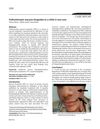
October 2023 in “Journal of the Pakistan Medical Association” This source describes a case of a 12-year-old male diagnosed with folliculotropic mycosis fungoides, presenting with an asymptomatic, erythematous plaque. Histology and immunohistochemistry confirmed FMF, which is typically rare in children and marked by follicular infiltration by CD4+ lymphocytes.
77 citations
,
June 2002 in “Journal of Investigative Dermatology” CD44 variant changes start alopecia areata, but don't maintain it.
 November 2025 in “Frontiers in Immunology”
 This review discusses the role of immune cells in the pathogenesis of alopecia areata and highlights emerging immunomodulatory strategies and novel therapeutic targets aimed at offering more effective and durable treatments for this autoimmune hair loss disorder.
 June 2025 in “bioRxiv (Cold Spring Harbor Laboratory)”
 This study found that in alopecia areata, epidermal γδ T cells and macrophages contribute to the disease alongside CD8 T cells, with the expression of BST2 marking interferon-driven immune activation in both mouse and human skin, which decreases following treatment with the JAK inhibitor tofacitinib.
2 citations
,
June 2024 in “Medical Journal of Babylon” In this study, researchers observed significantly higher CD8+ T cell levels in Iraqi patients with Alopecia areata compared to healthy controls, alongside concluding that the condition is more prevalent in men.
12 citations
,
September 2022 in “Frontiers in Immunology” This study found that soluble CD83 (sCD83) accelerated chronic and hard-to-heal wound healing and improved inflammatory and pro-resolving cytokine profiles, suggesting potential for therapeutic use.
7 citations
,
December 2016 in “Journal of the American Academy of Dermatology” In this study, researchers found that patients with alopecia areata had a significant increase in NKG2D+CD4+ T cell levels in their blood compared to healthy controls.
November 2025 in “The Journal of Immunology” In this study, researchers observed elevated levels of epidermal γδ T cells, keratinocytes, and an upregulation of the BST2 gene among immune cells in C3H/HeJ mice with alopecia areata, suggesting a potential role in disease pathogenesis.
 April 2021 in “Sohag Medical Journal”
 This review outlines the proposed theories behind the development of alopecia areata, emphasizing the autoimmune process involving lost immune privilege in hair follicles, and stresses the need to pinpoint specific pathogenic mechanisms for potential treatments.
 24 citations
,
March 2018 in “Experimental Dermatology”
24 citations
,
March 2018 in “Experimental Dermatology” This review explores the role of regulatory T cells in autoimmune skin disorders like alopecia areata and vitiligo, emphasizing unanswered questions and reporting no new experimental results.
 23 citations
,
January 2010 in “Journal of Medical Primatology”
23 citations
,
January 2010 in “Journal of Medical Primatology” This study found that alopecia in captive Rhesus macaques may be linked to chronic hypersensitivity dermatitis with CD4+ cell inflammation, possibly influenced by altered housing and reduced pathogen exposure.
 7 citations
,
January 2013 in “The journal of investigative dermatology/Journal of investigative dermatology”
7 citations
,
January 2013 in “The journal of investigative dermatology/Journal of investigative dermatology” This study found that thymus transplantation in athymic mice resulted in T-cell-driven hair follicle depigmentation and loss, without multiorgan autoimmune disease, highlighting mechanisms of tissue-specific tolerance.
 3 citations
,
January 1996 in “Pharmacotherapy: The Journal of Human Pharmacology and Drug Therapy”
3 citations
,
January 1996 in “Pharmacotherapy: The Journal of Human Pharmacology and Drug Therapy” In this study, a 33-year-old HIV-infected man experienced alopecia areata after beginning zidovudine therapy, which reversed upon discontinuation.
 1 citations
,
April 2019 in “The journal of investigative dermatology/Journal of investigative dermatology”
1 citations
,
April 2019 in “The journal of investigative dermatology/Journal of investigative dermatology” This study found that anagen stage protein homogenates and specific epitopes from melanogenesis proteins activated CD8 T cells, suggesting alopecia areata is an anagen-specific disease.
 1 citations
,
January 2015 in “Advanced techniques in biology & medicine”
1 citations
,
January 2015 in “Advanced techniques in biology & medicine” This study found that among patients with Down syndrome, those with alopecia areata may have increased antiperoxidase antibodies, possibly linked to hypothyroidism.
 1 citations
,
August 2007 in “Indian Journal of Pediatrics”
1 citations
,
August 2007 in “Indian Journal of Pediatrics” This case report describes a 13-year-old girl with atypical symptoms leading to a delayed diagnosis of HIV infection with fatal disseminated cryptococcosis.