 March 2021 in “Research Square (Research Square)”
 This study found that patients with RASopathies demonstrated lower levels of serum IgA and CD8 T cells compared to controls, potentially indicating an increased risk of developing autoimmune disorders.
 May 2020 in “JAAD case reports”
 This source describes a previous case report that combined anthralin and calcipotriene to treat alopecia areata, showing promising results, but highlights that further research is needed to understand the mechanisms and potential benefits of this combination therapy.
 74 citations
,
May 2016 in “Current opinion in pediatrics, with evaluated MEDLINE/Current opinion in pediatrics”
74 citations
,
May 2016 in “Current opinion in pediatrics, with evaluated MEDLINE/Current opinion in pediatrics” This review identifies shared interferon gamma-driven immune pathways in vitiligo and alopecia areata, revealing potential targets for new treatments, but reports no clinical results.
 60 citations
,
September 2015 in “Expert Review of Clinical Immunology”
60 citations
,
September 2015 in “Expert Review of Clinical Immunology” This study suggests that CD8+ cytotoxic T lymphocytes play a crucial role in the development of alopecia areata, based on observations in rodent models that mimic human autoimmune disease.
 33 citations
,
December 2005 in “Archives of dermatology”
33 citations
,
December 2005 in “Archives of dermatology” This study presents case reports of four patients with alopecia areata or alopecia universalis, highlighting varied responses to treatments like prednisone, intralesional triamcinolone, and squaric acid dibutyl ester.
 27 citations
,
April 2018 in “Journal of autoimmunity”
27 citations
,
April 2018 in “Journal of autoimmunity” In this study, iNKT10 cells were found to play a significant role in preventing and treating alopecia areata in a humanized mouse model, suggesting these cells could have potential in managing related autoimmune disorders.
 16 citations
,
April 2007 in “Journal of Medical Primatology”
16 citations
,
April 2007 in “Journal of Medical Primatology” This study reports that a 14-year-old female rhesus monkey with alopecia universalis was found to have a T-cell-mediated autoimmune disease similar to human alopecia areata universalis.
 11 citations
,
March 2014 in “Journal of Investigative Dermatology”
11 citations
,
March 2014 in “Journal of Investigative Dermatology” In this study, basal cell carcinoma developed in Ptch-deficient mice only after chemical treatment, not skin wounding, suggesting a second unknown event is necessary for tumor formation.
6 citations
,
January 2023 in “International journal of molecular sciences” This review discusses the bidirectional interactions between human mast cells and CD8 T cells in the skin, particularly in the context of disorders like psoriasis, atopic dermatitis, and vitiligo, and reports no new findings.
 3 citations
,
April 2019 in “The journal of investigative dermatology/Journal of investigative dermatology”
3 citations
,
April 2019 in “The journal of investigative dermatology/Journal of investigative dermatology” This research suggests that innate lymphoid cells type 1 (ILC1) may contribute to the development of alopecia areata, alongside CD8+ T cells, by disrupting hair follicle immune privilege and promoting features of the disease.
 2 citations
,
November 2015 in “Journal of Investigative Dermatology”
2 citations
,
November 2015 in “Journal of Investigative Dermatology” This study found that RANKL signaling enhances CD8+ T cell-mediated anti-viral immunity during herpes simplex virus infection by preventing apoptosis of Langerhans cells, suggesting potential therapeutic applications.
 February 2018 in “Trends in Immunology”
 This study demonstrated that antigens from the skin bacterium Staphylococcus epidermidis can stimulate CD8+ T cells, which in turn enhance wound healing.
 September 2017 in “The journal of investigative dermatology/Journal of investigative dermatology”
 This study suggests that the outer root sheath of human hair follicles may act as a "metabolic center," capable of synthesizing glucose from lactate, which supports glycogen metabolism.
 140 citations
,
March 2013 in “The journal of immunology/The Journal of immunology”
140 citations
,
March 2013 in “The journal of immunology/The Journal of immunology” This study found that IL-7 is crucial for the survival of memory regulatory T cells in the skin of mice, whereas IL-2 is essential for their initial generation but not for their maintenance.
 30 citations
,
July 2019 in “PloS one”
30 citations
,
July 2019 in “PloS one” This study found that T-regulatory cells, specifically the FOXP3 CD39 subset, were significantly reduced in both circulation and hair follicles of alopecia areata patients compared to healthy subjects, suggesting potential therapeutic targets.
 20 citations
,
November 2019 in “Current Opinion in Systems Biology”
20 citations
,
November 2019 in “Current Opinion in Systems Biology” This review discusses how recent studies use models and experiments to understand immune system signaling, but it reports no new clinical findings; the authors suggest strategies for improving these models.
 15 citations
,
January 2014 in “Dermatology”
15 citations
,
January 2014 in “Dermatology” This case report describes alopecia universalis-like hair loss occurring in two patients with cutaneous T cell lymphoma, providing clinical, dermoscopic, and pathologic features to help differentiate it from alopecia areata universalis.
 8 citations
,
October 2016 in “Experimental dermatology”
8 citations
,
October 2016 in “Experimental dermatology” This paper proposes that the induction of HF-specific neo-antigens by peripheral CD8+ T cells may maintain self-tolerance but could also lead to immunopathology in conditions like alopecia areata.
8 citations
,
August 2016 in “Journal of Cutaneous Pathology” This case report highlights a rare instance of CD8-positive hypopigmented mycosis fungoides causing alopecia areata-like changes, emphasizing the necessity of scalp biopsy in such presentations.
 4 citations
,
January 2011 in “Journal of UOEH”
4 citations
,
January 2011 in “Journal of UOEH” In this case study, the progression of alopecia universalis in a Japanese man was linked to the involvement of Th1 and Th17 cells, suggesting an autoimmune mechanism.
2 citations
,
September 2018 in “JAAD case reports” This report describes a rare case of folliculotropic and syringotropic CD8 mycosis fungoides with unusual widespread mucosal involvement.
 2 citations
,
July 2014 in “Our Dermatology Online”
2 citations
,
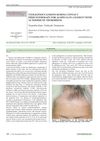
July 2014 in “Our Dermatology Online” This case report documents the development of vitiligo-like lesions in a patient with autoimmune thyroiditis following the use of topical squaric acid dibutylester for alopecia.
1 citations
,
November 2018 in “immuneACCESS” This study found that in alopecia areata, treatment with the oral JAK-inhibitor tofacitinib decreased clonally expanded CD8⁺ T cells in the scalp, but many expanded clones did not completely disappear, potentially leading to relapse after stopping treatment.
 January 2026 in “Forum Dermatologicum”
 This review examines various pharmacological options for managing alopecia areata, highlighting the effectiveness of corticosteroids for mild to moderate cases and promising results from JAK inhibitors like baricitinib for more severe forms, with additional benefits from minoxidil and potential from other treatments.
 January 2026 in “Clinical Cosmetic and Investigational Dermatology”
 This study found that targeting both hormonal and immune pathways improved treatment outcomes in androgenetic alopecia patients with an under-recognized inflammatory component called PIILIF, which may contribute to treatment resistance.

In this case report, a woman developed severe alopecia areata approximately one year after starting belimumab for systemic lupus erythematosus, with hair loss improving upon discontinuation of the drug, suggesting a possible connection between belimumab and immune-mediated hair loss.
 64 citations
,
July 2016 in “Journal of Immunology”
64 citations
,
July 2016 in “Journal of Immunology” In this study, blocking the CXCR3 receptor in mice prevented the development of alopecia areata by inhibiting the accumulation of specific T cells in the skin, suggesting a potential therapeutic approach for humans.
 23 citations
,
April 2021 in “Journal of Clinical Medicine”
23 citations
,
April 2021 in “Journal of Clinical Medicine” This review compiles existing data on frontal fibrosing alopecia and highlights the promise of 5-alpha reductase inhibitors as a treatment option, while noting the need for clarity on its cause and progression.
 12 citations
,
November 2003 in “Journal of the American Academy of Dermatology”
12 citations
,
November 2003 in “Journal of the American Academy of Dermatology” This study found hair regrowth in the majority of AA-affected mice and rats treated with diphencyprone, suggesting its potential utility for understanding human alopecia areata and the drug's therapeutic action.
 5 citations
,
June 2022 in “Frontiers in immunology”
5 citations
,
June 2022 in “Frontiers in immunology” This study observed that expanding regulatory T cells in the skin of mice with alopecia areata did not reverse the condition, indicating that additional immunotherapy may be necessary.