 45 citations
,
December 2014 in “Journal of the European Academy of Dermatology and Venereology”
45 citations
,
December 2014 in “Journal of the European Academy of Dermatology and Venereology” This study found that plasmacytoid dendritic cells are central to the pathogenesis of alopecia areata, suggesting they may help differentiate it from trichotillomania and androgenetic alopecia.
 27 citations
,
January 2013 in “The journal of investigative dermatology/Journal of investigative dermatology”
27 citations
,
January 2013 in “The journal of investigative dermatology/Journal of investigative dermatology” This study identified somatostatin as a potential secretory factor contributing to the immune privilege of human hair follicles.
 25 citations
,
January 2005 in “Pediatric Dermatology”
25 citations
,
January 2005 in “Pediatric Dermatology” This article discusses the use of methotrexate for treating generalized pustular psoriasis in a 2-year-old child, providing a specific case study but reporting no new clinical results.
 21 citations
,
January 2005 in “Pediatric Dermatology”
21 citations
,
January 2005 in “Pediatric Dermatology” An 8-year-old girl with vitiligo developed extra hair growth on her knee after using tacrolimus ointment.
 20 citations
,
December 2019 in “The journal of allergy and clinical immunology/Journal of allergy and clinical immunology/The journal of allergy and clinical immunology”
20 citations
,
December 2019 in “The journal of allergy and clinical immunology/Journal of allergy and clinical immunology/The journal of allergy and clinical immunology” In this study, ustekinumab did not promote hair regrowth in human patients with alopecia areata or prevent disease development in an AA mouse model, suggesting limited efficacy for this treatment.
 16 citations
,
November 2005 in “Journal of Investigative Dermatology Symposium Proceedings”
16 citations
,
November 2005 in “Journal of Investigative Dermatology Symposium Proceedings” This study found that intramuscular anti-IFN-γ significantly stabilized and promoted hair regrowth in alopecia areata patients with patchy, progressive hair loss, whereas those with total baldness showed more limited improvement.
 16 citations
,
January 2005 in “Pediatric Dermatology”
16 citations
,
January 2005 in “Pediatric Dermatology” This brief report describes a case of Fox-Fordyce disease in a prepubertal girl but reports no new clinical findings.
 15 citations
,
February 2013 in “Journal of Clinical Medicine and Research”
15 citations
,
February 2013 in “Journal of Clinical Medicine and Research” The researchers reported that both cryotherapy and betamethasone lotion yielded similar improvement rates for alopecia areata patches, without complete recovery observed in any patient.
 14 citations
,
January 2005 in “Pediatric Dermatology”
14 citations
,
January 2005 in “Pediatric Dermatology” This case report describes a child with hypopigmented mycosis fungoides successfully treated with UVA1 light therapy.
 12 citations
,
January 2016 in “Journal of Clinical and Investigative Dermatology”
12 citations
,
January 2016 in “Journal of Clinical and Investigative Dermatology” This study examines how the Severity of Alopecia Tool score was used to assess Alopecia Areata in patients while excluding systemic conditions that might affect vitamin D levels, but reports no new clinical results.
 12 citations
,
January 2005 in “Pediatric Dermatology”
12 citations
,
January 2005 in “Pediatric Dermatology” Fox Fordyce disease might be more common in prepubertal girls than thought and can be managed with treatment.
 11 citations
,
June 2011 in “Expert Review of Dermatology”
11 citations
,
June 2011 in “Expert Review of Dermatology” This review covers various skin-related adverse drug reactions and lists common drugs associated with these reactions but presents no new clinical findings.
 9 citations
,
January 2005 in “Pediatric Dermatology”
9 citations
,
January 2005 in “Pediatric Dermatology” This report details the clinical presentation and management of cutaneous mastocytosis in Indian children and provides no new experimental findings.
 7 citations
,
January 2012 in “International Journal of Trichology”
7 citations
,
January 2012 in “International Journal of Trichology” This article highlights differences in childhood alopecia areata compared to adult cases but reports no new clinical findings.
 6 citations
,
November 2017 in “Dermatologic Therapy”
6 citations
,
November 2017 in “Dermatologic Therapy” In this study, researchers found that applying mometasone furoate 0.1% cream combined with adapalene 0.1% gel resulted in significantly greater hair regrowth over 12 weeks compared to mometasone furoate cream alone in patients with alopecia areata.
 6 citations
,
February 2016 in “British Journal of Dermatology”
6 citations
,
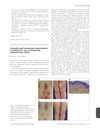
February 2016 in “British Journal of Dermatology” A woman with a drug allergy to anakinra was successfully desensitized, allowing her to continue treatment without allergic reactions.
 6 citations
,
June 2011 in “British Journal of Dermatology”
6 citations
,
June 2011 in “British Journal of Dermatology” This study found that individuals with alopecia areata had significantly higher serum levels of retinol-binding protein 4 and increased IgG immunoreactivity against it, suggesting a role in the disease's pathogenesis.
 4 citations
,
September 2019 in “Biomedical Papers/Biomedical Papers of the Faculty of Medicine of Palacký University, Olomouc Czech Republic”
4 citations
,
September 2019 in “Biomedical Papers/Biomedical Papers of the Faculty of Medicine of Palacký University, Olomouc Czech Republic” This study found that CD2 could be a potential new therapeutic target for treating patchy-type alopecia areata, suggesting the need for further research into its role.
 4 citations
,
July 2013 in “Journal of Dermatological Science”
4 citations
,
July 2013 in “Journal of Dermatological Science” This study found that interleukin-10 deficiency in B6 mice led to inflammatory milk production due to maternal stress, causing alopecia and hepatocyte steatosis in pups.
 1 citations
,
January 2020 in “Benha Journal of Applied Sciences”
1 citations
,
January 2020 in “Benha Journal of Applied Sciences” This study found that DEFB1 polymorphisms, specifically the rs1800972 CG and GG genotypes, may predict susceptibility to and severity of alopecia areata.
 January 2022 in “The Egyptian Journal of Hospital Medicine”
 This study found that higher serum IL-21 levels may serve as a promising diagnostic and prognostic marker for alopecia areata, strongly correlating with disease activity.
 December 2021 in “Research Square (Research Square)”
 This study found that dermal injection of M-CSF stimulated CD11b + myeloid cells can induce alopecia areata in mice by potentially activating B lymphocytes, offering insight into the disease's pathogenesis.
 December 2021 in “Signal transduction and targeted therapy”
 This study found that serum levels of NF-L and GFAP decreased but tau protein levels did not change in anorexia nervosa patients after short-term partial weight restoration.

This review discusses the dynamic behavior of immune cells in skin immune responses using intravital imaging in mice and reports no new clinical results.
 January 2019 in “Journal of Case Reports and Scientific Images”
 This case report describes the treatment of a 12-year-old female with Alopecia Areata using oral azathioprine.
 March 2018 in “Suez Canal University Medical Journal”
 In this study, NKG2D polymorphism was not linked to increased susceptibility to systemic lupus erythematosus among Egyptian patients living in the Suez Canal area.
 January 2005 in “Pediatric Dermatology”
 This article presents a discussion on alopecia areata in infants and concludes that the condition's occurrence in this age group is not as rare as previously thought; it offers no new data.
 1 citations
,
August 2016 in “Journal of Investigative Dermatology”
1 citations
,
August 2016 in “Journal of Investigative Dermatology” This research reported that STAT5 activation in the dermal papilla plays a crucial role in triggering anagen entry during post-developmental hair follicle cycling.
 August 2023 in “Research Square (Research Square)”
 In this study, researchers observed that Melan A, a melanocytic marker, was significantly expressed in hair follicles of alopecia areata patients and correlated with immune infiltrates, suggesting melanocytes might contribute to the autoimmune response in this condition.
 July 2021 in “Clinical case reports and studies”
 In this case report, a 9-year-old boy with diffuse alopecia areata showed improvement with topical diphencyprone immunotherapy, suggesting it as a safe and effective treatment option in pediatric cases of alopecia areata resistant to other therapies.