 43 citations
,
July 2016 in “European journal of pharmaceutical sciences”
43 citations
,
July 2016 in “European journal of pharmaceutical sciences” This study found that dexamethasone-loaded Eudragit® L 100 nanoparticles displayed controlled drug release depending on pH levels, with minimal toxicity to human fibroblasts.
 March 2018 in “International Pharmacy Acta”
 This study concluded that niosomes could effectively serve as stable carriers for topical aminexil delivery, showing promising stability and a slow, biphasic release profile in laboratory settings.
January 2026 in “Journal of Applied Polymer Science” In this study, researchers developed a novel composite fiber by incorporating minoxidil sulfate-loaded ZIF-8 nanoparticles into a polyvinyl alcohol matrix, achieving sustained drug release for up to 220 hours, strong mechanical properties, and the capability for cosmetic applications like wigs.
August 2024 in “Repozitorij Farmaceutsko-biokemijskog fakulteta (Sveučilišta u Zagrebu)” This study reports that a carbopol gel formulation with melatonin shows potential for extended drug release and biocompatibility in dermal applications due to its favorable bio-pharmaceutical properties.
100 citations
,
December 2021 in “Biomedicine & Pharmacotherapy” This review examines advancements in natural polymer-based drug delivery systems like hydrogels and composites for treating major diseases, highlighting challenges in solubility and functionalization but reports no new clinical results.
 January 2024 in “Authorea (Authorea)”
 This study found that laccase-assisted grafting of poly(tyrosine) onto wool materials improved shrinkage resistance and mechanical properties while causing minor decreases in crystallinity and thermal resistance, suggesting a potential "green" approach to enhance wool durability.
This study developed nanoparticulate systems for caffeine delivery in hair follicles, demonstrating effective caffeine loading and release, as well as successful imaging within model hair follicles.
1 citations
,
January 2021 in “SSRN Electronic Journal” This review discusses the use of nanomaterials in hair cosmetics and treatments and reports no clinical results, highlighting their potential to improve the efficacy and safety of active compounds.
December 2022 in “Ecological Chemistry and Engineering S” This study synthesized indole-acenaphthylene compounds using a magnetic nanocatalyst and explored their photoluminescence properties for detecting copper ions in a mixed solvent system, achieving a detection limit of 9.5 ∙ 10 –6 M.
3 citations
,
October 2023 in “Cosmetics” This study developed effervescent cleansing tablets containing asiatic-acid-loaded solid lipid microparticles, finding that they provided effective cleansing compared to water and showed good flow properties, pH, and hardness but were unstable at high temperature and humidity.
 3 citations
,
June 2023 in “ACS sustainable chemistry & engineering”
3 citations
,
June 2023 in “ACS sustainable chemistry & engineering” In this study, a method using riboflavin phosphate, citric acid, and polyols successfully optimized protein cross-linking in hair of all colors through visible light-mediated photo-cross-linking, improving the mechanical properties and hair-setting effects without the influence of hair color.
 61 citations
,
May 2014 in “International journal of pharmaceutics”
61 citations
,
May 2014 in “International journal of pharmaceutics” This research describes a process for producing caffeine nanocrystals, which may enhance skin penetration by accumulating in hair follicles and maintaining stability for two months, paving the way for in vivo testing.
 September 2023 in “Pharmaceuticals”
 This study found that nanoparticles containing minoxidil and betamethasone improved drug delivery to hair follicles, with lipidic nanoparticles significantly enhancing minoxidil and betamethasone penetration compared to control, making them a promising option for alopecia areata treatment with reduced side effects.
 May 2026 in “International Journal of Biological Macromolecules”
 In this study, researchers developed a biomacromolecular hydrogel to deliver plant-derived extracellular vesicles for treating androgenetic alopecia in a mouse model, which significantly improved hair regrowth and follicle density by activating Wnt/β-catenin signaling.
May 2026 in “Materials Today Bio” This study reported that a bioderived melanoidin/tannic acid nanocomplex forms a durable, antioxidant-active coating on hair fibers, providing enhanced UV protection and improving tensile resilience by suppressing oxidative stress and activating endogenous antioxidant pathways.
March 2026 in “ACS Applied Bio Materials” In this study, a copolymer made from Tung oil and Tung free fatty acids demonstrated improved mechanical and thermal properties for hair repair, with enhanced resistance and flexibility observed in treated bleached hair, suggesting its potential as a sustainable biopolymer for cosmetic applications.
 66 citations
,
February 2010 in “CrystEngComm”
66 citations
,
February 2010 in “CrystEngComm” Made 8 minoxidil samples; 1 cocrystal, 7 salts formed.
August 2026 in “Pakistan Journal of Pharmaceutical Sciences” In rats with cyclophosphamide-induced hair loss, this study found that applying cetirizine HCl-loaded emulgel with microneedling stimulated hair growth, suggesting a potentially safer alternative to minoxidil for treating chemotherapy-induced alopecia.
80 citations
,
June 2012 in “European Journal of Pharmaceutics and Biopharmaceutics” This study observed that smaller polymeric submicron particles provided more efficient selective drug delivery to inflamed skin in a mouse model, enhancing therapeutic effects while reducing systemic adverse effects.
 17 citations
,
October 2016 in “Artificial Cells Nanomedicine and Biotechnology”
17 citations
,
October 2016 in “Artificial Cells Nanomedicine and Biotechnology” This study found that arginine-loaded lipidic nanoparticles improved hair follicle growth in male hamsters more effectively than an aqueous arginine solution.
 9 citations
,
January 2018 in “Acta dermato-venereologica”
9 citations
,
January 2018 in “Acta dermato-venereologica” This study found that carbonic anhydrase II was significantly upregulated in human keratinocytes when treated with toll-like receptor 3 agonist and Th2 cytokines, suggesting its potential role in inflammatory skin conditions.
 17 citations
,
August 2024 in “Discover Nano”
17 citations
,
August 2024 in “Discover Nano” This review summarizes that polyesters hold promise for vascular tissue engineering due to their mechanical properties and biodegradability, but optimizing their use in repairing damaged blood vessels remains challenging due to the complexity of vascular tissues.
 June 2026 in “International Journal of Drug Delivery Technology”
 This study developed a Hyaluronic acid-Carbopol liposomal gel co-loaded with Adapalene and Clindamycin Phosphate, optimized to improve skin penetration and anti-acne efficacy, showing enhanced drug delivery, superior clinical effectiveness, and excellent skin tolerability compared to commercial formulations.
78 citations
,
February 2024 in “ACS Omega” This study developed a bilayer material combining poly(vinyl alcohol) and bacterial cellulose with a gelatin-poly(vinyl alcohol) hydrogel, showing strong potential as a wound dressing due to its good antibacterial properties, cell viability, and sustained drug release.
 33 citations
,
July 2021 in “Clinical, Cosmetic and Investigational Dermatology”
33 citations
,
July 2021 in “Clinical, Cosmetic and Investigational Dermatology” This review discusses the use of nanocarrier technology in functional cosmetics to enhance skin penetration, increase ingredient stability, and allow codelivery of active ingredients, without reporting new clinical results.
 September 2025 in “ACS Applied Polymer Materials”
 This study reported that a composite hydrogel made with Chlorella-derived extracellular polysaccharide–selenium nanoparticles showed strong antibacterial and anti-inflammatory effects in vitro and significantly accelerated wound healing in vivo, offering potential for managing infected wounds and monitoring healing progression.
 18 citations
,
February 2015 in “Acta Crystallographica Section D: Structural Biology”
18 citations
,
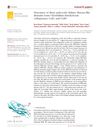
February 2015 in “Acta Crystallographica Section D: Structural Biology” This study reports that Ca 2+ binding alters the dynamics and surface properties of PKD-like domains in Clostridium histolyticum collagenases, enhancing their stability and potentially aiding in collagen-targeting vehicle development.
 6 citations
,
June 2022 in “Frontiers in Bioengineering and Biotechnology”
6 citations
,
June 2022 in “Frontiers in Bioengineering and Biotechnology” This study found that a hydrogel containing icariin enhanced wound healing and hair-follicle regeneration in vivo by promoting M2 macrophage polarization and modulating the BMP pathway, with treated skin defects showing improved recovery and new hair follicle development compared to untreated defects.
 May 2026 in “Nature Communications”
 In this study, a self-adaptive nanozyme embedded in a madecassoside-enriched hydrogel demonstrated strong antibacterial efficacy and accelerated healing in wounds infected with drug-resistant bacteria, as evidenced by improved repair and regeneration in MRSA-infected mice and preclinical pig models.
13 citations
,
January 2024 in “Journal of Nanobiotechnology” This research reported that a newly developed adhesive wound dressing (SIS/PAA/LAP) demonstrated higher tissue adhesion and burst strength compared to conventional products, and improved tissue repair outcomes in animal models, suggesting potential for enhanced wound healing applications.