 12 citations
,
November 2003 in “Journal of the American Academy of Dermatology”
12 citations
,
November 2003 in “Journal of the American Academy of Dermatology” This study found hair regrowth in the majority of AA-affected mice and rats treated with diphencyprone, suggesting its potential utility for understanding human alopecia areata and the drug's therapeutic action.
 11 citations
,
April 2024 in “Allergy Asthma and Clinical Immunology”
11 citations
,
April 2024 in “Allergy Asthma and Clinical Immunology” This study found compelling genetic evidence linking atopic and allergic conditions with the development of alopecia areata, suggesting a need for closer monitoring in affected individuals.
 11 citations
,
May 2023 in “Journal of Cutaneous Medicine and Surgery”
11 citations
,
May 2023 in “Journal of Cutaneous Medicine and Surgery” This study found that combining plasma rich in growth factors with conventional treatment significantly improved hair regrowth and reduced symptoms in patients with frontal fibrosing alopecia compared to conventional treatment alone.
 11 citations
,
July 2014 in “Gene”
11 citations
,
July 2014 in “Gene” This study reports a unique case of common variable immunodeficiency with autoimmunity linked to a heterozygous S250C variant in the autoimmune regulator gene, suggesting a potential molecular basis for this combination.
 11 citations
,
September 2013 in “Journal of The European Academy of Dermatology and Venereology”
11 citations
,
September 2013 in “Journal of The European Academy of Dermatology and Venereology” In this study, sensorineural hearing loss was significantly more frequent in patients with alopecia areata compared to healthy controls, suggesting a relationship between the autoimmune condition and hearing function.
 11 citations
,
November 2012 in “Seminars in Cutaneous Medicine and Surgery”
11 citations
,
November 2012 in “Seminars in Cutaneous Medicine and Surgery” This review summarizes current understanding and genetic insights into androgenetic alopecia, female pattern hair loss, and alopecia areata, noting the potential future role of molecular diagnostics, but it reports no new clinical results.
 11 citations
,
July 2008 in “International Journal of Dermatology”
11 citations
,
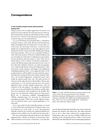
July 2008 in “International Journal of Dermatology” This article discusses a case of patchy alopecia areata that spares greying hairs but reports no new findings; it refers to existing literature for context.
 11 citations
,
March 2007 in “Digestive Diseases and Sciences”
11 citations
,
March 2007 in “Digestive Diseases and Sciences” The conditions alopecia areata, primary sclerosing cholangitis, and ulcerative colitis may be linked by shared autoimmune and cell death mechanisms.
 10 citations
,
January 2024 in “Polymer Chemistry”
10 citations
,
January 2024 in “Polymer Chemistry” This review discusses the design and advances of lipid–polymer hybrid nanoparticles as promising delivery systems for genome editing strategies, highlighting their potential in biomedical applications.
 10 citations
,
April 2020 in “Dermatology and therapy”
10 citations
,
April 2020 in “Dermatology and therapy” In this study of 35 patients with scalp alopecia areata, calcipotriol ointment led to faster and greater hair regrowth than clobetasol, though differences were not statistically significant.
 10 citations
,
December 2015 in “Clinics in Dermatology”
10 citations
,
December 2015 in “Clinics in Dermatology” This review highlights the eye and skin manifestations of endocrine-related metabolic diseases but provides no new clinical results.
 10 citations
,
September 2014 in “European Journal of Dermatology”
10 citations
,
September 2014 in “European Journal of Dermatology” This case report describes a 29-year-old woman with longstanding alopecia areata who experienced improvement in her scalp hair loss after 7 years of topical treatment with squaric acid dibutylester.
 10 citations
,
March 2014 in “Scandinavian journal of clinical and laboratory investigation”
10 citations
,
March 2014 in “Scandinavian journal of clinical and laboratory investigation” This study found that MDA-modified DNA may contribute to immune responses in alopecia areata patients by creating neo-epitopes, providing new insights into the condition's immunological mechanisms.
 9 citations
,
January 2022 in “Theranostics”
9 citations
,
January 2022 in “Theranostics” This review discusses the role of collagen XVII in maintaining stem cell niches and its impact on skin aging and wound repair, without reporting new clinical results.
 9 citations
,
July 2020 in “Journal of Dermatology”
9 citations
,
July 2020 in “Journal of Dermatology” This study found that diffuse and pseudo-fringe sign patterns are common in Asian patients with frontal fibrosing alopecia, and that treatments combining antiandrogens or antimalarials with topical therapy are effective.
 9 citations
,
January 2007 in “Gynecological Endocrinology”
9 citations
,
January 2007 in “Gynecological Endocrinology” This case report presents the first known instance of combined polycystic ovary syndrome and autoimmune polyglandular syndrome type 2 in a patient, exploring potential mechanisms for their interrelation.
 9 citations
,
May 2005 in “Expert Review of Clinical Immunology”
9 citations
,
May 2005 in “Expert Review of Clinical Immunology” This article examines anticytokine therapies for autoimmune diseases, highlighting the potential of anti-interferon-γ as a universal treatment for certain conditions and noting varying effectiveness of tumor necrosis factor-α inhibitors.
 8 citations
,
April 2015 in “British Journal of Dermatology”
8 citations
,
April 2015 in “British Journal of Dermatology” This report describes two cases of white piedra caused by Trichosporon inkin in a northern climate, detailing clinical findings and diagnosis without presenting new experimental results.
 7 citations
,
October 2024 in “Frontiers in Immunology”
7 citations
,
October 2024 in “Frontiers in Immunology” In this study, researchers prepared a humanized CXCL12 antibody for alopecia areata treatment, finding it significantly delayed disease onset in mice and reduced immune cell activation, suggesting potential as an immune modulatory therapy.
 7 citations
,
May 2020 in “Trends in molecular medicine”
7 citations
,
May 2020 in “Trends in molecular medicine” This study explored the immune environment of the hair follicle's bulge region and suggested that its unique signaling may prevent melanoma formation by lacking necessary proinflammatory signals for full oncogenic transformation, indicating potential strategies for melanoma prevention by replicating this immune-privileged environment.
 7 citations
,
November 2018 in “Journal of the American Academy of Dermatology”
7 citations
,
November 2018 in “Journal of the American Academy of Dermatology” This study aimed to characterize alopecia areata patients experiencing poliosis by comparing their clinical parameters to those without poliosis.
 7 citations
,
January 2009 in “Immunological investigations”
7 citations
,
January 2009 in “Immunological investigations” This report describes a rare case of alopecia areata universalis developing in a child during the recovery phase of phenobarbital-induced anti-convulsant hypersensitivity syndrome, which suggests a mechanism involving lymphocyte-related immune responses.
 6 citations
,
August 2020 in “Dermatology and Therapy”
6 citations
,
August 2020 in “Dermatology and Therapy” This study found that patients with alopecia areata had significantly lower serum vitamin D levels and higher odds of vitamin D deficiency, but no significant difference in serum calcium levels, compared to controls.
 6 citations
,
January 2019 in “Medical Hypotheses”
6 citations
,
January 2019 in “Medical Hypotheses” This hypothesis article explores frontal fibrosing alopecia as a potential autoimmune condition and calls for future research to investigate this possibility, but reports no new clinical results.
 6 citations
,
April 2017 in “Experimental dermatology”
6 citations
,
April 2017 in “Experimental dermatology” This study found that B6.CD80CD86−/− mice developed autoimmune-like alopecia with nearly 100% incidence by 40 weeks, making them a promising model for studying human alopecia areata.
 6 citations
,
December 2015 in “Medwave”
6 citations
,
December 2015 in “Medwave” This article presents a case of alopecia universalis linked to leflunomide use and reviews its application in rheumatoid arthritis treatment, highlighting potential adverse effects.
 6 citations
,
January 2015 in “Journal of the American Veterinary Medical Association”
6 citations
,
January 2015 in “Journal of the American Veterinary Medical Association” A 7-year-old dog with a rare autoimmune disease was euthanized due to severe anemia and poor prognosis.
 5 citations
,
May 2023 in “Frontiers in immunology”
5 citations
,
May 2023 in “Frontiers in immunology” This review discusses how environmental factors like lifestyle, nutrition, and vitamin deficiencies may influence autoimmune diseases such as MS, SLE, and AA, highlighting associations with vitamin D levels and dietary interventions, but notes a lack of conclusive evidence for their roles in disease pathogenesis.
 5 citations
,
February 2022 in “Frontiers in physiology”
5 citations
,
February 2022 in “Frontiers in physiology” This review discusses the role of various cells outside the hair follicle in regulating melanocyte stem cells and hair graying, but reports no new clinical results.
 5 citations
,
August 2015 in “Bioscience, Biotechnology, and Biochemistry”
5 citations
,
August 2015 in “Bioscience, Biotechnology, and Biochemistry” In this study, ob/ob mice were found to have a prolonged telogen hair cycle phase from 10 to 24 weeks, suggesting their potential as a model for studying telogen effluvium.