 July 2023 in “Anuradhapura Medical Journal”
 This study reported a high prevalence of dermatological conditions among university students in Sri Lanka, with self-reported acne being the most common and associated with significant psychological distress; more than half of the participants consulted a doctor for their skin issues.
 July 2023 in “Archives of Dermatological Research”
 Minoxidil may help with hair loss caused by cancer treatments.
 June 2023 in “International Journal of Research in Dermatology”
 In this study, Egyptian nodulocystic acne patients had significantly fewer CAG repeats in their androgen receptor gene compared to controls, which may influence acne development and suggest a role for antiandrogen therapy in treatment strategies.
 June 2023 in “Journal of Clinical Oncology”
 This study found that alopecia induced by CDK4/6 inhibitors in breast cancer patients occurs more quickly and is more resistant to minoxidil treatment compared to endocrine therapy-induced alopecia.
 August 2022 in “Frontiers in genetics”
 This study identified a novel bi-allelic missense variant in the DSC3 gene linked to severe Hypotrichosis with Recurrent Skin Vesicles in a Saudi child, supporting its role in the condition.
 July 2022 in “International Journal of Applied Pharmaceutics”
 This study concluded that the optimized caffeine-loaded nanostructured lipid carriers improved hair growth by enhancing permeation through skin layers more effectively than an existing market formula.
 March 2022 in “Research Square (Research Square)”
 This case report describes a 15-year-old girl with Alopecia Universalis and psychiatric conditions experiencing hair regrowth after self-medicating with cannabis, suggesting it may have therapeutic potential.
 November 2021 in “Research Square (Research Square)”
 This study optimized caffeine-loaded nanostructured lipid carriers for alopecia treatment, achieving enhanced skin permeation and promoting hair growth compared to a marketed formula, as shown through physiochemical evaluations and histological examination.
This study found that while Smilax aristolochiifolia continues to hold socio-economic importance within the Totonac culture in Puebla, low abundance and land use changes pose challenges to its conservation.
 April 2017 in “Medicina Clínica (english Edition)”
 This review discusses the diagnosis and management of acquired haemophilia and reports no new findings; the authors highlight the importance of early diagnosis to reduce mortality.
 January 2017 in “Egyptian Journal of Dermatology and Venereology”
 This study found that iron deficiency might play a role in the development of telogen effluvium in premenopausal women, highlighting the importance of checking hemoglobin in acute TE and serum ferritin in chronic TE.
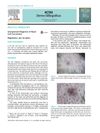 May 2015 in “Actas Dermo-Sifiliográficas”
 A young man was unexpectedly diagnosed with basal cell carcinoma after a scalp examination and confocal microscopy.
April 2022 in “Journal of advances in medicine and medical research” This study found that applying topical minoxidil 5% twice daily for 24 weeks increased hair density and width in men with androgenetic alopecia, although the change in clinical hair grading was not statistically significant.
 March 2009 in “International Journal of Dermatology”
 This study found no association between the androgen receptor gene and type II androgenetic alopecia in Egyptian women, suggesting it is not a useful biomarker for genetic predisposition.
238 citations
,
December 2022 in “Frontiers in Public Health” This review discusses ciprofloxacin resistance mechanisms in bacteria and explores new approaches, such as combining it with other antibacterial agents, to enhance its effectiveness against resistant infections.
198 citations
,
June 2013 in “Molecular psychiatry” This study found that schizophrenia-derived neurons exhibited impaired differentiation and mitochondrial dysfunction, suggesting a potential link between these factors and neurodevelopmental processes in schizophrenia.
171 citations
,
June 2004 in “Journal of Investigative Dermatology” GLI2 activates GLI1, promoting skin tumor growth and hair development.
 107 citations
,
August 2014 in “Dermatologic Surgery”
107 citations
,
August 2014 in “Dermatologic Surgery” This pilot study suggests injecting platelet-derived growth factors into the scalp may offer some clinical benefits for androgenetic alopecia, though further randomized trials are needed for confirmation.
100 citations
,
July 2006 in “British Journal of Dermatology” This study found that intralesional triamcinolone acetonide injections using a needleless injector led to rapid hair regrowth in patients with limited alopecia areata, while lasting growth was rare in alopecia totalis.
92 citations
,
May 2004 in “Journal of Investigative Dermatology” 82 citations
,
July 2022 in “Bioengineering & Translational Medicine” This review examines how biochemical and biophysical induction factors influence cell fate in tissue engineering and reports no new experimental results.
76 citations
,
February 2024 in “International Journal of Molecular Sciences” This review discusses the growing importance of hydrogel scaffolds in skin wound healing, highlighting their unique properties and recent advancements in their use for treating difficult tissue damage, particularly within tissue engineering.
72 citations
,
November 2017 in “Journal of developmental biology” This review discusses the role of Hedgehog signaling in epidermal and hair follicle development and its involvement in basal cell carcinoma, without reporting new empirical findings.
 68 citations
,
December 2014 in “Cell Biochemistry and Function”
68 citations
,
December 2014 in “Cell Biochemistry and Function” This review examines the role of nuclear hormone receptors in skin wound repair processes and reports no new clinical results, highlighting the importance of their interaction with skin cells for effective healing.
68 citations
,
April 2012 in “Digestive and Liver Disease” This study found that both Elental and 6-mercaptopurine were effective for maintaining remission in Crohn's disease, without a significant difference between them over 24 months.
 65 citations
,
January 2005 in “American journal of clinical dermatology”
65 citations
,
January 2005 in “American journal of clinical dermatology” This article reviews the diagnosis and treatment of tinea capitis in children, noting that newer antifungal agents can offer effective systemic therapy alongside supportive topical treatments; it reports no new clinical findings.
64 citations
,
March 2021 in “Anaesthesia” This review discusses the history and impact of iron deficiency anemia in women, highlighting its prevalence and the need for better detection and care, especially for those undergoing anesthesia.
48 citations
,
November 2018 in “Journal of dermatological treatment” In a study reviewing 291 patients with lichen planopilaris, findings revealed that women were more commonly affected than men, cyclosporine and methotrexate were most effective in achieving remission, and 5-alpha reductase inhibitors and systemic retinoids were particularly beneficial for frontal fibrosing alopecia.
46 citations
,
June 2013 in “Journal of structural biology” This study suggests that the mechanical robustness of hair may be enhanced by the binding interactions of keratin-associated proteins, particularly KAP8.1, with intermediate filament proteins.
 46 citations
,
May 2012 in “Molecular and Cellular Endocrinology”
46 citations
,
May 2012 in “Molecular and Cellular Endocrinology” In this study, higher expression levels of aromatase and steroidogenic acute regulatory protein were correlated with increased estrogen synthesis and fewer hair follicles in human skin, suggesting a link to elastic fiber formation and hair growth.