5 citations
,
May 2024 in “BMC Biotechnology” This study found that using three-dimensional cell culture with Matrigel enhances the biological function and stemness of stem cells, leading to improved soft tissue repair and healing by activating the host microenvironment and autologous stem cells.
2 citations
,
June 2020 in “Journal of Investigative Dermatology” This article reviews the steps and methods involved in preparing skin tissues for three-dimensional volumetric imaging, highlighting its potential to provide detailed insights into skin structure not possible with traditional 2D histology, but reports no new findings.
 10 citations
,
January 2013 in “Stem Cells and Development”
10 citations
,
January 2013 in “Stem Cells and Development” This study suggests that dermal stem/progenitor cells can be enriched by intracellular granularity and display high proliferation and differentiation potential in vitro, distinguishing them from other fibroblasts and progenitors.
July 2022 in “Institutional Repositories DataBase (IRDB)” 3D spheroid cells effectively test hair growth compounds like Minoxidil.
 April 2017 in “Plastic and reconstructive surgery. Global open”
 In this study with a rat muscle defect model, decellularized muscle matrix demonstrated better integration, neovascularization, and myogenesis compared to commercially available acellular dermal matrices, and also showed trends toward reduced inflammation and fibrosis after 30 and 60 days.
October 2022 in “Hair Transplantation” This article discusses tools for measuring hair density in donor areas to guide hair transplant surgery and reports no new clinical results; the authors emphasize the role of digital imaging in achieving consistent outcomes.
1 citations
,
July 2025 in “Biomaterials Advances” This study investigated how 2D and 3D cell culturing methods influence hair follicle morphogenesis, finding that 3D cultures responded more expectedly to minoxidil while 2D cultures reacted better to DHT treatment, challenging the assumption that 3D cultures are always superior.
17 citations
,
February 2023 in “Cosmetics” This study explores the use of bioinspired 3D printed hollow microneedles, which may offer improved delivery of anti-wrinkle formulations, and reviews the current landscape and challenges of existing wrinkle treatments and microneedle technology.
January 2025 in “SSRN Electronic Journal” April 2025 in “Journal of Biophotonics” This study found that 808 nm laser photobiomodulation altered mitochondrial respiration and enhanced osteogenic protein expression in human dental pulp stem cells, with the effects being dose-specific and more pronounced at 15 J/cm².
August 2026 in “Materials & Design” This study developed a multifunctional 3D-printed hydrogel scaffold, SH-EGCG, that showed promising results for repairing infected diabetic wounds; in lab and animal tests, it demonstrated antibacterial activity, enhanced wound healing, and improved tissue regeneration and remodeling through various supportive mechanisms.
17 citations
,
May 2025 in “MedComm” This review highlights how organoid technology is transforming precision medicine by summarizing its development and applications in modeling diseases, testing drug efficacy, and tailoring patient-specific treatments, despite current challenges in standardization and ethical considerations.
40 citations
,
June 2019 in “Biochemical and Biophysical Research Communications” This study demonstrated that combining the Wnt/β-catenin activator CHIR99021 with 3D spheroid culture effectively enriched hair follicle formation in reconstituted human skin.
 1 citations
,
February 2024 in “Journal of nanobiotechnology”
1 citations
,
February 2024 in “Journal of nanobiotechnology” This review explores how combining extracellular vesicles with hydrogels and utilizing 3D bioprinting technologies creates innovative composite systems for wound healing, offering advanced mechanical and biological support, while addressing challenges like degradation and regulatory issues in clinical applications.
 1 citations
,
September 2019 in “Journal of Investigative Dermatology”
1 citations
,
September 2019 in “Journal of Investigative Dermatology” This study found that combining human dermal papilla fibroblasts with hair matrix cells formed organoids capable of limited hair follicle development in ex vivo skin, but not fully formed hair follicles.
This study found that in beagles with benign prostate hyperplasia, finasteride treatment increased blood volume and decreased vessel leakiness in the prostate's parenchymal zone as shown by dynamic contrast-enhanced MRI.
 3 citations
,
June 2023 in “Nano today”
3 citations
,
June 2023 in “Nano today” This study reported that bioinks containing calcium molybdate nanoparticles and dermal papilla cells can promote hair regrowth in vivo by creating an anti-inflammatory environment and activating the mTOR signaling pathway in macrophages.
 3 citations
,
September 2023 in “Advanced science”
3 citations
,
September 2023 in “Advanced science” Researchers demonstrated that a new vaccine platform using antigen-loaded hydrogels enhanced humoral immune responses in mice, producing stronger antigen-specific antibody levels compared to the conventional adjuvant Alum, and offering promising protective capabilities against influenza virus.
125 citations
,
March 2017 in “Micromachines” This review highlights recent advancements in microfluidics for 3D tissue model generation and discusses its applications in tissue engineering and high-throughput drug screening without reporting new experimental results.
 1 citations
,
January 2022 in “Electronic Imaging”
1 citations
,
January 2022 in “Electronic Imaging” This study introduces a novel method for digitizing hair color that accurately captures and renders the color appearance of physical hair samples in synthetic images.
 58 citations
,
March 2019 in “Experimental Dermatology”
58 citations
,
March 2019 in “Experimental Dermatology” This study suggests that exosomes derived from dermal papilla cells, especially those cultured in three dimensions, promote hair growth and regeneration by enhancing follicular cell activity.
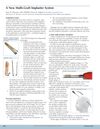 2 citations
,
May 2018 in “International Society of Hair Restoration Surgery”
2 citations
,
May 2018 in “International Society of Hair Restoration Surgery” The new system makes hair transplants faster and more precise.
 31 citations
,
August 2019 in “Regenerative Medicine”
31 citations
,
August 2019 in “Regenerative Medicine” This study found that the human placenta extracellular matrix hydrogel restored the hair-inductive capacity of high-passaged dermal papilla cells, enabling them to regenerate new hair follicles when co-grafted with mouse epidermal cells.
1 citations
,
July 2025 in “Cancer Medicine” This study observed that colorectal cancer tumoroids adapted to an environment without a matrix by developing disordered self-assembly, but their tumor-specific phenotypes and drug sensitivity remained unchanged.

In this study, researchers optimized the culture strategy for dermal papilla cells and established a promising immortalized cell strain, iDP6, which resembles primary DP cells and is suitable for further research applications.
 November 2022 in “Journal of Investigative Dermatology”
 This study found that non-balding dermal papilla cells emphasized extracellular matrix organization and reduced inflammation when cultured in 3D or with adipose-derived stem cells, unlike balding cells which maintained inflammatory pathways.
10 citations
,
August 2021 in “Frontiers in cell and developmental biology” This study suggests the possibility of regenerating hair follicle structures in vitro using hiPSC-derived cell composites, which might reduce reliance on human tissue-derived cells for hair bioengineering.
13 citations
,
August 2024 in “iScience” This study found that 3D spheroid culture reprogrammed mesenchymal stem cells into a uniform immunosuppressive phenotype, suggesting potential therapeutic applications for inflammatory diseases like psoriasis.
December 2025 in “Advanced Healthcare Materials” This study introduces a spherical skin model that effectively mimics key features of human skin, offering a scalable and rapid alternative for non-animal dermatological and cosmetic testing.
26 citations
,
June 2023 in “International Journal of Bioprinting” In this study, an innovative composite hydrogel incorporating methylene blue-loaded nanoparticles was developed for 3D-printed wound dressings, showing improved mechanical properties, excellent antibacterial effects, and enhanced skin healing in mice.