2 citations
,
January 2020 in “Skin Appendage Disorders” This report presents a case where multiple steatocystomas appeared in a psoriatic patient during ustekinumab treatment, suggesting the drug may unmask a genetic predisposition to steatocystoma multiplex.
 1 citations
,
September 2025 in “Dermatology and Therapy”
1 citations
,
September 2025 in “Dermatology and Therapy” This review suggests that glucagon-like peptide 1 receptor agonists (GLP-1 RAs) have potential benefits for dermatologic conditions but may also cause adverse skin reactions and impact surgical outcomes.
1 citations
,
January 2024 in “Pediatric Dermatology” In this case study, a 12-year-old boy with a restricted diet exhibited symptoms of scurvy, including leg weakness and bruising, which improved following treatment with vitamin C and B12 supplements, highlighting the impact of severe vitamin deficiencies on health.
 1 citations
,
October 2023 in “Egyptian Journal of Immunology”
1 citations
,
October 2023 in “Egyptian Journal of Immunology” This study found that women with PCOS had significantly higher levels of the pro-inflammatory chemokine MIP-1α compared to controls, suggesting an association with low-grade chronic inflammation, though the increase in MIP-1β levels did not reach statistical significance.
 1 citations
,
July 2023 in “International Journal of Molecular Sciences”
1 citations
,
July 2023 in “International Journal of Molecular Sciences” This study found that a hypoxic microenvironment enhanced the proliferation and pluripotency of adipose mesenchymal stem cells, promoting hair follicle formation and upregulating specific growth factors in Arbas Cashmere goats.
 1 citations
,
February 2023 in “International Journal of Molecular Sciences”
1 citations
,
February 2023 in “International Journal of Molecular Sciences” This study found that exogenous melatonin improved cashmere fiber quality and yield in goats by enhancing antioxidant capacity and reducing pro-aging cytokine expression in secondary hair follicles.
1 citations
,
February 2023 in “Russian Journal of Bioorganic Chemistry” In an animal study, researchers observed that a newly synthesized deoxycholic acid derivative showed similar prostate protection effects to finasteride in Wistar rats while being less toxic.
1 citations
,
January 2023 in “Science Advances” This study found that bacterially induced metabolic changes in stem cells can enhance skin and hair follicle regeneration in both mice and humans, suggesting potential strategies for improving recovery after injury.
 1 citations
,
September 2022 in “Journal of dermatological science”
1 citations
,
September 2022 in “Journal of dermatological science” This study found that a combination of vitamins in hair care products promoted hair shaft elongation in a mouse model by activating the PlGF/VEGFR-1 signaling pathway.
 1 citations
,
October 2021 in “Clinical, Cosmetic and Investigational Dermatology”
1 citations
,
October 2021 in “Clinical, Cosmetic and Investigational Dermatology” In this study on cultured human dermal papilla cells, researchers found that niacinamide may enhance hair growth by reducing oxidative stress-induced cell senescence and delaying catagen entry, suggesting potential applications against hair loss.
1 citations
,
July 2021 in “Clinical Cosmetic and Investigational Dermatology” This case study reports a misdiagnosis of secondary syphilis with probable neurosyphilis as PLEVA in a 12-year-old, highlighting the importance of considering syphilis in patients with unusual symptoms.
1 citations
,
April 2021 in “IntechOpen eBooks” This review examines genetic variation in the ovine KRTAP1.1 gene and its potential impact on wool quality, reporting no new findings but suggesting opportunities for developing gene markers for wool and pelt traits.
 1 citations
,
September 2017 in “Journal of Investigative Dermatology”
1 citations
,
September 2017 in “Journal of Investigative Dermatology” This study reported that introducing the TERT and Bmi1 genes into mouse dermal papilla cells resulted in immortal cells capable of inducing new hair follicles in vivo, and human immortal DPCs were also developed.
 1 citations
,
July 2012 in “Nasza Dermatologia Online”
1 citations
,
July 2012 in “Nasza Dermatologia Online” This study found that patients with alopecia areata had significantly higher serum levels of IL-1α compared to healthy controls, with no significant difference observed in IL-1β levels.

This study found that Plakophilin 1 regulates innate immune responses in keratinocytes by controlling RNA helicase activity, balancing inflammation during epidermal immune challenges.

This study found that melatonin upregulates LncRNA16913.1, which sequesters chi-miR-195-5p to release FZD6 and enhance fibroblast proliferation in cashmere goat skin, suggesting a regulatory mechanism within the lncRNA-miRNA-mRNA cascade in vitro.
 June 2026 in “Oriental Journal Of Chemistry”
 This research found that a novel dehydroepiandrosterone derivative (12) significantly reduces cell viability and increases apoptosis in testosterone-stimulated normal and tumor prostate cells, unlike finasteride and dutasteride, which also showed activity under dihydrotestosterone stimulation.
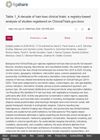
This study analyzed hair-loss clinical trials from 2015 to 2025 and found that, while the number of registrations increased globally, research activity was concentrated in certain regions and varied in therapeutic approaches and outcome specifications.
May 2026 in “Dermatologic Surgery” This study reports conflicting evidence on whether GLP-1 receptor agonists are associated with various forms of alopecia, suggesting dermatology practitioners should consider monitoring and counseling patients using these medications.
 April 2026 in “Inflammopharmacology”
 This study found that Punica granatum ethanolic leaf extract may alleviate skin fibrosis in rats by modulating inflammation-related pathways and reducing dermal alterations.
 April 2026 in “Open MIND”
 This review article discusses the aesthetic impacts of GLP-1 medications like Ozempic (semaglutide), including "Ozempic Face," skin sagging, and loss of lean mass, and explores potential recovery methods such as biostimulators, HIFU, endolaser, and PRP.
 March 2026 in “European Journal of Medical and Health Research”
 In this case-control study, researchers observed that women with female pattern hair loss exhibited significantly lower serum IGF-1 levels than controls, while IGFBP-3 levels showed no significant difference, suggesting a potential role for IGF-1 in the condition.
 March 2026 in “Molecules”
 In this laboratory study, researchers reported that Camellia sinensis seed flavonoids significantly reduced oxidative stress and inflammation in UV-irradiated skin cells by modulating key signaling pathways, highlighting its potential as a skincare ingredient for anti-inflammatory and anti-photoaging benefits.
 February 2026 in “Skin Appendage Disorders”
 This study found that scalp microinfusion with dutasteride using microneedling and tattoo devices appears safe and shows promise as a treatment for male androgenetic alopecia, resulting in stabilization or improvement in 96.7% of patients, although further controlled studies are needed.
 December 2025 in “Naunyn-Schmiedeberg s Archives of Pharmacology”
 In this animal study, AGO (agomelatine) effectively alleviated testosterone-induced benign prostatic hyperplasia in rats by reducing oxidative stress and inflammation, indicating its potential as a therapeutic option for managing BPH through specific signaling pathways.
 November 2025 in “SKIN The Journal of Cutaneous Medicine”
 This study aims to assess the real-world effectiveness of baricitinib, a JAK inhibitor, for promoting regrowth of nasal, genital, and beard hair in patients with severe alopecia areata, expanding on findings from the BRAVE-AA clinical trial. Results are not reported.
 November 2025 in “International Journal of Science and Research (IJSR)”
 This article reviews the causes and prevalence of telogen effluvium and notes successful cases treated with homoeopathic medicines, but it provides no new clinical results.
 November 2025 in “Molecular and Cellular Biomedical Sciences”
 This study found no significant association between the MMP-1 gene polymorphisms rs1799750 and androgenetic alopecia in the sample population.
 October 2025 in “EMJ Dermatology”
 This study found that glucagon-like peptide-1 receptor agonist therapy was independently associated with an increased incidence of non-scarring hair loss, including telogen effluvium and androgenic alopecia, in adults but not alopecia areata.
 September 2025 in “Cureus”
 This review suggests that GLP-1 receptor agonists may improve various dermatologic conditions, but larger studies are needed to confirm these findings.