 April 2025 in “Pharmacognosy Magazine”
 In this study, researchers found that Compound Baqian Danshen Liniment may improve vitiligo in mice by promoting melanocyte activity and reducing inflammation and oxidative stress.
1 citations
,
January 1989 in “Carcinogenesis” This study found that dexamethasone treatment inhibited the inflammatory response and the induction of ornithine decarboxylase activity in mouse skin after TPA application, although the effect on ODC was weaker during the hyperplastic stage.
18 citations
,
July 2016 in “Genetica” This study found that in Liaoning cashmere goats, the BMP4 gene shows increased transcription from the anagen stage to telogen, and higher gene methylation correlates with reduced expression in skin tissue.
 October 2025 in “Animal Bioscience”
 This review summarizes the application of genome wide association studies and selection signature analyses in sheep and goat breeding in China, highlighting genomic regions that influence traits like reproductive performance and body size.
 December 2022 in “Journal of complementary medicine & alternative healthcare”
 This case report describes significant improvement in adolescent alopecia with a 10-month regimen of traditional Chinese medicine, including oral and external treatments.
 April 2025 in “Frontiers in Animal Science”
 In this study, researchers found that circulating exosomes from different sheep breeds can significantly alter hair growth in mice, with the source of exosomes influencing hair follicle size and hair diameter, as well as expression of specific hair growth and melanin synthesis markers.
3 citations
,
August 2024 in “Molecular Biology Reports” This study found that the lncRNA018392, responsive to melatonin, accelerates cell proliferation in cashmere goats by recruiting the transcription factor SPI1 to upregulate the nearby gene CSF1R, which may explain the molecular mechanisms of cashmere growth.
14 citations
,
June 2021 in “British Journal of Dermatology” This article discusses the BIOMAP consortium's efforts in standardizing data for atopic dermatitis and psoriasis research to facilitate personalized medicine, but it presents no new research findings.
 17 citations
,
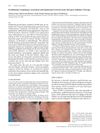
January 2010 in “Acta Dermato Venereologica”
17 citations
,
January 2010 in “Acta Dermato Venereologica” This report details a case of a 43-year-old woman developing yellowish papular eruptions alongside typical acneiform skin reactions on her cheeks and chest following a switch from cetuximab to panitumumab treatment.
7 citations
,
January 2023 in “Journal of Animal Science” This study found that the miRNA chi-miR-877-3p affects hair follicle cycles in Jiangnan cashmere goats by regulating IGFBP5 gene expression and cell proliferation.
 8 citations
,
September 2016 in “Asian journal of beauty & cosmetology”
8 citations
,
September 2016 in “Asian journal of beauty & cosmetology” In this study, the methanol-ultrasound extract of Dendropanax morbifera leaf showed potential for use in functional cosmetics and hair growth products due to its high antioxidant capacity and effects on growth factor expression without cytotoxicity.
 7 citations
,
September 2024 in “BMC Genomics”
7 citations
,
September 2024 in “BMC Genomics” In this study, whole-genome sequencing of Lanping black-boned sheep identified ERBB4 and ROR1 genes as potentially important in their distinctive hyperpigmentation, enhancing understanding of their genetic evolution from Lanping normal sheep.
 December 2025 in “Scientific Reports”
 In this study, researchers observed that DHEA-induced PCOS rats experienced significant changes in gut microbiota and metabolic profiles, particularly affecting steroid and lipid metabolism, suggesting the gut-ovary axis may play a role in the pathogenesis of PCOS.
253 citations
,
April 2009 in “Journal of Biological Chemistry” This study found that p2y5 functions as a novel LPA receptor involved in the G13-Rho signaling pathway, with implications for human hair growth, and proposes renaming it to LPA6.
2 citations
,
July 2025 in “Analytical Chemistry” This study reported the development of a workflow that combines SIMS and X-ray elemental mapping techniques for multimodal imaging at the single cell level, successfully applied to visualize elements, metals, and lipids in porcine skin without loss or delocalization.
6 citations
,
February 2023 in “Genes” This study found that overexpression of the CUX1 protein promotes proliferation of Hu sheep dermal papilla cells and affects key genes in the Wnt/β-catenin signaling pathway.
6 citations
,
July 2024 in “Journal of Cosmetic Dermatology” In this study, researchers found that a composition containing mannose-6-phosphate significantly reduced the total skin pore area by 24% in women after 56 days and by 30.2% in men after 7 days, suggesting its effectiveness in improving pore appearance by targeting dermal and epidermal modifications.
4 citations
,
May 2025 in “Cells” This study found that miR-370-3p targets SMAD4 to inhibit cell proliferation, promote apoptosis, and affect the cell cycle in follicular papilla cells, demonstrating differences in their expression in sheep tissues, which may impact hair follicle development.
12 citations
,
May 2023 in “Molecules” This study identified seven potential enzyme inhibitors from a Polygonum cuspidatum extract using ultrafiltration combined with high-performance liquid chromatography. These compounds showed inhibitory activity against tyrosinase, α-glucosidase, and xanthine oxidase, with most discovered in this extract for the first time.
5 citations
,
April 2022 in “Genes” In Angora rabbits, overexpression of miR-129-5p was found to induce apoptosis and inhibit proliferation of dermal papilla cells, highlighting its role in hair follicle development by targeting HOXC13.
 6 citations
,
January 2011 in “Journal of pediatric endocrinology & metabolism/Journal of pediatric endocrinology and metabolism”
6 citations
,
January 2011 in “Journal of pediatric endocrinology & metabolism/Journal of pediatric endocrinology and metabolism” This report details the case of an 11-year-old girl with APECED syndrome carrying a unique homozygous mutation in the AIRE gene, the first of its kind documented.
 January 2026 in “Frontiers in Medicine”
 This study found that acupuncture may reduce anxiety and depression in women with polycystic ovary syndrome, potentially through hormonal and neuroendocrine modulation, but further high-quality research is needed to confirm these findings.
14 citations
,
November 2024 in “International Journal of Molecular Sciences” This review summarizes existing evidence on how YAP and TAZ proteins are activated in epidermal keratinocytes and their role in coordinating with other signaling molecules to control transcription and influence epidermal cell fate, highlighting their importance beyond the Hippo pathway.
September 2024 in “Journal of the American Academy of Dermatology”  7 citations
,
September 2004 in “대한의생명과학회지”
7 citations
,
September 2004 in “대한의생명과학회지” This study suggests that a topical oriental medicine extract may improve hair density and scalp condition in individuals experiencing male pattern hair loss after 18 months of use.
January 2025 in “LUMEN ET VIRTUS” In this study, a case of alopecia X in a male, uncastrated German Spitz dog was successfully managed with orchiectomy and melatonin, leading to partial hair regrowth and improved dermatological condition after 90 days of treatment.
 October 2025 in “Open Repository of the University of Porto (University of Porto)”
 Dutasteride is more effective than finasteride for hair growth, and sublingual apomorphine quickly improves Parkinson's symptoms.
 9 citations
,
July 2022 in “Cell reports”
9 citations
,
July 2022 in “Cell reports” This study found that Sox2 within dermal papilla cells in the hair follicle regulates hair pigmentation, influencing the type and production of melanin.
 1 citations
,
December 2017 in “Anais Brasileiros de Dermatologia”
1 citations
,
December 2017 in “Anais Brasileiros de Dermatologia” This article discusses the DOAJ, a comprehensive index of international open access journals, and emphasizes its role in providing free quality content online without presenting new research findings.
 3 citations
,
January 2017 in “Evidence-based complementary and alternative medicine”
3 citations
,
January 2017 in “Evidence-based complementary and alternative medicine” This study found that Galla chinensis solution significantly improved skin lesions and fungal eradication in dermatophytosis-infected dogs, showing over 85% efficacy in fungal removal after 14 days and outperforming the positive control treatment.