55 citations
,
December 2021 in “BMC Veterinary Research” This study identified several candidate genes related to wool production traits and adaptation to hot, arid environments in Iranian sheep, highlighting potential targets for future inbreeding programs.
17 citations
,
May 2018 in “BMC genomics” This study found that miR-432 inhibits KRT83 expression, revealing potential molecular mechanisms for the formation of curly fleece in Tan sheep and suggesting implications for understanding curly hair formation in humans.
 9 citations
,
February 1981 in “Australian journal of biological sciences”
9 citations
,
February 1981 in “Australian journal of biological sciences” This study found that crossbred lambs fed liquid diets with reconstituted cow's milk initially grew wool without crimp, with crimp resuming two weeks post-weaning.
July 2020 in “Faculty Opinions – Post-Publication Peer Review of the Biomedical Literature” March 2021 in “Annals of palliative medicine” This meta-analysis found that plum-blossom needling, as an add-on therapy, provided moderate beneficial effects on hair regrowth in alopecia areata patients compared to conventional treatment alone.
July 2026 in “Materials Today Bio” This study demonstrated that in a mouse melanoma wound model, the MQ Microneedles effectively managed ROS levels to inhibit tumor growth and promote wound healing through light-controlled release.
 3 citations
,
December 2016 in “KSBB Journal”
3 citations
,
December 2016 in “KSBB Journal” This study found that a herbal medicine increased hair growth in a mouse model, showing strong antioxidant activity and similar 5-alpha-reductase inhibition to finasteride without cytotoxicity in human dermal papilla cells.
December 2013 in “대한피부미용학회지” In this study, wheat sprout extract (fr. 5) application was associated with increased hair growth in C57BL/6 mice, suggesting its potential as a hair remedy product.
18 citations
,
January 1965 in “Stain Technology” This study describes a double embedding technique for preparing tangential sections of hair and wool fibers, recommending specific staining methods for quantitative analysis and demonstrating wool fiber cortical fractions.
August 2009 in “PHARMACY: Jurnal Farmasi Indonesia (Pharmaceutical Journal of Indonesia)” This study concluded that ethanolic extract of Morinda may enhance hair growth in male rabbits.
 13 citations
,
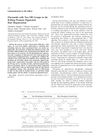
August 2019 in “Biological & Pharmaceutical Bulletin”
13 citations
,
August 2019 in “Biological & Pharmaceutical Bulletin” This study found that flavonoids with two hydroxyl groups in their B-ring, such as sterubin and luteolin, supported the regeneration of pigmented hair after skin injury, unlike those with one hydroxyl group.
 28 citations
,
May 2017 in “Molecular ecology”
28 citations
,
May 2017 in “Molecular ecology” This study observed that in wild snowshoe hares, gene expression patterns during seasonal coat color change show a consistent lag between gene expression and visible coat color changes.
49 citations
,
January 2017 in “Oxidative Medicine and Cellular Longevity” In this study, the alcoholic extract of Eclipta alba demonstrated significant anticancer activity in vitro by inducing apoptosis in breast cancer cell lines and showed strong antioxidant properties.
1 citations
,
April 2024 in “Pathogens” This study observed mycobacterial infection with M. xenopi in a pet ferret, noting its resistance to doxycycline, and highlighted the potential zoonotic transmission risk associated with such infections.
January 2008 in “Asian-Australasian Journal of Animal Sciences” In this study, red deer antler extract was found to promote hair growth and increase IGF-I expression in a rat wound healing model.
March 1956 in “Institutional Repositories DataBase (IRDB)” 14 citations
,
March 2018 in “The American journal of case reports” This study highlights the phenotypic variability in 5 patients with Woodhouse-Sakati syndrome carrying the c.436delC mutation, suggesting a broader range of clinical presentations than previously recognized.
November 2025 in “Skin Health and Disease” This case series describes eight instances of autosomal recessive woolly hair in an Indian population over the past 12 years, detailing their clinical presentation, hair traits, and treatment response.
 6 citations
,
January 2021 in “Cellular and Molecular Biology”
6 citations
,
January 2021 in “Cellular and Molecular Biology” This study found that grape pomace from Georgian winemaking contains significant tocopherols and antioxidant activity, suggesting it could be a valuable resource for the pharmaceutical and food industries.
November 2025 in “Plant Foods for Human Nutrition” April 2025 in “OPAL (Open@LaTrobe) (La Trobe University)” This study investigated the impact of circulating exosomes from Xinji fine-wool and small-tailed Han sheep on hair growth in mice, finding that these exosomes influenced hair follicle development and melanin synthesis, with differences noted in hair follicle and hair diameters between different exosome treatments.
October 2025 in “OPAL (Open@LaTrobe) (La Trobe University)” In a study on secondary hair follicle stem cells from Arbas cashmere goats, researchers found that 10 μg/mL quercetin for 48 hours enhances cell proliferation and inhibits apoptosis through multiple signaling pathways, potentially improving cashmere production.

This study found that soups with 5% and 10% hibiscus flower were more desirable in sensory attributes and had higher β-carotene content compared to the control soup.
 1 citations
,
April 2017 in “Journal of Investigative Dermatology”
1 citations
,
April 2017 in “Journal of Investigative Dermatology” This study found that the novel IPC analog SIG-1451 may inhibit inflammatory cytokine release in cell-based assays relevant to allergic dermatitis.
4 citations
,
December 2019 in “Trials” This study aims to evaluate the effectiveness of YH0618 granules in preventing chemotherapy-induced hair loss in breast cancer patients through a randomized, double-blind, multi-center clinical trial, focusing on potential mechanisms related to kidney deficiency as understood in Chinese Medicine. Results are not yet reported.
January 2010 in “대한미용학회지” This study observed that Polygoni mulitiflori Radix water extracts accelerated hair regrowth in mice by enhancing enzyme activities and increasing IGF-1 gene expression related to hair growth.
January 2013 in “Wageningen Academic Publishers eBooks” This study explored proteomics to investigate protein changes during protein synthesis and keratinization in maturing wool fiber, but the relationship to fibre development remains largely unknown.
 7 citations
,
May 2022 in “PLOS ONE”
7 citations
,
May 2022 in “PLOS ONE” This study found that Hetian sheep with higher wool density produce more and finer wool, with key genes potentially influencing their wool growth and density.
July 2024 in “Journal of Investigative Dermatology” Linalool in fragrances may harm hair follicles and contribute to hair loss.
Linalool in personal care products may worsen frontal fibrosing alopecia by damaging hair follicle stem cells and triggering harmful immune responses.