 6 citations
,
January 2016 in “Springer eBooks”
6 citations
,
January 2016 in “Springer eBooks” Invasomes effectively deliver drugs through the skin and have potential for improved treatments.
 November 2021 in “Revista Ibero-Americana de Humanidades, Ciências e Educação”
 This paper evaluates the therapeutic response of androgenetic alopecia to topical application of specific compounds using digital drug delivery but reports no new clinical results.
 June 2026 in “International Journal of Molecular Sciences”
 This review discusses the potential benefits and challenges of using extracellular vesicles in aesthetic medicine but reports no new clinical results, highlighting the need for rigorous validation and stronger regulatory oversight.
56 citations
,
June 2002 in “Biomaterials” This study found that controlled release of VEGF via a collagen hydrogel promoted hair follicle growth and cell proliferation in mice more effectively than free VEGF injections.
January 2026 in “The FASEB Journal” This upcoming clinical trial at Shenzhen People's Hospital will explore the safety and efficacy of human umbilical cord mesenchymal stem cell-derived small extracellular vesicles as a treatment for androgenetic alopecia in young men, comparing them to minoxidil. Results are not reported yet.
 9 citations
,
October 2013 in “Drug Delivery”
9 citations
,
October 2013 in “Drug Delivery” This research found that ethosomes significantly enhanced finasteride delivery into the dermis of human cadaver skin compared to liposomes in an in vitro study.

This review of SVF treatment for androgenetic alopecia found a significant increase in hair density across studies with no serious adverse events, but calls for standardized protocols and further research.
December 2007 in “대한피부과학회지” This study found that while the new cytopurine/pentadecanoic glyceride topical solution significantly improved total hair and daily shed hair counts in AGA patients, it did not show significant differences compared to placebo in other measures.
 July 2025 in “ACS Applied Materials & Interfaces”
 This study found that combining ultrasound with a GelMA hydrogel able to deliver mesenchymal stem cell-derived vesicles significantly improved wound healing in a mouse model by enhancing fibroblast activity, promoting re-epithelialization, and facilitating hair follicle regeneration, highlighting a novel approach to skin regeneration therapy.
6 citations
,
August 2020 in “International Research Journal on Advanced Science Hub” In this study, researchers developed a niosomal gel system for transdermal delivery of testosterone, reporting strong penetrative capability, good spreadability, and a promising in vitro drug release profile, suggesting it may be an effective alternative for reducing the side effects of steroid treatments.
May 2025 in “OPAL (Open@LaTrobe) (La Trobe University)” This study found that the multifunctional exosome-based delivery platform EX104 reversed hair follicle miniaturization and promoted hair growth in a mouse model of androgenetic alopecia, performing comparably to minoxidil while also enhancing capillary growth and follicular proliferation.
 March 2018 in “International Pharmacy Acta”
 This study concluded that niosomes could effectively serve as stable carriers for topical aminexil delivery, showing promising stability and a slow, biphasic release profile in laboratory settings.
 April 2018 in “Journal of Investigative Dermatology”
 This study found that Anigozanthos Flavidus flower extract may improve skin elasticity and reduce wrinkles by increasing essential extracellular matrix proteins in both in vitro and in vivo settings.
January 2007 in “Journal of Clinical Dermatology” This study found that the new cytopurine/pentadecanoic glyceride topical solution significantly improved total hair count and reduced daily hair shedding in patients with androgenetic alopecia over 16 weeks, although other measures did not differ from placebo.
 August 2026 in “Journal of Nanobiotechnology”
 In testosterone-induced AGA mouse models, this study found that a dual-drug-loaded cationic nanoemulsion of minoxidil and finasteride enhanced follicle-associated retention, supporting hair regeneration while reducing systemic absorption and showing good skin compatibility, indicating a promising approach for androgenetic alopecia treatment.
 April 2026 in “International Journal of Drug Delivery Technology”
 This review concluded that while topical prostaglandin analogues show some potential in treating androgenetic alopecia, evidence is still limited and no products have regulatory approval.
 24 citations
,
January 2003 in “Drug Delivery”
24 citations
,
January 2003 in “Drug Delivery” This study found that only minoxidil encapsulated in cationic vesicles significantly promoted hair growth in mice, likely due to its higher retention on the skin.
This study found that using Labrasol® in phospholipid vesicle formulations improved minoxidil's skin delivery and local accumulation, showing potential for treating hair growth disorders.
29 citations
,
December 2021 in “Pharmaceutics” This review discusses the use of phospholipid soft vesicle carriers to improve the delivery and therapeutic outcomes of topical treatments for various skin conditions, but reports no new clinical results.
September 2025 in “Pharmaceutics” In this study, quercetin nanocrystals stabilized with glycyrrhizic acid were developed as a new treatment strategy for androgenetic alopecia, which significantly reduced DHT levels and improved hair regrowth in a mouse model, indicating synergistic potential for clinical application.
 August 2025 in “International Journal of Pharmaceutical Sciences and Nanotechnology”
 This study formulated a minoxidil nanoemulgel with improved solubilization and skin penetration, demonstrating a high entrapment efficiency and sustained drug release in vitro, which suggests potential improvements in treating androgenetic alopecia compared to conventional formulations.
 August 2023 in “European journal of dermatology/EJD. European journal of dermatology”
 This study reported that therapeutic make-up significantly improves the long-term quality of life for patients with facial dermatoses, showing a sustained benefit one year after application, particularly in younger patients.
 October 2004 in “Australian Prescriber”
 This review discusses the lack of long-term clinical studies on metformin's cardiovascular benefits in women with polycystic ovary syndrome, highlighting lifestyle changes as a crucial management strategy for reducing associated risks.
 15 citations
,
February 2013 in “Pharmaceutical nanotechnology”
15 citations
,
February 2013 in “Pharmaceutical nanotechnology” This study found that invasomes enhanced the iontophoretic transdermal delivery of finasteride in rabbits, increasing AUC and T1/2 compared to oral suspension.
December 2022 in “Clinical and experimental dermatology and therapies” In this study, the addition of a topical gel containing growth-factor mimicking oligopeptides and other ingredients showed improved efficacy in subjects with androgenic alopecia using minoxidil or finasteride compared to drug treatment alone.
January 2026 in “International Journal of Biological Macromolecules” The hydrogel improves hair growth treatment by enhancing drug delivery and promoting follicle repair.
 22 citations
,
January 2004 in “Dermatology”
22 citations
,
January 2004 in “Dermatology” This article discusses the use of topical estrogen therapy for androgenetic alopecia in menopausal females and reports no new clinical results.
 13 citations
,
April 2001 in “Journal of The American Academy of Dermatology”
13 citations
,
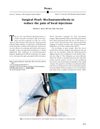
April 2001 in “Journal of The American Academy of Dermatology” Using a vibrating device during injections can help reduce pain.
1 citations
,
May 2022 in “European Journal of Dermatology” This study found that while no predictive factors for response to vismodegib were identified, longer treatment duration was associated with a lower risk of relapse in basal cell carcinoma patients.
January 2010 in “Acta Universitatis Traditionis Medicalis Sinensis Pharmacologiaeque Shanghai” This study found that Huoxue Bushen Mixture increased VEGF expression and the proliferation of dermal papilla cells, suggesting it may promote hair growth compared to control treatments in rats.