 1 citations
,
January 2008 in “Springer eBooks”
1 citations
,
January 2008 in “Springer eBooks” This study found that hair follicle stem cells are multipotent and can enhance nerve regeneration and function in mice, showing potential as an accessible source for treating peripheral nerve injuries.
 August 2026 in “Zenodo (CERN European Organization for Nuclear Research)”
 This study found that excessive consumption of nutmeg, ginger, cloves, and mixed spices led to significant liver damage and other health issues in laboratory mice.
August 2026 in “Zenodo (CERN European Organization for Nuclear Research)” In this study, excessive consumption of nutmeg, ginger, cloves, and mixed spices caused significant liver damage and other harmful effects in mice, leading to severe health issues and mortality.
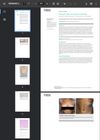
This case report describes a pediatric instance of follicular atopic dermatitis in a dark-skinned patient, highlighting its unique clinical and dermoscopic features, such as purplish to brownish scaly papules and specific dermoscopic patterns, which are crucial for enhancing diagnostic accuracy in similar cases.
February 2026 in “Chemical Engineering Journal” This study found that a novel nano-engineered platform, PCA, significantly promoted hair regeneration in an androgenetic alopecia mouse model by enhancing angiogenesis and hair follicle stem cell proliferation, showing promise for future hair regrowth treatments.
This study found that hypoxic preconditioning of nanofat from donor mice reduced its vascularization capacity in vivo, suggesting that this approach cannot currently enhance nanofat's regenerative potential.
 December 2025 in “Doğu Fen Bilimleri Dergisi”
 In this study, researchers found that the expression of vimentin, desmin, and laminin in rat skin contributes to cell structure and tissue integrity, with varying reactions across different cell types.
September 2025 in “Journal of Polymer Science” This review article highlighted the diverse applications of functionalized materials from bacterial cellulose, detailing advances in both in situ and ex situ methods for enhancing these materials' properties, particularly for medical applications, and proposed directions for future research.
 July 2025 in “JOURNAL OF CLINICAL AND DIAGNOSTIC RESEARCH”
 In this case report, a nine-year-old boy with an unusual scalp nodule was found to have trichofolliculoma, a rare skin tumor, emphasizing the importance of considering this diagnosis in children and using dermoscopy and histopathology for accurate identification and treatment.
 July 2025 in “Bioma Berkala Ilmiah Biologi”
 In this study, researchers examined the histological structure of wild boar skin from three anatomical regions and found it comprises three main layers: epidermis, dermis, and hypodermis, containing various cell types and structures such as hair follicles, sebaceous glands, and fat cells.
 March 2025 in “Nature Communications”
 This study used human stem cell-derived skin organoids to model EV-A71 infection, revealing that various skin cell types are susceptible to the virus and identifying a potential drug target and replication inhibitor, suggesting its utility for studying skin infectious diseases and drug screening.
February 2025 in “Brazilian Journal of Hair Health” This case study found that multiparametric ultrasound can be an effective non-invasive diagnostic tool for evaluating scalp changes in alopecia areata following repeated corticosteroid injections, potentially offering an alternative to biopsy.
January 2025 in “International Journal of Endocrinology” This study found that the hydroalcoholic extract of the Dorema aucheri plant, especially at a 5% concentration, enhanced diabetic wound healing in male rats, improving re-epithelialization, collagen deposition, and neovascularization more effectively than other tested concentrations.
In this study, researchers emphasized the escalating burden of peripheral arterial disease in India due to increasing diabetes prevalence, compounded by a shortage and urban concentration of vascular surgeons, necessitating that general surgeons enhance their diagnostic skills.
 January 2025 in “Open Life Sciences”
 This study observed that transgenic mice with overexpression of HE4 developed keratitis and severe corneal opacity, suggesting that HE4 may significantly influence keratopathy and inflammatory responses in the eye.
 August 2024 in “Journal of Marine Medical Society”
 This case report highlighted the use of dermoscopy not only for diagnosing skin disorders but also as an educational tool to inform patients about the harmful effects of unqualified medical advice, particularly highlighting the quackery issue in dermatology.
 April 2024 in “Indian journal of ophthalmology. Case reports”
 This study reports a case of acute central serous chorioretinopathy potentially linked to prolonged topical minoxidil use for alopecia, with improvement following cessation of the treatment.
 January 2024 in “Wiadomości Lekarskie”
 This review discusses the potential of augmented reality to advance vascular and endovascular surgery by improving 3D anatomical understanding and reducing patient risk, but notes that further research is needed to overcome current technological limitations.
October 2023 in “European Journal of Dermatology” In a study of 147 patients with androgenic alopecia, those who received hair transplantation combined with platelet-rich plasma injections experienced better hair regrowth and smaller areas of hair loss compared to those who only had hair transplantation.
 August 2023 in “Bioengineering”
 This systematic review reports that bioprinting technology holds significant potential for improving patient quality of life by enabling personalized medical treatments, reducing organ transplant rejection risks, and accelerating skin tissue regeneration, although many advancements are still at the research stage.
 July 2023 in “JAAD International”
 This study describes androgenetic alopecia as a common non-scarring hair loss condition primarily influenced by genetic factors and androgen sensitivity, notably impacting psychosocial well-being, especially in females and younger males seeking treatment.

This case report describes retinal occlusion and medial canthal swelling in a 64-year-old female following the injection of acellular porcine urinary bladder matrix for hair restoration, a previously unreported side effect.
 March 2023 in “Journal of Veterinary Medicine and Animal Health”
 This study in Kitui County, Kenya, identified histopathological lesions due to Cordylobia anthropophaga infestations in dogs, including parasitic granulomas and eosinophilic lymphadenitis, leading to severe health effects such as emaciation and potential death.
 January 2023 in “Open veterinary journal”
 This study observed that applying a cream containing secretome from Bovine Umbilical Vein Endothelial Cells promoted healing and regeneration in burn wounds in rats, particularly at a 15% concentration.
 October 2022 in “Dermatology practical & conceptual”
 Scalp skin condition LEDS has similar features to Zoon's balanitis, a mucosal skin disorder.
 September 2022 in “bioRxiv (Cold Spring Harbor Laboratory)”
 This study applied a new RGB trichrome stain to human skin samples, revealing distinct structural staining in normal tissues and potential proteoglycan-rich zones in hair follicles.
 May 2022 in “bioRxiv (Cold Spring Harbor Laboratory)”
 This study found that intracrine androgen signaling, mediated by steroid 5α-reductase, is essential for optimal decidualization and vascular development in the endometrium during pregnancy, indicating potential targets for improving age-related fertility issues.

This hypothesis paper suggests that sexual and cognitive dysfunctions reported by some men after using finasteride and dutasteride may stem from vascular and tissue changes in penile tissue triggering broader inflammatory effects.
January 2022 in “Clinical Cases in Dermatology” This case report describes a middle-aged man with niacinamide-induced poikilodermatous flushing observed on the neck, established through clinical and dermatoscopic evaluation.
 December 2021 in “Research Square (Research Square)”
 In this study, high expression of S100A4 in glioblastoma was associated with worse patient survival and promoted tumor progression by enhancing pro-tumorigenic vascular functions.