 1 citations
,
July 2023 in “Archives of dermatological research”
1 citations
,
July 2023 in “Archives of dermatological research” This study found that both 0.01% and 0.03% bimatoprost gel and 2% minoxidil gel significantly improved eyebrow density in individuals with hypotrichosis, with no significant difference between the treatments, although the highest bimatoprost concentration showed a more favorable response.
 1 citations
,
October 2002 in “Dermatologic Surgery”
1 citations
,
October 2002 in “Dermatologic Surgery” This review summarizes expert opinions on the use of approved pharmacologic treatments alongside hair transplantation, highlighting their potential to enhance hair density and regrowth speed while reducing further hair loss, but reports no new clinical trial results.
 November 2024 in “RECIMA21 - Revista Científica Multidisciplinar - ISSN 2675-6218”
 In this study, a literature review concluded that minoxidil is safe and effective for treating androgenetic alopecia, with few side effects, and highlighted the role of pharmacists in optimizing treatment by monitoring use and fostering adherence.
 February 2022 in “Programa de Iniciação Científica - PIC/UniCEUB - Relatórios de Pesquisa”
 This study found that PRP treatment showed better results than injectable minoxidil for reducing hair loss and promoting hair growth, with noticeable effects after the second application.
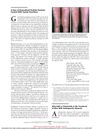 40 citations
,
September 2003 in “Archives of Dermatology”
40 citations
,
September 2003 in “Archives of Dermatology” This webpage provides access options for JAMA Dermatology but does not contain research findings or results.
 9 citations
,
September 2011 in “Cutaneous and Ocular Toxicology”
9 citations
,
September 2011 in “Cutaneous and Ocular Toxicology” This article presents a case of central serous chorioretinopathy occurring after the use of topical minoxidil solution, but reports no clinical study findings.
 April 2025 in “Jurnal Analis Farmasi”
 This study evaluated hair tonic formulations containing Ambon banana peel extract and found that the preparation, particularly at an 8% concentration, significantly promoted hair growth compared to other formulations, though it still differed from the control group's effectiveness.
 152 citations
,
April 2012 in “Recent Patents on Inflammation & Allergy Drug Discovery”
152 citations
,
April 2012 in “Recent Patents on Inflammation & Allergy Drug Discovery” This review describes minoxidil's hair regrowth mechanism and discusses dermatological applications, but reports no new clinical results, emphasizing the need for regular use and addressing allergic reactions.
 128 citations
,
July 2009 in “International Journal of Pharmaceutics”
128 citations
,
July 2009 in “International Journal of Pharmaceutics” This study found that penetration enhancer-containing vesicles significantly improved minoxidil delivery to the skin compared to traditional liposomes and penetration enhancer-containing ethanolic solutions, with deformability linked to enhanced deposition.
 86 citations
,
July 1990 in “British Journal of Pharmacology”
86 citations
,
July 1990 in “British Journal of Pharmacology” Diazoxide, minoxidil sulphate, and cromakalim relax rat blood vessels by opening K+ channels, with some differences in their actions.
 81 citations
,
February 1997 in “Journal of Investigative Dermatology”
81 citations
,
February 1997 in “Journal of Investigative Dermatology” This study suggests that minoxidil activates PGHS-1, which may explain its hair growth-stimulating effects and could aid in designing more potent hair growth-promoting drugs.
 74 citations
,
June 2010 in “European Journal of Pharmaceutics and Biopharmaceutics”
74 citations
,
June 2010 in “European Journal of Pharmaceutics and Biopharmaceutics” This study found that hair follicles are a significant and efficient pathway for the absorption of topical minoxidil foam in humans, with faster blood detection when follicles are open.
 74 citations
,
July 1991 in “The Journal of Urology”
74 citations
,
July 1991 in “The Journal of Urology” This study found that topically applied minoxidil was more effective than nitroglycerin and placebo in enhancing penile diameter, rigidity, and arterial flow, with the most pronounced effects in patients with neurogenic impotence.
 63 citations
,
January 1984 in “Journal of Investigative Dermatology”
63 citations
,
January 1984 in “Journal of Investigative Dermatology” Minoxidil promotes hair growth by increasing cell division and DNA synthesis.
 54 citations
,
June 1985 in “American Journal of Dermatopathology”
54 citations
,
June 1985 in “American Journal of Dermatopathology” This abstract does not provide specific findings or results.
 52 citations
,
February 1985 in “Archives of Dermatology”
52 citations
,
February 1985 in “Archives of Dermatology” Minoxidil absorbs poorly through skin, with low risk of side effects at 1-2% concentration.
 51 citations
,
October 1980 in “The New England Journal of Medicine”
51 citations
,
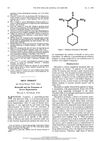
October 1980 in “The New England Journal of Medicine” Minoxidil lowers blood pressure effectively but may cause unwanted hair growth and other side effects.
 49 citations
,
January 1980 in “Journal of Cardiovascular Pharmacology”
49 citations
,
January 1980 in “Journal of Cardiovascular Pharmacology” Minoxidil doesn't increase pericardial disorder risk, but may cause fluid accumulation.
 45 citations
,
January 1981 in “Annals of Internal Medicine”
45 citations
,
January 1981 in “Annals of Internal Medicine” Minoxidil controls blood pressure effectively, but may cause side effects like hypertrichosis.
 45 citations
,
August 2011 in “Journal of Microencapsulation”
45 citations
,
August 2011 in “Journal of Microencapsulation” This study found that chitosan microparticles containing minoxidil sulphate sustained its release and may hold potential for targeted topical treatment of alopecia.
 43 citations
,
May 1978 in “JAMA”
43 citations
,
May 1978 in “JAMA” Minoxidil controls blood pressure but may cause kidney damage and needs diuretics to prevent swelling.
 43 citations
,
January 1977 in “Toxicology and Applied Pharmacology”
43 citations
,
January 1977 in “Toxicology and Applied Pharmacology” In this study, minoxidil was found to have low toxicity in various animals, with specific heart lesions observed only in dogs at certain doses.
 37 citations
,
April 1979 in “The Journal of Clinical Pharmacology”
37 citations
,
April 1979 in “The Journal of Clinical Pharmacology” Minoxidil effectively controls blood pressure but side effects may limit its use.
 36 citations
,
September 2018 in “American Journal of Clinical Dermatology”
36 citations
,
September 2018 in “American Journal of Clinical Dermatology” This study found that a topical combination of 0.25% finasteride and 3% minoxidil may increase hair diameter more effectively than 3% minoxidil alone in postmenopausal women with female pattern hair loss.
 36 citations
,
March 2002 in “Journal of Biological Chemistry”
36 citations
,
March 2002 in “Journal of Biological Chemistry” Food deprivation increases MST enzyme in the brain, possibly affecting energy balance.
 35 citations
,
August 1980 in “Circulation”
35 citations
,
August 1980 in “Circulation” Minoxidil may cause heart issues in animals and humans.
 28 citations
,
January 1989 in “Toxicologic Pathology”
28 citations
,
January 1989 in “Toxicologic Pathology” This study found that none of the nine minoxidil-treated autopsy cases showed cardiac pathology attributable to minoxidil, suggesting no direct link between the drug and specific human cardiac lesions.
 23 citations
,
March 1988 in “Biochemical Pharmacology”
23 citations
,
March 1988 in “Biochemical Pharmacology” This study found that minoxidil inhibited prostacyclin production in various endothelial and smooth muscle cells in culture without affecting the synthesis of other cyclooxygenase products.
 23 citations
,
January 2016 in “Theranostics”
23 citations
,
January 2016 in “Theranostics” In this animal study, ultrasound combined with a new microbubble formulation of minoxidil increased hair growth rates and improved follicle characteristics more effectively than minoxidil alone.
 22 citations
,
February 2008 in “Journal of Neurochemistry”
22 citations
,
February 2008 in “Journal of Neurochemistry” This study found that minoxidil prevents long-term serotonergic toxicity induced by MDMA in rats, primarily by opening mitochondrial KATP channels and involving Akt and MAP kinases in its neuroprotective mechanism.