50 citations
,
December 2005 in “European Journal of Immunology” This study found that a specific mutation in the mouse RXRalpha gene significantly impacts immune responses and causes hair loss and skin cysts.
 July 2025 in “New Phytologist”
 This study demonstrated that the FER/MLO signaling module regulates calcium dynamics and ROS accumulation in root hair growth, with the constitutively active MLO (faNTA) able to restore normal development and signaling in specific mutant genotypes, highlighting MLO15's role in root hair tip growth regulation.
 5 citations
,
November 2014 in “Hair transplant forum international”
5 citations
,
November 2014 in “Hair transplant forum international” This article introduces a series on low level laser light therapy, focusing on its science, regulatory aspects, and controlled trial methodologies, but reports no new clinical results.
 April 2024 in “Journal of pharmacy & pharmacognosy research”
 This study used in silico analysis to identify 4-[2-(4-nitrophenyl)ethylcarbamoyl]benzenesulfonyl as a potential inhibitor of the EGFR mutant associated with NSCLC, highlighting the need for further in vitro and in vivo validation.
This case report highlights that Tjalma Syndrome may present as a main symptom of systemic lupus erythematosus and should be considered in patients with ascites, pleural effusions, and elevated CA-125 levels.
September 2019 in “Journal of Investigative Dermatology” This study found that in chronic alopecia areata, increased IL-17 expression and CD8+CD49a-Trm cell infiltration in hair follicles were associated with more severe histopathologic gradings, while Foxp3+mTreg infiltration decreased.
July 2026 in “Pathology - Research and Practice”  1 citations
,
January 2019 in “Journal of Nuclear Technologyin Applied Science (JNTAS) (Print)”
1 citations
,
January 2019 in “Journal of Nuclear Technologyin Applied Science (JNTAS) (Print)” This study found that low-level laser therapy accelerates skin regeneration in gamma-irradiated mice and enhances the biostimulatory effect on hair follicles.
November 2025 in “Journal of Investigative Dermatology” Certain immune cells in atopic dermatitis skin could be targeted for treatment.
60 citations
,
September 2023 in “Science” This study found that the restoration of CD103⁺γδ T cells in humans is associated with sustained remission in inflammatory bowel disease, suggesting a conserved role for these cells in limiting disease progression.
 September 2016 in “Journal of Dermatological Science”
 This study identified that in Japanese patients with autosomal recessive woolly hair/hypotrichosis, the c.736T > A LIPH mutation is associated with a mild phenotype, while the c.742C > A mutation may lead to severe baldness.
May 2005 in “Molecular Carcinogenesis” This study found that mrp/plf-mRNA expression in murine skin increases in response to different tumor promoters, suggesting its potential as a short-term biomarker for chemical carcinogenesis.

This study found that lateral root formation in plants in response to L. bicolor volatiles involves complex signaling processes, potentially including unknown proteins, CRKs, and ABA pathways.
 67 citations
,
January 2020 in “Cellular & Molecular Immunology/Cellular & molecular immunology”
67 citations
,
January 2020 in “Cellular & Molecular Immunology/Cellular & molecular immunology” This review discusses the dual role of tissue-resident memory T cells in providing immune protection against infections and cancer and contributing to autoimmune skin disease pathology, without presenting new experimental results.
September 2017 in “The journal of investigative dermatology/Journal of investigative dermatology” The researchers reported that TGM2 appears to play a crucial role in sebocyte differentiation and may act as a negative regulator of lipid metabolism in sebaceous glands.
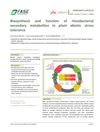 November 2025 in “Frontiers of Agricultural Science and Engineering”
 This study observed that rhizobacterial strain RT3 significantly improved drought tolerance in lettuce by increasing survival rates and fresh biomass after rewatering, with metabolites such as proline and glycine enhancing stress resilience.
 130 citations
,
November 2017 in “Frontiers in Immunology”
130 citations
,
November 2017 in “Frontiers in Immunology” This review explores recent findings on regulatory T cells, focusing on their unique functions in non-lymphoid tissues and new mechanisms of action, but presents no original clinical results.
19 citations
,
July 1997 in “British Journal of Dermatology” This study successfully developed and characterized a monospecific monoclonal antibody, LHTric-1, that specifically localizes to the pre-cortical region of the hair follicle and can aid research on hair and nail formation.
353 citations
,
November 2014 in “Molecular immunology” This review discusses the immune functions of porcine skin and proposes a classification of dendritic cell subsets based on similarities to human skin, but it reports no new clinical results.
11 citations
,
October 2024 in “International Journal of Molecular Sciences” This study observed that the cutaneous microbiome in psoriasis patients differs both qualitatively and quantitatively from healthy individuals, suggesting a potential link to psoriasis pathogenesis.
7 citations
,
August 2023 in “Frontiers in Immunology” This review discusses the role of transient receptor potential channels in pathological scarification and suggests these channels as potential targets for its prevention and treatment, although it reports no new clinical findings.
5 citations
,
November 2025 in “Cells” This review summarizes the roles of various cells and signaling pathways in skin wound healing, highlights deviations leading to pathological outcomes like chronic wounds, and evaluates cutting-edge approaches such as biomaterials and precision medicine to improve healing and intervention strategies.
3 citations
,
June 2024 in “Pharmacia” In this study, isatin-gallate hybrids were synthesized and assessed, with compound 3b showing significant in vitro antioxidant and cytotoxic activities, and the series displaying moderate efficacy in inhibiting coronavirus activity through in silico analysis.
 3 citations
,
December 2022 in “Cells”
3 citations
,
December 2022 in “Cells” This review examines the role of cannabinoid compounds in treating various skin conditions and suggests their potential as systemic and topical therapies, but it reports no new experimental results.
2 citations
,
November 2024 in “Journal of Clinical Medicine” This review suggests that vitamin D3 deficiency and the colonization of oral mucosa by *Candida* fungi may contribute to the pathogenesis of psoriasis, highlighting the potential interaction between vitamin D, microbiome imbalance, and fungal infections in the disease's progression.
1 citations
,
April 2015 in “InTech eBooks” RAGE is a potential target for melanoma treatment, but its effectiveness is uncertain due to variable expression levels.
 January 2024 in “Journal der Deutschen Dermatologischen Gesellschaft”
 This research paper reviews the mechanisms and management of non-biologic immunosuppressive drugs used in dermatology, highlighting their safety profiles and handling during pregnancy, breastfeeding, and vaccination, but does not report specific results on these aspects.
14 citations
,
January 2011 in “The International Journal of Developmental Biology” This study showed that coexpression of TG2 and Gbx1 in the epidermis is necessary for esophagus-like mucosal transdifferentiation, with TGF-beta2 in the dermis essential for the process through epithelial-mesenchymal interaction.
1 citations
,
April 2024 in “JDDG Journal der Deutschen Dermatologischen Gesellschaft” In this case report, the authors concluded that cutaneous lupus erythematosus was induced by the PD-1 inhibitor tislelizumab during treatment for metastatic lung adenocarcinoma, despite initial remission and treatment adjustments.
 10 citations
,
January 2010 in “Journal of cosmetic and laser therapy”
10 citations
,
January 2010 in “Journal of cosmetic and laser therapy” This article describes a non-blinded study investigating low level laser therapy for seven patients but reports no new clinical findings.