 23 citations
,
December 2021 in “Frontiers in Immunology”
23 citations
,
December 2021 in “Frontiers in Immunology” This review discusses the significance of IL-1 family cytokines in skin inflammation and pathology, emphasizing their interactions with microbes and potential therapeutic applications, but reports no new clinical results.
21 citations
,
April 2025 in “MedComm” This review explores the complex factors involved in alopecia areata, such as immune and genetic influences, and discusses advances in diagnostic and therapeutic approaches, while reporting no new clinical results.
 15 citations
,
March 2020 in “Experimental and Therapeutic Medicine”
15 citations
,
March 2020 in “Experimental and Therapeutic Medicine” This review discusses the inflammatory and immunological processes in the skin and reports no new clinical results, highlighting their roles in skin conditions like psoriasis, atopic dermatitis, vitiligo, and pemphigus.
15 citations
,
June 2015 in “F1000Research” This study examined immune responses to Diphencyprone and found that its induced skin reactions have higher levels of negative immune regulators compared to psoriasis, suggesting differences in immune regulation may contribute to psoriasis chronicity.
1 citations
,
October 2025 in “Journal of Dermatological Treatment” This case study reported that Dupilumab treatment improved eczema, itch, and hair condition in a girl with Netherton Syndrome, as shown by over 40% improvement in various dermatological scores; however, significant flares of ichthyosis linearis circumflexa persisted.
1 citations
,
January 2025 in “Genes & Diseases” This review highlights that T cells are crucial in regulating hair follicle regeneration and their disruption can lead to alopecia, providing insights into hair disorders related to T cell immune balance and hair follicle regeneration.
 July 2025 in “Journal of Cosmetic Dermatology”
 In this study, authors present a case where a 26-year-old patient with alopecia areata experienced relapse after initially responding to Tofacitinib, mitigated by corticosteroids, highlighting challenges and potential insights into the treatment and pathogenesis of the condition.
April 2024 in “International journal of molecular sciences” This study examines the similarities and differences in the pathogenesis of autoimmune conditions alopecia areata and vitiligo, highlighting shared features like immune cell involvement and cytokine pathways, while noting differing immune responses in skin and hair.
December 2017 in “Annales de dermatologie et de vénéréologie” This article reviews key developments in pediatric dermatology for 2017, including consensus recommendations, novel genetic findings, and treatment insights for conditions like psoriasis and vascular malformations, without providing new clinical trial results.
 April 2018 in “Journal of Investigative Dermatology”
 This study found that IL-9 influences the behavior of human primary keratinocytes by promoting motility while reducing invasion potential through a novel mechanism independent of matrix-metalloproteinases.
![Verification of the Major Metabolic Oxidation Path for the Naphthoyl Group in Chemoattractant Receptor-Homologous Molecule Expressed on Th2 Cells (CRTh2) Antagonist 2-(2-(1-Naphthoyl)-8-fluoro-3,4-dihydro-1H-pyrido[4,3-b]indol-5(2H)-yl)acetic Acid (Setipiprant/ACT-129968)](/images/assets/d743d32f-3115-48ff-9697-2f2d56130701/small/14175.jpg) 6 citations
,
September 2015 in “Journal of Medicinal Chemistry”
6 citations
,
September 2015 in “Journal of Medicinal Chemistry” This study synthesized and verified the structures of Setipiprant's major and minor metabolites, confirming their regio- and enantioselectivity from earlier proposals in a clinical study.
1 citations
,
January 2002 in “PubMed” The researchers reported that both finasteride and PM-9 competitively inhibit the 5 alpha-reductase enzyme in P. crustosum broth.
11 citations
,
February 2023 in “British Journal of Pharmacology” This study found that ISX9 may activate the Wnt/β-catenin signaling pathway and holds potential as a therapeutic agent for treating alopecia.
5 citations
,
February 2025 in “Frontiers in Immunology” This study highlights emerging research on lactate's biological roles in skin health, emphasizing its function as a signaling molecule that regulates skin barrier and immunity, and notes its therapeutic potential for skin conditions such as tumors and inflammatory diseases.
This study identified ISX9 as a novel agonist of the Wnt/β‐catenin pathway, which promoted hair regrowth in mice and may offer a therapeutic approach for alopecia.
 February 2024 in “bioRxiv (Cold Spring Harbor Laboratory)”
 This study found that tissue damage in adult mice triggers the release of mitochondrial DNA, which activates the TLR9 pathway and influences hair regeneration by recruiting gamma delta T cells, ultimately affecting healing outcomes such as fibrosis.
 10 citations
,
September 2022 in “Cellular and Molecular Life Sciences”
10 citations
,
September 2022 in “Cellular and Molecular Life Sciences” This review discusses the roles of the transcription factor SOX9 in organ development and maintenance, providing insights into its regulation and diverse functions, but reports no new experimental results.
 December 2022 in “Research Square (Research Square)”
 In this study, the researchers developed a quantum algorithm, QuantAnts machines, which identified complexes of CD9, CD34, and CD74 as potential targets for certain cancers involving the RAS pathway.
 1 citations
,
June 2013 in “Science-business Exchange”
1 citations
,
June 2013 in “Science-business Exchange” In this study, researchers at the University of Pennsylvania found that increasing FGF9 levels in wounded mouse skin can lead to the growth of hair follicles.
January 2012 in “Zhongguo nongye Kexue” This study concluded that transgenic somatic cell nuclear transfer technology can produce cashmere goat blastocysts carrying the K2.9 gene using specific fibroblast cells and activation methods.
10 citations
,
May 2023 in “iScience” In this study, researchers found that Sox9 is critical for determining whether Nestin+ stem cells in adult mouse skin develop into melanocytes or glial cells, offering insights into possible paths for melanoma research.
This study found that expressions of TLR-3, TLR-7, TLR-8, and TLR-9 were significantly higher in alopecia areata patients compared to healthy controls, indicating a potential role in disease autoimmunity.
22 citations
,
March 2003 in “Steroids” This study found that both finasteride and a new steroidal compound, PM-9, competitively inhibit the 5α-reductase enzyme in Penicillium crustosum broth.
 May 2024 in “Journal of molecular structure”
 This study found that a novel thiohydantoin derivative, 3a, effectively inhibited androgen receptor activity in LNCaP cells and showed promising in vivo results by reducing testosterone-induced prostate changes, outperforming finasteride in mitigating prostate index and histopathological alterations.
 25 citations
,
June 2021 in “Developmental Cell”
25 citations
,
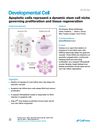
June 2021 in “Developmental Cell” In this study, researchers found that deleting Caspase-9 in hair follicle stem cells delayed apoptosis, leading to accelerated wound repair and new hair follicle regeneration by maintaining apoptotic cells as signaling centers.
 44 citations
,
March 2015 in “PLOS ONE”
44 citations
,
March 2015 in “PLOS ONE” This study found that FGF-9 treatment in diabetic mice improved heart function after myocardial infarction by decreasing monocyte infiltration and promoting anti-inflammatory macrophage differentiation.
 1 citations
,
December 2020 in “bioRxiv (Cold Spring Harbor Laboratory)”
1 citations
,
December 2020 in “bioRxiv (Cold Spring Harbor Laboratory)” This study found that Sox9 plays a critical role in maintaining radial glial progenitor cells and regulates the timing of their generation of upper-layer cortical neurons.
4 citations
,
August 2022 in “Cells” This study found that the lncRNA lncRNA2919 is involved in hair follicle regeneration by downregulating growth-related genes, inhibiting cell proliferation, and promoting apoptosis in rabbit dermal papilla cells.
 January 2024 in “Inflammation and regeneration”
 This study identified Th22 cells as key effectors in hair regeneration driven by thymosin beta 15, suggesting they could be potential targets for hair regrowth therapies.
 16 citations
,
August 2015 in “Protein Expression and Purification”
16 citations
,
August 2015 in “Protein Expression and Purification” This study found that recombinant human FGF9 expressed in Arabidopsis thaliana oil bodies significantly promoted the proliferation of NIH/3T3 cells.