10 citations
,
March 2022 in “Frontiers in Oncology” This study found that the overexpression of the lncRNA HOTTIP in glioma cells increased resistance to the chemotherapy drug temozolomide, suggesting a key role for miR-10b and EMT processes in this resistance.
 6 citations
,
July 2023 in “Nature cell biology”
6 citations
,
July 2023 in “Nature cell biology” In this study, re-activating SOX9 in adult epidermal stem cells led to a fate switch towards hair follicle stem cell identity, with altered chromatin dynamics and oncogenic activation, contributing insights into developmental processes and cancer pathways.
 October 2013 in “Faculty Opinions – Post-Publication Peer Review of the Biomedical Literature”
 FGF9 from certain T cells helps create new hair follicles during wound healing, which could potentially be used for hair loss treatments.
 103 citations
,
January 2011 in “Blood”
103 citations
,
January 2011 in “Blood” This study found that thymus transplantation in infants with FOXN1 deficiency led to T-cell reconstitution and functional immunity, resolving serious infections and cytopenias.
4 citations
,
June 2017 in “Irish veterinary journal” In this study, a single application of a 10 mg/mL deltamethrin-based solution effectively reduced lice infestations by 98% to 100% in treated horses and prevented new infestations for up to a month, without adverse events reported.
 3 citations
,
March 2020 in “International Journal of Molecular Sciences”
3 citations
,
March 2020 in “International Journal of Molecular Sciences” This study found that overexpressing the gene Thymosin β4 (Tβ4) can promote the growth and development of secondary hair follicle dermal papilla cells in cashmere goats, suggesting its potential as a target for increasing cashmere production.
 7 citations
,
June 2015 in “The anatomical record”
7 citations
,
June 2015 in “The anatomical record” This study in Hexi cashmere goats found that secondary follicle activity increases with time, and Hoxc13 expression varies significantly across different growth stages, suggesting a role in follicle activity.
 June 2013 in “Faculty Opinions – Post-Publication Peer Review of the Biomedical Literature”
 FGF9 from certain cells can trigger new hair growth during wound healing, but humans have fewer of these cells, which may limit hair regrowth.
 May 2025 in “Experimental Dermatology”
 This study found that specific TRPM5 modulators are unlikely to directly affect sebaceous glands, but safe TPPO analogues may provide moderate lipogenic and anti-inflammatory effects beneficial for dry skin conditions.
52 citations
,
June 1991 in “Journal of Virology” In this study, researchers found that the ability of hamster polyomavirus to cause lymphoid tumors in Syrian hamsters may be linked to its association with the tyrosine kinase p59fyn.
In this study, researchers identified IL18R+ thymus-resident regulatory T cells in mice, demonstrating their unique molecular features and resistance to age- and stress-induced thymus involution, highlighting IL18 signaling's role in Treg migration and retention.
September 2019 in “Journal of Investigative Dermatology” This study found that in chronic alopecia areata, increased IL-17 expression and CD8+CD49a-Trm cell infiltration in hair follicles were associated with more severe histopathologic gradings, while Foxp3+mTreg infiltration decreased.
 May 2026 in “Apollo (University of Cambridge)”
 In this review, the authors discuss how SOX9 functions as a key regulator of epithelial cell fate and tissue repair, suggesting its role in integrating environmental signals, which could inform regenerative medicine approaches despite potential risks like fibrosis and cancer.
 5 citations
,
November 2024 in “Journal of Clinical Immunology”
5 citations
,
November 2024 in “Journal of Clinical Immunology” This study reports that a 9-week-old infant with Netherton syndrome showed rapid and sustained symptom improvement, including skin microbiome normalization and developmental progress, after off-label dupilumab treatment, without adverse reactions.
 17 citations
,
January 2019 in “International journal of biological sciences”
17 citations
,
January 2019 in “International journal of biological sciences” This study found that inserting the Tβ4 gene into cashmere goats increased cashmere yield by 74.5% without compromising quality, suggesting potential economic benefits for goat breeding.
November 2022 in “Journal of Investigative Dermatology” This study reported that an HS-associated NCSTN mutation in iPSC-derived skin organoids led to altered hair follicle stem cell differentiation and increased expression of proteins linked to HS inflammation.
 237 citations
,
June 2013 in “Nature Medicine”
237 citations
,
June 2013 in “Nature Medicine” This study found that fibroblast growth factor 9, initially secreted by γδ T cells, plays a key role in modulating hair follicle regeneration in mice after skin wounds.
 January 2025 in “Nanoscale”
 This study reports that a new boron/nitrogen-doped carbon nano-onion-based delivery system for doxorubicin enhanced its uptake and anticancer effects in specific cancer cell types, while reducing cardiotoxicity in human heart cells.
 June 2013 in “Faculty Opinions – Post-Publication Peer Review of the Biomedical Literature”
 A substance called FGF9 from certain immune cells can trigger new hair growth during wound healing in mice, but humans may not have the same response due to fewer of these cells.
 47 citations
,
April 2003 in “Journal of dermatological science”
47 citations
,
April 2003 in “Journal of dermatological science” This study showed that Thujae occidentalis semen extract inhibited 5alpha-reductase type 2 in laboratory tests and reduced androgen-related hair loss in animal models, suggesting potential use for male pattern baldness.
March 2023 in “Asian Journal of Beauty and Cosmetology” This study found that the herbal extract HX109 promoted hair growth in mice by increasing cell viability and enhancing hair regrowth, with the effects increasing as doses rose.
 17 citations
,
November 2015 in “Oxidative Medicine and Cellular Longevity”
17 citations
,
November 2015 in “Oxidative Medicine and Cellular Longevity” This study suggests that FGF-9 treatment may improve cardiac function by reducing vascular apoptosis and enhancing angiogenesis in infarcted hearts of both nondiabetic and diabetic mice.
 6 citations
,
August 2022 in “Science immunology”
6 citations
,
August 2022 in “Science immunology” This study identified key regions and transcription factors, including SIX1 and FOXN1 itself, that regulate Foxn1 expression in thymic epithelial cells and hair follicle cells, offering insights into its transcriptional regulation.
33 citations
,
March 2015 in “Experimental Dermatology” In this study, LHX2 and SOX9 were found to mark distinct epithelial progenitor cell populations within human hair follicles, suggesting roles in maintaining the hair follicle epithelium.
 June 2023 in “jurnal veteriner”
 In this study, Typhonium flagelliforme leaf-ethanolic extract combined with natural interferon was observed to stabilize body weight, inhibit tumor growth, and reduce mitosis, angiogenesis, and certain protein expressions in carcinogen-induced tumors in female mice, suggesting potential antitumor effects.
May 2022 in “The journal of immunology/The Journal of immunology” This study developed a foxn1-deficient Xenopus laevis model using CRISPR/Cas9, observing reduced T-cell markers and altered immune responses in tadpoles, providing a nonmammalian model for immunological research.
This study found that IL18 signaling plays a crucial role in the homing and retention of mature regulatory T cells in the mouse thymus, primarily by upregulating the chemokine receptor CCR6.
19 citations
,
November 2012 in “Cell Communication and Signaling” This study found that Fibroblast growth factor-9 (FGF-9) accelerates epithelial invagination in engineered ectodermal organs and suggests its potential role in organogenesis and regeneration research.
1 citations
,
July 2025 in “Genetics Selection Evolution” In this study, using scRNA-seq, researchers detailed the gene expression and cell differentiation processes in goat fetal horn buds, identifying crucial roles for dermal and epithelial cells in horn initiation and highlighting potential genetic factors involved in horn morphogenesis.
 24 citations
,
July 2017 in “Structure”
24 citations
,
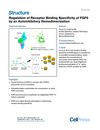
July 2017 in “Structure” In this study, researchers found that ligand homodimerization controls the receptor binding specificity of the FGF9 subfamily, preventing off-target activation of FGFR "b" isoforms.