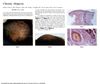
 June 1995 in “Archives of Dermatology”
 This case report describes a 27-year-old woman with a family history of hair thinning and a 6-year history of alopecia on the scalp.
May 2022 in “Reactions Weekly”  37 citations
,
January 2017 in “International Journal of Dermatology”
37 citations
,
January 2017 in “International Journal of Dermatology” This study found that trichoscopic features like exclamation mark hairs and angulated hairs were more indicative of alopecia areata in an Asian population, while features like broken hairs of different lengths and flame hairs were more common in trichotillomania.
 July 2023 in “World Journal of Biology Pharmacy and Health Sciences”
 This research suggests that the drugs trazodone and chlorpromazine, which have effects on specific receptors, may help restore libido synaptic circuits and potentially treat sexual dysfunction associated with post-SSRI and post-finasteride syndromes.
 November 2021 in “PARIPEX INDIAN JOURNAL OF RESEARCH”
 In this study, researchers administered Trigona bee honey to dogs with dermatitis and observed improvements in skin damage, including reduced inflammation, decreased erythema, and increased hair growth at alopecia sites, indicating its potential as a treatment for canine dermatitis.
8 citations
,
October 1993 in “International Journal of Dermatology” This case report details a 52-year-old man's successful hair regrowth following treatment with griseofulvin for Trichophyton tonsurans-induced scalp ringworm.
5 citations
,
June 2015 in “Chinese journal of natural medicines/Zhongguo tianran yaowu/Chinese Journal of Natural Medicines” This study found that Tripterygium wilfordii multiglycoside significantly inhibited testosterone-induced benign prostatic hyperplasia in rats without causing toxicity, suggesting its potential as a therapy for BPH.
 January 2022 in “Journal of Skin and Stem Cell”
 This review discusses trichodynia, its potential causes, and treatment options, but reports no new clinical findings.
53 citations
,
March 2006 in “Biopolymers” This study suggests that increased amounts of less stable disulfide conformers in hair shafts may be linked to the brittleness observed in trichothiodystrophy.
 November 2023 in “PubMed”
 This study showed that intralesional injections of pentoxifylline may be an effective and safe alternative to triamcinolone acetonide for treating localized alopecia areata.

This comparative clinical study found no statistically significant difference in the remission and recurrence rates between intralesional triamcinolone acetonide and methotrexate for treating localized alopecia areata, suggesting similar efficacy between the two treatments.
4 citations
,
November 1999 in “PubMed” This article presents five family cases of monilethrix and reports that neither vitamins nor desquamative ointments are effective treatments, although symptoms may spontaneously regress over time.
2 citations
,
January 2018 in “International Journal of Trichology” This case report describes trichothiodystrophy in two sisters with only hair fragility, illustrating the condition's variable presentation and the importance of regular monitoring for potential associated impairments.
 January 2026 in “Indian Journal of Dermatopathology and Diagnostic Dermatology”
 This report highlights a case where dermoscopic observation of corkscrew hairs in a young woman led to the diagnosis of trichotillomania, emphasizing its role in distinguishing this psychiatric disorder from other forms of non-scarring alopecia and highlighting the importance of timely intervention.
July 2026 in “International Journal of Research in Pharmacology & Pharmacotherapeutics” In this study, the methanolic extract of Tridax procumbens Linn demonstrated significant antiulcer activity in a mice model of acetic acid-induced ulcerative colitis, offering 57.12% ulcer protection compared to 50.60% by the standard drug prednisolone.
50 citations
,
July 2015 in “Journal of the American Academy of Dermatology” This study found that 2.5 mg/mL triamcinolone acetonide injections were as effective as higher doses for treating limited, patchy alopecia areata, while minimizing side effects like skin atrophy.
December 2021 in “Pathologica” This case report describes a rare instance of trichogerminoma with unusually numerous mitotic figures and a higher Ki67 proliferative rate, distinguishing it from previously documented cases.
29 citations
,
February 1989 in “Journal of Cutaneous Pathology” This case report identifies a new type of hair matrix tumor called "rippled pattern trichomatricoma," distinguished by its unique cell arrangement and differentiation features.
1 citations
,
September 2002 in “European Journal of Endocrinology” This case study reports the clinical features of triple H syndrome in a 25-year-old man, including ACTH deficiency, alopecia universalis, and anterograde amnesia, which were improved with hydrocortisone treatment.
 2 citations
,
October 2001 in “Analytical Sciences”
2 citations
,
October 2001 in “Analytical Sciences” A new compound that could treat various androgen-related conditions was created and analyzed.
15 citations
,
March 2009 in “Pediatric dermatology” This case report documents a novel occurrence of bilateral trichomegaly with alopecia areata in a healthy 3-year-old girl, without known underlying health conditions or medication use.
1 citations
,
August 2024 in “Pediatric Dermatology” In this report, researchers describe an unusual case of congenital pili multigemini, a hair follicle disorder, presenting on the eyebrow of a female infant, highlighting its rarity and atypical location.

This study found that a combination of topical and oral treatment led to greater improvements in hair density, thickness, and anagen/telogen ratio in patients with androgenetic alopecia compared to topical treatment alone, with significant benefits observed over a 3-month period.
3 citations
,
January 2020 in “International journal of trichology” This study reports that congenital triangular alopecia, which can be misdiagnosed as other conditions, lacks effective treatment and generally requires no therapeutic intervention.
8 citations
,
March 2020 in “Pain Medicine” This case report describes a woman with refractory trichodynia who became asymptomatic after receiving botulinum toxin type A injections, suggesting potential efficacy of this treatment for persistent trichodynia.
 December 2023 in “Journal of ethnopharmacology”
 This study found that tribuloside, a flavonoid from Tribulus terrestris L., enhances melanin production in human melanocytes, zebrafish, and human skin samples without causing toxicity, potentially through inhibiting PDE to increase cAMP levels and promote the melanin biosynthesis pathway.
In this study, the combined treatment of ursolic acid and resveratrol was evaluated for its effects on skin tumor promotion in female FVB mice. The combination was applied topically before TPA treatment and was found to significantly inhibit TPA-induced epidermal hyperproliferation, signaling pathways, and skin inflammation more effectively than either compound alone. Key signaling pathways affected included EGFR, STAT3, and NF-κB, among others. The combination also increased tumor suppressor levels and reduced proinflammatory cytokine expression. Overall, the combined treatment resulted in a greater reduction in tumor multiplicity and size, highlighting its potential as a more effective strategy for inhibiting skin tumor promotion compared to individual treatments.
In this study, the combined treatment of ursolic acid and resveratrol was evaluated for its inhibitory effects on skin tumor promotion in female FVB mice. The combination was applied topically before TPA treatment and was found to significantly inhibit TPA-induced epidermal hyperproliferation, signaling pathways, and skin inflammation more effectively than either compound alone. Key signaling pathways affected included EGFR, STAT3, and NF-κB, among others. The combination also increased tumor suppressor levels and reduced proinflammatory cytokine expression. Overall, the combined treatment resulted in a greater reduction in tumor multiplicity and size, highlighting its potential as a more effective strategy for preventing skin tumor promotion compared to individual treatments.
July 2018 in “Media Informasi” This study found that a 3:2 combination of pandan leaf and mother-in-law's tongue extracts in hair tonic showed similar hair growth activity as 5% minoxidil after three weeks.