 December 2025 in “Bioscientist Jurnal Ilmiah Biologi”
 In this study, researchers developed an optimized formulation of a traditional ethnomedicinal recipe from East Nusa Tenggara, which demonstrated strong antioxidant activity and significantly enhanced hair growth in a mouse alopecia model, compared to control groups.
 April 2022 in “Molecules”
 This study identified two potent 5α-reductase inhibitors from Tectona grandis leaves, and suggests that ethanol is a preferable solvent for extracting these compounds, which are potential ingredients for hair loss treatments.
 9 citations
,
October 2019 in “Dermatologic Therapy”
9 citations
,
October 2019 in “Dermatologic Therapy” This study observed that oral tofacitinib was reasonably well-tolerated but had limited efficacy in treating alopecia areata, with a clinical response seen in 41.4% of patients over six months.
This study conducted a genome-wide association analysis on 1,125 ewes and identified 24 SNPs associated with wool production traits, and highlighted potential candidate genes like ADAR and TP53 for further research into the genetic mechanisms influencing wool growth in sheep.
 December 2024 in “Ukrainian Journal of Dermatology Venerology Cosmetology”
 This study observed that after 12 weeks of using the nutraceutical Alpenta, women with acute or chronic telogen effluvium experienced significant improvements in hair growth parameters, including increased anagen hair percentage, hair density, and diameter, with high patient satisfaction and good product tolerability reported.
 April 2025 in “Egyptian Journal of Medical Research”
 This study found that individuals with Telogen Effluvium had significantly lower levels of vitamin D compared to healthy individuals, with a particularly negative correlation observed between disease duration and vitamin D levels in affected patients.
 October 2025 in “International Journal of Risk & Safety in Medicine”
 In this case study, a 5-year-old girl with alopecia areata and atopic dermatitis that were unresponsive to previous treatments achieved substantial improvement with long-term tofacitinib, highlighting its potential safety and efficacy in managing both conditions concurrently.
2 citations
,
August 2023 in “The Journal of Animal and Plant Sciences” This study identified 1277 genomic regions selected for traits in indigenous Chinese goats, including cashmere fiber, reproduction, size, and high-altitude adaptation, revealing key candidate genes for these phenotypes through whole-genome resequencing.
November 2025 in “Agriculture” This study applied a machine learning-based genomic analysis to identify genetic markers associated with wool traits in Central Anatolian Merino sheep, successfully highlighting loci relevant to fiber diameter, staple length, and greasy fleece yield, which could inform breeding programs to enhance wool quality and yield.
 February 2026 in “Cosmetics”
 This review highlights that Trigonella foenum-graecum L. (fenugreek) shows promise as a versatile plant-based ingredient in cosmetics due to its phytochemicals, which offer benefits for skin and hair care, although further research is necessary for robust validation.

This review highlights that Fenugreek seeds and leaves contain different bioactive compounds, with seeds showing anti-diabetic and anti-hyperlipidemic effects and leaves exhibiting strong anti-microbial properties. Both parts also provide anti-inflammatory benefits and support hair health, underscoring the potential for optimized therapeutic applications from Trigonella foenum-graecum.
 32 citations
,
July 2018 in “Scientific Reports”
32 citations
,
July 2018 in “Scientific Reports” In this study, the authors reported that feeding cashmere goats with essential oil-cobalt significantly enhanced their growth, meat quality, and fiber quality, while stimulating immune-related physiological changes.
18 citations
,
November 2016 in “Transgenic research” This study found that transgenic cashmere goats overexpressing thymosin beta-4 have a higher secondary to primary hair follicle ratio, suggesting potential for increased cashmere yield.
 November 2025 in “Zenodo (CERN European Organization for Nuclear Research)”
 This review consolidates evidence on Croton tiglium's bioactive compounds and effects, discussing its potential uses in treatments like hair-growth formulations, yet emphasizes the significant safety challenges due to the plant's inherent toxicity.
 10 citations
,
August 2021 in “Journal of Cosmetic Dermatology”
10 citations
,
August 2021 in “Journal of Cosmetic Dermatology” This study retrospectively analyzed 3028 patients with telogen effluvium, finding that 6.2% had iron deficiency anemia and vitamin D deficiency was common, especially in women who were more often prescribed vitamin D therapy.
Managing telogen effluvium is challenging due to limited scientific evidence.
 January 2018 in “Journal of Clinical Dermatology”
 This study found that women with telogen effluvium had significantly lower levels of zinc and iron in their hair compared to healthy women.
 December 2013 in “Iranian Journal of Applied Animal Science”
 Adding bentonite clays to goat diets increased milk yield, periwinkle shell improved chicken egg production, and vaccination increased muscle area and carcass yield in calves.
 1 citations
,
January 2022 in “Skin appendage disorders”
1 citations
,
January 2022 in “Skin appendage disorders” This case series reported that telogen effluvium may reveal underlying traction alopecia, emphasizing the importance of recognizing this to ensure accurate diagnosis and treatment.
 23 citations
,
January 2021 in “Journal of Dermatological Science”
23 citations
,
January 2021 in “Journal of Dermatological Science” This review describes the diagnosis and management challenges of telogen effluvium, a type of hair loss triggered by physiological stress, and summarizes current understanding of its mechanisms and treatments while recommending future research directions.
October 2024 in “JURNAL ILMU KEFARMASIAN INDONESIA” This study found that the F6 formulation of a hair tonic containing EDS and ATG extracts produced the most significant hair growth in rabbits, without causing skin irritation and remaining stable throughout the observation period.
 March 2024 in “BMC cancer”
 This study reports that high expression of proteins ST14 and TMEFF1 in ovarian cancer correlates with higher tumor malignancy and worse prognosis, and reveals an interaction where ST14 regulates TMEFF1 to promote cancer cell proliferation, migration, and invasion.
 14 citations
,
July 2012 in “Journal of the American Academy of Dermatology”
14 citations
,
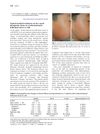
July 2012 in “Journal of the American Academy of Dermatology” This study found that topical tacalcitol improved roughness and scaling in erythromelanosis follicularis faciei et colli, although it was less effective for facial erythema.
 February 2026 in “Animals”
 In this study, supplementing low-protein diets with 0.75% methionine maintained growth performance, improved fur quality, enhanced nutrient utilization, and supported intestinal microbiota balance in blue foxes, with significant results on several biochemical parameters and nutrient digestibility observed.
1 citations
,
December 2024 in “Archives of Iranian Medicine” This study found that tofacitinib significantly improved disease activity in most patients with LPP, though further research is needed to refine protocols, understand response predictors, and address gender-specific adverse effects.
 3 citations
,
July 2013 in “Bioscience, Biotechnology, and Biochemistry”
3 citations
,
July 2013 in “Bioscience, Biotechnology, and Biochemistry” This study found that topically applied Chinese black tea extract, when fermented and combined with capsaicin, significantly promoted hair growth in mice, potentially involving estrogen receptor interactions.
3 citations
,
October 2024 in “Animals” In this proteomic analysis, the researchers found that transitioning from crimped to straight wool in Tan sheep is linked to significant changes in wool protein expression, revealing distinct patterns of keratins and keratin-associated proteins that could influence wool quality and economic value.
 11 citations
,
August 2018 in “Asian-Australasian journal of animal sciences”
11 citations
,
August 2018 in “Asian-Australasian journal of animal sciences” This study found that a short daily photoperiod increased crude protein digestibility, secondary hair follicle activity, and cashmere quality in Inner Mongolia white cashmere goats without harming fiber characteristics.
 October 2022 in “Pediatric Dermatology”
 This study found that pediatric telogen effluvium in the US has varying triggers and management outcomes, with emotional stress and acute illness being the most common triggers.
 37 citations
,
January 2019 in “Dermatologic Therapy”
37 citations
,
January 2019 in “Dermatologic Therapy” This article is a letter to the editor discussing the treatment of telogen effluvium using a dietary supplement, but it provides no new research results.