
This study found that ocu-miR-205 affects signaling pathways, promoting the apoptosis of dermal papilla cells and influencing hair follicle density in Rex rabbits.
 3 citations
,
March 2014 in “Journal of Industrial Microbiology & Biotechnology”
3 citations
,
March 2014 in “Journal of Industrial Microbiology & Biotechnology” This study identified a cytochrome P450 enzyme, CYP-pa1 from Pseudonocardia autotrophica, as responsible for the specific hydroxylation of cyclosporin A at the 9th N-methyl leucine, suggesting potential for biotechnological applications.
 2 citations
,
January 2026 in “Frontiers in Endocrinology”
2 citations
,
January 2026 in “Frontiers in Endocrinology” This review discusses the impaired functionality of regulatory T cells in the pancreas during the development of Type 1 diabetes, highlighting their role in disease pathogenesis, potential of Treg-based therapies, and challenges in clinical applications.
 2 citations
,
June 2021 in “Notulae Botanicae Horti Agrobotanici Cluj-Napoca”
2 citations
,
June 2021 in “Notulae Botanicae Horti Agrobotanici Cluj-Napoca” This review examines the role of root hair specification and nutrient acquisition in plants, emphasizing the need for further genetic research to understand the mechanisms influencing root hair development and growth.

This study found that ocu-miR-205 promotes apoptosis in dermal papilla cells, alters hair follicle signaling pathways, and affects hair density in Rex rabbits.
 1 citations
,
January 2018 in “Journal of clinical & experimental dermatology research”
1 citations
,
January 2018 in “Journal of clinical & experimental dermatology research” In this study, researchers found no significant difference in vitamin D levels between psoriasis patients and controls, suggesting no association between vitamin D deficiency and psoriasis.
 April 2026 in “Research Square”
 E13 fetal mouse fibroblast vesicles may help reduce scarring.
 February 2026 in “Frontiers in Immunology”
 This study found that administering human amniotic mesenchymal stem cells (hAMSCs) in a mouse model of psoriasis improved skin lesions and reduced inflammation-related markers, suggesting potential therapeutic benefit and safety for treating psoriasis, and identified specific gene targets involved in the treatment's mechanism.
 January 2025 in “Open Medicine”
 This study found that high-concentration cell-free adipose extract effectively reduced collagen deposition and blood vessel formation in a rabbit ear model, showing promise for preventing and treating hypertrophic scars.
 December 2024 in “Frontiers in Veterinary Science”
 This study on Dorper sheep identified important genetic factors influencing hair follicle development, finding that expression patterns and genes like DBI, FZD3, and ZDHHC21 play a crucial role in wool shedding, which could help improve understanding of mammalian skin-related traits and human hair advancement.
 April 2024 in “Journal of cancer research and clinical oncology”
 This review discusses the isolation, characterization, and potential clinical applications of tissue-derived extracellular vesicles in cancer diagnosis, prognosis, and treatment, noting their significance but highlighting the risks and need for appropriate protocols.
 March 2024 in “Frontiers in medicine”
 In this nonrandomized controlled trial, tenon capsule injection of platelet-rich plasma improved capillary perfusion and may enhance short-term vision in patients with acute nonarteritic anterior ischemic optic neuropathy.
 January 2024 in “Research Square (Research Square)”
 This study identified key genes related to ischemic stroke through the ferroptosis pathway and highlighted the potential role of specific traditional Chinese medicines in regulating associated biological processes.

This study examined the molecular communication in psoriasis cells, highlighting unique immune cell interactions and identifying new features of the hair follicle cell-psoriasis axis. It suggests the potential for targeted therapies at the single-cell level to improve psoriasis treatment.
 January 2024 in “Regenerative Biomaterials”
 This review introduces the potential of metal-organic framework-based functional composite materials in tissue engineering but reports no new results, emphasizing the need for further innovation in the field.
 April 2023 in “Research Square (Research Square)”
 This study found that lower GPX4 mRNA levels in polymorphonuclear neutrophils of systemic lupus erythematosus patients were negatively associated with disease activity and serological markers, suggesting a diagnostic value for GPX4 mRNA.

In this study with mice, simultaneous inactivation of Smad4 and PTEN genes led to rapid development of invasive forestomach squamous cell carcinomas, mirroring human esophageal SCCs.

In this study, the deletion of Smad4 and PTEN genes in mice was associated with rapid and invasive squamous cell carcinoma formation in the forestomach, modeling human esophageal cancer progression.
 September 2022 in “Research Square (Research Square)”
 This study found that overexpressing Rps14 in supporting cells promoted hair cell regeneration in the organ of Corti by facilitating cell proliferation and differentiation.
 September 2020 in “Research Square (Research Square)”
 This study identified 21 candidate genes related to immunoglobulin concentrations in colostrum and serum of dairy cattle, which may aid in genetic improvement for disease resistance.
 July 2020 in “Research Square (Research Square)”
 This study identified 21 candidate genes linked to immunoglobulin levels in colostrum and serum of dairy cattle, suggesting potential for genetic selection to enhance immunity.

This study found that ocu-miR-205 promotes the apoptosis of dermal papilla cells and the transformation of hair follicles from growth to regression and resting phases in Rex rabbits.
 36 citations
,
July 2019 in “Journal of Materials Science Materials in Medicine”
36 citations
,
July 2019 in “Journal of Materials Science Materials in Medicine” This study demonstrated that keratin derived from human hair can improve axon extension and alleviate motor deficits from sciatic nerve injuries, highlighting its potential as a promising biomaterial for peripheral nerve regeneration.
 113 citations
,
November 2017 in “Scientific Reports”
113 citations
,
November 2017 in “Scientific Reports” This study found that treatment with mesenchymal stem cell extracellular vesicles enhanced hair growth in mice and stimulated dermal papilla cell activity and growth factor production in vitro.
 100 citations
,
November 2021 in “Cell Research”
100 citations
,
November 2021 in “Cell Research” This study found that SARS-CoV-2 hijacks the host factor IGF2BP1 to stabilize its RNA and enhance translation, and identified Cepharanthine and Trifluoperazine as potential treatments against the virus.
 67 citations
,
November 2019 in “Nature Communications”
67 citations
,
November 2019 in “Nature Communications” This study demonstrated that a c-Kit-CreER-driven mouse model confirms melanocyte stem cells as a genuine source of melanoma, paralleling human melanoma in heterogeneity and gene signatures.
 57 citations
,
March 2024 in “Nano-Micro Letters”
57 citations
,
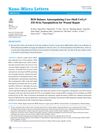
March 2024 in “Nano-Micro Letters” In this study, researchers created a core-shell nanozyme, CeO2@ZIF-8/Au, which autonomously regulates ROS levels to efficiently eliminate bacteria, reduce inflammation, and promote wound healing by balancing ROS generation and scavenging in response to environmental conditions.
 51 citations
,
March 2014 in “Nature Communications”
51 citations
,
March 2014 in “Nature Communications” This study suggests that activating retinoic acid signalling can inhibit Wnt signalling and induce regression in certain skin tumors, providing potential therapeutic strategies for tumor regression.
 45 citations
,
April 2013 in “Cell Transplantation”
45 citations
,
April 2013 in “Cell Transplantation” In this study, the researchers reported that activin B combined with bone marrow-derived mesenchymal stem cells enhanced wound healing and hair follicle regeneration in rats by promoting cell migration through the ERK and JNK pathways.
 32 citations
,
May 2018 in “Cell Cycle”
32 citations
,
May 2018 in “Cell Cycle” This study found that melatonin exposure promoted hair follicle fiber growth in Cashmere goat cultures, potentially influencing pathways related to the microvascular system and extracellular matrix.