 11 citations
,
August 2018 in “Facial Plastic Surgery Clinics of North America”
11 citations
,
August 2018 in “Facial Plastic Surgery Clinics of North America” This study reviewed the prospects and challenges of using stem cells from adipose tissue in regenerative medicine for facial rejuvenation, emphasizing the need for further research to ensure patient safety before these methods can become routine in cosmetic and reconstructive surgery.
14 citations
,
February 2008 in “Stem Cells and Development” This study identified several genes highly expressed in germ-line stem cells that are also common in hematopoietic stem cells, potentially aiding the exploration of fundamental stem cell commonalities.
 February 2026 in “International Journal of Molecular Sciences”
 This study investigated the photoprotective properties of Brazilian pepper tree extract against UV-induced damage in skin cells, reporting that it enhanced expression of genes relevant to skin health and showed superior activity compared to standard antioxidants.
 July 2023 in “Media Dermato Venereologica Indonesiana”
 This research discusses Stevens-Johnson syndrome and toxic epidermal necrolysis, life-threatening conditions often induced by immune-mediated drug reactions. Optimal management involves early diagnosis, drug withdrawal, and supportive therapy, though evidence for systemic treatments like corticosteroids and cyclosporin remains variable and lacks randomized controlled trial confirmation.
32 citations
,
August 2016 in “Science Signaling” This study developed PiSCES biosignatures that distinguished alopecia areata patients from controls, revealing enhanced basal TCR signaling and a potential disease-specific signaling network signature.
 August 2022 in “Frontiers in genetics”
 This study identified a novel bi-allelic missense variant in the DSC3 gene linked to severe Hypotrichosis with Recurrent Skin Vesicles in a Saudi child, supporting its role in the condition.
 January 2025 in “Frontiers in Immunology”
 This case report details a rare instance of a young male with coexisting autoimmune polyendocrine syndrome type 2 and anti-GAD65 antibody-associated stiff person syndrome, where symptoms improved by adding intravenous immunoglobulin therapy, emphasizing the importance of awareness for early diagnosis and treatment.
2 citations
,
January 2023 in “Uro” This study found that both a proprietary ultrahigh-pressure extract and a hexanic extract of saw palmetto showed comparable inhibition of 5α-reductase, suggesting similar potential for managing symptoms of benign prostatic hyperplasia.
April 2018 in “Journal of Investigative Dermatology” This study found that inactivating CerS4 in mouse epidermis disrupts lipid homeostasis and is crucial for maintaining, but not forming, the skin barrier.
211 citations
,
March 2011 in “Journal of Lipid Research” This study reports a novel LC/MS method that separates and analyzes all known ceramide subclasses in human stratum corneum, identifying a new subclass, CER [EOdS], with minimal sample preparation.
 December 2022 in “Gastroenterology”
 This report describes a case of Cronkhite-Canada syndrome diagnosed in a 54-year-old man with symptoms including gastrointestinal polyps, alopecia, skin hyperpigmentation, and severe diarrhea, who experienced significant symptom improvement with azathioprine.
 18 citations
,
February 2022 in “Cell Death Discovery”
18 citations
,
February 2022 in “Cell Death Discovery” In this study, researchers found that hair follicle-derived mesenchymal stem cells, modified to overexpress extracellular matrix protein 1, significantly improved liver function and reduced liver damage in cirrhotic mice by inhibiting hepatic stellate cell activation and TGF-β/Smad signaling.
October 2025 in “Clinical and Experimental Pediatrics” In this case report and literature review, researchers identified a novel mutation in the CLDN1 gene linked to neonatal ichthyosis-sclerosing cholangitis syndrome and found that its phenotype varies widely, suggesting a multidisciplinary approach is crucial for management.
September 2009 in “Hair transplant forum international” This article reports that the ISHRS has formed a committee to register hair restoration outcomes in patients with cicatricial alopecia and other hair diseases, without presenting new research findings.
1 citations
,
January 2022 in “Oxidative Medicine and Cellular Longevity” This study found that hair follicle-derived mesenchymal stem cells can alleviate pyroptosis and improve ulcerative colitis symptoms in mice, suggesting potential new treatments for the condition.
 25 citations
,
May 2020 in “Aesthetic Surgery Journal”
25 citations
,
May 2020 in “Aesthetic Surgery Journal” In this systematic review, tSVF-based therapy demonstrated favorable outcomes for various pathologies, including aged skin and osteoarthritis, with low incidence of adverse events, while highlighting the need for further research into optimal protocols and mechanisms of action.
 25 citations
,
December 2021 in “Stem Cell Research & Therapy”
25 citations
,
December 2021 in “Stem Cell Research & Therapy” This review discusses the potential of mesenchymal stem/stromal cells and their exosomes in promoting wound healing and skin regeneration, but reports no new experimental results.
 July 2023 in “British journal of dermatology/British journal of dermatology, Supplement”
 In this study, researchers analyzed skin tumors from patients with CYLD cutaneous syndrome and found that loss of CYLD function is linked to changes in cellular signaling pathways, particularly NF-κB signaling, and leads to increased secretion of specific extracellular matrix proteins.
24 citations
,
March 2022 in “Genome biology” This study introduces scINSIGHT, a method that showed improved performance over existing approaches in identifying gene expression patterns and cellular processes in heterogeneous scRNA-seq datasets from different biological conditions.
 October 2023 in “The American Journal of Gastroenterology”
 This case report describes chronic iron deficiency anemia in a patient with Cronkhite-Canada syndrome, highlighting the need for more data to guide treatment and cancer surveillance due to its rarity and mortality risk.

In preclinical studies, topical CUR61414 reduced Hh signaling and shrank BCCs in mice, but this study found no clinical efficacy in human superficial or nodular BCCs.
1 citations
,
August 2025 in “Bioengineering” In this study, the combination of full-thickness skin column grafts and the TSN6 peptide improved wound healing quality in pigs by enhancing epidermal maturation compared to other treatments.
 October 2025 in “Indian Journal of Dermatology”
 This study examined the dermoscopic features of five patients with tuberous sclerosis and found that dermoscopy can differentiate characteristic cutaneous features from similar conditions, potentially aiding in earlier diagnosis when other symptoms are subtle or absent.
2 citations
,
July 2024 in “International Journal of Molecular Sciences” In this study, researchers found that knocking down the transcription factor Csdc2 inhibited the proliferation of dermal papilla cells in cashmere goats, and identified its regulatory relationship with the gene Robo2, providing insights into the genetic mechanisms influencing cashmere fiber growth.
 April 2023 in “Journal of Investigative Dermatology”
 This research reexamined transcriptomic data to study stem and progenitor cell proliferation in psoriasis, finding that the number of committed progenitor cells increased eight-fold in psoriatic skin without altering stem cell numbers, potentially identifying new therapeutic targets.
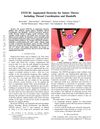 April 2024 in “arXiv (Cornell University)”
 In this study, the researchers developed an advanced robotic system called STITCH for performing suture tasks, which completed an average of 2.93 sutures autonomously and 4.47 sutures with human intervention in physical trials.
June 1996 in “Journal of Dermatological Science” 3 citations
,
July 2017 in “Journal of Investigative Dermatology” This study found that SSEA-4 is a marker that distinguishes eccrine from apocrine ductal cells in human sweat glands, suggesting its potential use in diagnostic applications.
 146 citations
,
May 2002 in “The American journal of pathology”
146 citations
,
May 2002 in “The American journal of pathology” This study found that cathepsin L deficiency in mice led to significant abnormalities in hair follicle development and cycling, including disrupted hair shaft outgrowth and premature hair growth phase entry.
1 citations
,
January 2025 in “Advances in Wound Care” This study identified dual epithelial and mesenchymal traits in dermal sheath cells during wound repair, suggesting they could be targeted to enhance healing.