 291 citations
,
January 2014 in “The Scientific World Journal”
291 citations
,
January 2014 in “The Scientific World Journal” Lichen Planus is a less common condition affecting skin and mucous membranes, with various types and associated risk factors, challenging to diagnose, significantly impacts life quality, and may have a risk of cancerous changes in oral lesions.
9 citations
,
October 2022 in “Journal of Molecular Neuroscience” This study reports a novel LSS gene mutation in an Egyptian family with alopecia intellectual disability syndrome 4, expanding the known clinical and genetic features of the condition.
 90 citations
,
July 2008 in “Dermatologic therapy”
90 citations
,
July 2008 in “Dermatologic therapy” This article reviews lichen planopilaris, a chronic scarring alopecia, and explores recent treatment developments, but it reports no new clinical results.
 160 citations
,
March 2009 in “Seminars in Cutaneous Medicine and Surgery”
160 citations
,
March 2009 in “Seminars in Cutaneous Medicine and Surgery” This article reviews lichen planopilaris, its presentation, and treatment challenges, and emphasizes the need for more research into its pathogenesis and therapy efficacy; it reports no new findings.
8 citations
,
November 2009 in “The Neurologist/The neurologist” This case report highlights a 21-year-old woman with seizures, mental retardation, spastic diplegia, and ichthyosis consistent with Sjogren-Larsson syndrome, and emphasizes the importance of differential diagnosis when additional symptoms are present.
 December 2023 in “Journal of General Procedural Dermatology and Venereology Indonesia”
 The abstract highlights that lichen planus can manifest as cicatricial alopecia or lichen planopilaris, while discoid lupus erythematosus, a common form of lupus erythematosus, typically causes scarring alopecia. Results are not reported here.
 1 citations
,
November 2020 in “Journal of The American Academy of Dermatology”
1 citations
,
November 2020 in “Journal of The American Academy of Dermatology” This study found that oral spironolactone is generally well tolerated and may be effective for treating female-pattern hair loss, with improvements in hair regrowth stability as measured by Sinclair scores.
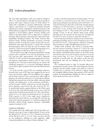 April 2012 in “Informa Healthcare eBooks”
 Lichen planopilaris is a rare, chronic condition causing hair loss, mainly in middle-aged women, and early treatment is important to prevent permanent baldness.
 3 citations
,
February 2019 in “Animal biotechnology”
3 citations
,
February 2019 in “Animal biotechnology” In this study, the PLP2 gene was found to promote secondary hair follicle development in Liaoning cashmere goats, with its expression negatively regulated by melatonin and potentially affecting follicle development via the BMP pathway.
 May 2017 in “Journal of The American Academy of Dermatology”
 PLAU and SerpinB2 affect cell death differently in various forms of leprosy and could be targets for new treatments.
 May 2025 in “The Journal of Rheumatology”
 This case report suggests that a proactive physical therapy model can be effective for improving physical function and meeting exercise guidelines in patients newly diagnosed with systemic lupus erythematosus.
16 citations
,
July 2021 in “American Journal of Medical Genetics Part A” This study identified novel LSS mutations implicated in hypotrichosis simplex with or without neurodevelopmental abnormalities, highlighting the need for careful evaluation of synonymous mutations' potential pathogenic effects.
June 2023 in “Journal of dermatology for physician assistants” This case report highlights a misdiagnosis of traction alopecia that progressed to lichen planopilaris in a patient of color, emphasizing the need to consider LPP in similar cases due to differing treatments.
January 2026 in “JPRAS Open” In this pilot study, PDLLA scalp microinjections showed improvement in physician-rated Global Aesthetic Improvement Scale scores over 12-24 weeks for 90% of patients with non-scarring alopecia, with no serious adverse events reported, although findings remain preliminary due to methodological limitations.
 March 2025 in “Research Square (Research Square)”
 This study explored the potential of the lysate and lipoteichoic acid from Lactiplantibacillus plantarum APsulloc 331261 to improve scalp seborrheic dermatitis by modulating inflammatory and lipogenesis pathways in vitro, suggesting potential as a natural treatment option.
 April 2017 in “Journal of Investigative Dermatology”
 In this pilot study, researchers observed a correlation between clinical severity and histologic severity of lichen planopilaris, suggesting that an immunohistochemical scoring system could aid in grading disease activity.
3 citations
,
October 2020 in “Arthritis Care & Research” This review discusses the advancement and validation of outcome measures for pediatric systemic lupus erythematosus to improve disease monitoring and treatment precision but reports no new clinical findings.
 January 2023 in “Brazilian Journal of Pharmaceutical Sciences”
 This study concluded that the liquid chromatography-mass spectrometry method developed is viable for accurately quantifying spironolactone and its metabolite canrenone in plasma despite interference from plasma components.
 2 citations
,
January 2024 in “Advances in Dermatology and Allergology”
2 citations
,
January 2024 in “Advances in Dermatology and Allergology” This study suggests a potential role for S100A7 and IL-17 in the pathogenesis of lichen planopilaris.
4350 citations
,
May 2012 in “Arthritis & Rheumatism” This study found that the new SLICC classification criteria for systemic lupus erythematosus were more sensitive and resulted in fewer misclassifications than the current ACR criteria, although they had lower specificity.
 January 2024 in “Wiadomości Lekarskie”
 This study will evaluate the preferences for professional language interpretation services among patients with limited English proficiency in the otolaryngology clinic setting, aiming to improve communication and healthcare outcomes.
This study demonstrated that the IVL-DrugFluidic® platform is effective for mass-producing finasteride-loaded polymeric microspheres for long-acting injectables, maintaining stable drug release without an initial burst for a month.
 August 2023 in “The journal of investigative dermatology/Journal of investigative dermatology”
 This study reports that a patient with rare linear lichen planopilaris experienced complete hair regrowth after 12 weeks of treatment with the antibody ixekizumab, suggesting it as a potential targeted therapy.
1 citations
,
March 2010 in “International Journal of Cosmetic Science” This study introduces a new device for measuring changes in hair stiffness and lubricity, which can help predict the effects of various hair treatments.
 37 citations
,
October 2015 in “Anais Brasileiros de Dermatologia”
37 citations
,
October 2015 in “Anais Brasileiros de Dermatologia” This study found diverse clinical presentations of lichen planopilaris, with classic lichen planopilaris being the most common, highlighting the importance of recognizing this variability for accurate diagnosis.
 20 citations
,
March 2023 in “Drug Delivery and Translational Research”
20 citations
,
March 2023 in “Drug Delivery and Translational Research” This study found that a lacticin 3147 solid lipid nanoparticle gel demonstrated potent and sustained antimicrobial activity against S. aureus, including MRSA, in ex vivo S. aureus-infected pig skin.
 1 citations
,
June 2022 in “Curēus”
1 citations
,
June 2022 in “Curēus” This case study highlights the unique occurrence of Papillon-Lefévre syndrome in two siblings from a consanguineous family, emphasizing the potential role of genetic factors in the disease's development.
5 citations
,
May 2001 in “Proceedings of SPIE, the International Society for Optical Engineering/Proceedings of SPIE” This study developed a double-wavelength laser scanning microphotometer to measure hair shaft and follicle absorbance, improving spatial resolution and reducing light scattering effects in vitro.
1 citations
,
August 2021 in “Journal of Investigative Dermatology” ASLAN004 was safe and well-tolerated, supporting further development for treating certain diseases.
May 2024 in “JAAD Case Reports” This case report describes a 29-year-old man with a year-long non-itchy skin eruption and hair loss, with distinct papules and plaques across his scalp, beard, body, and suprapubic regions, but no systemic symptoms or family history of autoimmune disease.