7 citations
,
June 2000 in “Journal of the American Academy of Dermatology” This study found that betamethasone valerate in a foam vehicle has comparable total coverage to traditional topical corticosteroid vehicles, despite less coverage per unit of foam.
4 citations
,
April 2001 in “Experimental Dermatology” This study used a novel HPLC-radiomatic flow scintillation system to measure 5α-reductase activity in dermal papillae from miniaturized hair follicles of the human occipital scalp, revealing significant variability in enzyme activity across samples.
8 citations
,
June 2021 in “Frontiers in Medicine” This study reported that the combination of a 308-nm excimer lamp and 10% liquor carbonis detergens significantly improved scalp psoriasis symptoms compared to the excimer lamp alone, with more patients achieving 75% reduction in their Psoriasis Scalp Severity Index.
In this study, the researchers observed that antiandrogen treatment with Cyproterone acetate led to atrophy of pilo-sebaceous units and may activate Langerhans cells, contributing to local inflammation.
December 2012 in “한국피부미용향장학회지” This study suggests that aroma oils categorized by scalp type have similar chemical compositions, potentially enhancing their effectiveness in aromatherapy for scalp issues.
This study observed that mesenchymal stem cell-conditioned medium accelerated burn wound healing in rats by enhancing epidermal growth factor presence, improving wound closure, collagen density, and re-epithelialization compared to the control.
2 citations
,
October 2024 in “PubMed” The authors reviewed nine studies on various dermatological procedures for treating Seborrheic Dermatitis, noting significant efficacy in small cohorts with high patient satisfaction, but highlighted the need for further research to address challenges like cost, variable effectiveness, and long-term safety.
 16 citations
,
April 2012 in “Journal of mammalogy”
16 citations
,
April 2012 in “Journal of mammalogy” Among Australian fur seals at one colony, this study found that alopecia, primarily affecting juvenile females, is linked to hair shaft fractures associated with low tyrosine and zinc levels, as well as higher pollutant exposure.
 June 2026 in “Journal of Pakistan Association of Dermatologists”
 This study found a significant correlation between lower triglyceride levels and reduced acne severity among medical students, while no significant association was observed between BMI and acne severity.
This study found that in beagles with benign prostate hyperplasia, finasteride treatment increased blood volume and decreased vessel leakiness in the prostate's parenchymal zone as shown by dynamic contrast-enhanced MRI.
11 citations
,
March 1959 in “Journal of Histochemistry & Cytochemistry” This study observed that radioactive sulphur appeared in rat and mouse hair follicles more quickly than in lambs, possibly linked to faster hair growth rates in the rodents.
September 2024 in “Journal of Drugs in Dermatology” This review found that various dermatological procedures for Seborrheic Dermatitis, such as phototherapy and laser treatments, showed significant efficacy in small cohorts with high patient satisfaction, but highlighted the need for further research to standardize protocols and evaluate long-term outcomes.
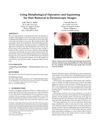
This study presents a new approach to automatically remove hair artifacts from dermoscopic images, which reportedly performed well compared to existing methods like DullRazor using the PH2 datasets.
66 citations
,
September 2008 in “The Journal of Dermatology” This study found that gastrointestinal dysfunction is a significant risk factor for sebaceous gland diseases in adolescents, with correlations observed between these conditions and various GI symptoms.
35 citations
,
April 1956 in “Journal of the American Medical Association” This study found that using selenium sulfide shampoo for seborrheic dermatitis was associated with hair loss, which ceased after discontinuing the shampoo.
7 citations
,
February 2023 in “Journal of Dermatological Treatment” This study concluded that the Scalp Photographic Index is a reliable and validated tool for objectively classifying and scoring various scalp conditions.
 11 citations
,
January 2006 in “Analytica Chimica Acta”
11 citations
,
January 2006 in “Analytica Chimica Acta” Validated method reliably measures finasteride in tablets using liquid chromatography.
February 2026 in “Journal of Surfactants and Detergents” In this study, researchers synthesized new surfactants with hair repair properties, finding that they effectively restored the hydrophobic barrier of damaged hair and improved combing ease compared to untreated hair, highlighting their potential in haircare products.
 16 citations
,
July 2012 in “Current pharmaceutical biotechnology”
16 citations
,
July 2012 in “Current pharmaceutical biotechnology” This review discusses the pathogenesis of common sebaceous gland diseases and their molecular pathways, but it reports no new clinical findings.
December 1981 in “ビジネスコミュニケ-ション” In this study, TRPV1 signaling was found to play a critical, previously unrecognized role in human sebocyte biology, and targeting this pathway may offer a new approach for managing inflammatory sebaceous gland disorders like acne.
April 2025 in “Journal of Reproductive Healthcare and Medicine” This study confirmed that an injectable implant known as RISUG-PH™, when administered via the vas deferens, successfully delivers the drug Finasteride to the prostate in male rats for up to 28 days, suggesting a potential localized alternative to oral delivery methods.
January 2009 in “Yaowu fenxi zazhi” This study established a reliable method for determining residual solvents in Finasteride using gas chromatography.
October 2024 in “Jurnal Pharmascience” This study concluded that formulations of celery and candlenut extracts meet the necessary criteria for use as a spray preparation aimed at promoting hair growth, based on evaluations of physical properties and consistency.
30 citations
,
November 2005 in “The journal of investigative dermatology. Symposium proceedings/The Journal of investigative dermatology symposium proceedings” This study discovered that the lipid in human hair follicles is mainly located in the hair cuticle and keratinized inner root sheath, distinct from sebaceous and epidermal lipids, suggesting a potential role as a "hair barrier.
May 2026 in “Therapeutic Delivery” This study found that applying a dutasteride-loaded liposome formulation to damp rat skin nearly doubled the drug's follicular accumulation compared to dry skin, suggesting scalp hydration status may significantly impact the drug's topical delivery, especially in follicle-rich areas.
 29 citations
,
January 2010 in “Journal of oleo science”
29 citations
,
January 2010 in “Journal of oleo science” In this study, mannosylerythritol lipids from soybean oil notably increased fibroblast and papilla cell viability, suggesting potential as a hair growth agent.
22 citations
,
January 2017 in “Journal of steroid biochemistry and molecular biology/The Journal of steroid biochemistry and molecular biology” This study developed and validated a mass spectrometric method to measure hydroxy-androgens in serum, which aids in understanding androgen synthesis in castration resistant prostate cancer.
 26 citations
,
March 1986 in “Clinical and Experimental Dermatology”
26 citations
,
March 1986 in “Clinical and Experimental Dermatology” Scalp hair grows at 0.37 mm/day, forearm hair at 0.18 mm/day, and thigh hair at 0.30 mm/day, with no significant differences found in people with certain hair conditions.
 13 citations
,
October 2021 in “Anais Brasileiros de Dermatologia”
13 citations
,
October 2021 in “Anais Brasileiros de Dermatologia” This article discusses how dermoscopy, particularly "entomodermoscopy," aids in diagnosing skin infestations and infectious dermatoses, enhancing clinical evaluations, and monitoring treatment efficacy for conditions like scabies, pediculosis, myiasis, and tungiasis.
5 citations
,
January 2000 This study observed a new skin disease in farmed mink in Canada, suggesting that an unidentified infectious agent, in association with secondary bacterial infection, may cause the condition.