50 citations
,
June 1993 in “European journal of biochemistry” This article reviews the regulation of gene expression and assembly of intermediate filaments but presents no new findings.
7 citations
,
May 2022 in “Cancers” This study found that UC.145 influences DKK1 methylation and Wnt signaling in gastric cancer, with implications for patient survival and its potential as a predictive biomarker.
26 citations
,
March 1995 in “Differentiation” This study isolated and sequenced the complete gene rKAP4L1, which encodes a cysteine-rich hair keratin-associated protein in rabbit hair follicles.
 February 2020 in “Definitions”
 This abstract reviews the role of the human KRT 16 wild-type allele in skin and hair development and its association with certain genetic skin disorders, without presenting new findings.
15 citations
,
June 2012 in “British Journal of Dermatology” This study identified a novel KRT86 mutation associated with autosomal dominant monilethrix, expanding understanding of its genetic basis beyond known motifs.
15 citations
,
March 2021 in “EMBO Reports” PRSS35 enzyme may help start skin tumors and could be a target for cancer treatment.

In this study, researchers identified specific gene polymorphisms in Subo Merino sheep that significantly affect wool traits, suggesting these genetic markers could aid in breeding high-quality fine-wool sheep.
 38 citations
,
April 2017 in “PLOS Genetics”
38 citations
,
April 2017 in “PLOS Genetics” This study found that human progenitor keratinocytes form unique complements of enhancers and super-enhancers during differentiation and migration, influencing gene expression and skin disease variant enrichment.
October 2025 in “Animals” This study explored the genetic regulation of goose feather follicle development, identifying miR-200a as a key regulator that inhibits GEDF proliferation through the Wnt pathway, potentially impacting goose down quality and supporting selective breeding strategies.
6 citations
,
June 2012 in “PloS one” This study identified a novel SCF mRNA splice variant in white merino sheep skin, which may play a role in hair follicle melanogenesis.
January 2021 in “Research Square (Research Square)” This study found that long noncoding RNA profiles in Wan strain Angora rabbits may help understand the molecular mechanisms regulating hair follicle density, potentially influencing wool fiber production.
15 citations
,
January 1993 in “DNA sequence” This study sequenced a related gene to KRT2.9 called KRT2.13, which encodes a type II keratin protein not expressed in the hair follicle, and found significant sequence homology suggesting possible gene conversion or conservation of functional sequences.

Among Super Merino and Small-Tailed Han sheep, this study identified differentially expressed long non-coding RNAs and mRNAs linked to hair follicle growth and fiber traits, suggesting their potential roles in regulating these important wool characteristics through RNA sequencing and gene enrichment analyses.
39 citations
,
December 2012 in “The American Journal of Human Genetics” This study identified mutations in the SNRPE gene that may disrupt hair growth, linking a spliceosome component to hereditary hair loss disorders.
13 citations
,
November 2018 in “Animal Genetics” This study suggests that a newly identified KRT 71 gene variant may be responsible for curly hair in Curly Coated Retrievers and potentially contributes to follicular dysplasia.
 2 citations
,
November 2022 in “Animal Bioscience”
2 citations
,
November 2022 in “Animal Bioscience” This study found that m6A-circRNA-ZNF638 enhances the activation of secondary hair follicle stem cells in cashmere goats by interacting with the miR-361-5p/Wnt5a pathway.
September 2017 in “Journal of Investigative Dermatology” LRIG1 protein affects hair growth by regulating skin receptors, leading to hair loss when overexpressed.
June 2020 in “Zenodo (CERN European Organization for Nuclear Research)” This review discusses Robertsonian chromosomal translocations and their prevalence in the population, highlighting their association with infertility, and reports no new clinical results.
54 citations
,
October 2007 in “The FASEB Journal” This study suggests that hairlessness in nude mice may be due to insufficient expression of phospholipase C-δ1, a molecule essential for normal hair development downstream of the Foxn1 gene.
50 citations
,
December 2005 in “European Journal of Immunology” This study found that a specific mutation in the mouse RXRalpha gene significantly impacts immune responses and causes hair loss and skin cysts.
37 citations
,
December 2020 in “PLANT PHYSIOLOGY” In this study, the researchers identified a temperature-sensitive mutant in Arabidopsis thaliana, showing disrupted root hair formation and altered responses to plant hormone treatments at elevated temperatures.
11 citations
,
October 2023 in “mSphere” This study reported that the PrrH sRNA in *Pseudomonas aeruginosa* may directly regulate genes involved in pyochelin siderophore biosynthesis, highlighting its role in adapting to heme availability, with light conditions influencing this gene expression.
April 2026 in “Current Opinion in Genetics & Development” This mini-review explores how both endogenous and damage-released RNAs serve as instructional signals that influence cell identity and plasticity during tissue maintenance and repair, highlighting RNA's role as a regulator of cellular flexibility in various regenerative contexts.
58 citations
,
November 2004 in “The journal of investigative dermatology/Journal of investigative dermatology” This study found that mutations in the Foxn1 gene in nude mice affect not only hair but also nail structure and differentiation, offering insights into nail hypergranulosis pathogenesis relevant to human nail diseases.
75 citations
,
April 2000 in “Developmental Dynamics” This study suggests that the structural integrity and physical proximity of Whn's DNA binding and activation domains are crucial for hair keratin gene activation and may explain the nude phenotype.
 24 citations
,
July 2017 in “Structure”
24 citations
,
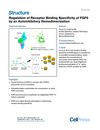
July 2017 in “Structure” In this study, researchers found that ligand homodimerization controls the receptor binding specificity of the FGF9 subfamily, preventing off-target activation of FGFR "b" isoforms.
10 citations
,
May 2021 in “Frontiers in Plant Science” This study identified OsRopGEF3 as a key regulator in rice root hair growth, demonstrating that it interacts with proteins to promote reactive oxygen species production, affecting root hair length and width.
 22 citations
,
March 2017 in “Scientific reports”
22 citations
,
March 2017 in “Scientific reports” This study investigated the role of NLRP3 inflammasomes in alopecia areata and found that outer root sheath cells may contribute to inflammation by increasing IL-1β and HMGB1 secretion when stimulated with double-stranded RNA.
26 citations
,
May 2007 in “Differentiation” This study suggests that Foxn1 acts as a brake on PKC signaling in keratinocytes, thereby modulating the stages of differentiation by controlling PKC activity.
 106 citations
,
March 2013 in “Nature Communications”
106 citations
,
March 2013 in “Nature Communications” This study found several microRNA-related genetic variants linked to epithelial ovarian cancer risk, with a notable association at the 17q21.31 region, suggesting potential new susceptibility genes.