 24 citations
,
July 2017 in “Structure”
24 citations
,
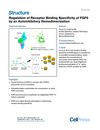
July 2017 in “Structure” In this study, researchers found that ligand homodimerization controls the receptor binding specificity of the FGF9 subfamily, preventing off-target activation of FGFR "b" isoforms.
60 citations
,
July 2014 in “Autophagy” This study found that autophagy is impaired in Birt-Hogg-Dubé syndrome-associated renal tumors and identified that the FLCN protein interacts with key autophagy components regulated by ULK1.
20 citations
,
March 1975 in “Journal of steroid biochemistry/Journal of Steroid Biochemistry” This study found a direct correlation between the testicular feminization gene and decreased androgen receptor activity, potentially explaining the androgen insensitivity in affected individuals.
 35 citations
,
October 2017 in “Signal Transduction and Targeted Therapy”
35 citations
,
October 2017 in “Signal Transduction and Targeted Therapy” This study found that fibromodulin significantly reduces scar formation and boosts scar strength in rodent and porcine models, suggesting potential for FMOD-based therapies in cutaneous wound repair.
3 citations
,
June 2025 in “Gyemyeong uidae haksulji” This review suggests that PDRN shows promise as a safe and versatile regenerative agent for wound healing and other dermatological applications, based on its dual mechanisms and clinical evidence of efficacy.
September 2017 in “Journal of Investigative Dermatology” RCS-01 is safe and may help rejuvenate aging skin.
August 2025 in “Journal of Investigative Dermatology” Fibronectin is essential for hair follicle regeneration and may help rejuvenate aged skin.
June 2026 in “ACS Nano Medicine” This study designed fibronectin nanogel microneedles, reporting their potential to enhance tissue repair by improving collagen organization, reducing inflammation, and promoting angiogenesis in both photoaged and diabetic wound models.
July 2026 in “Materials Today Bio” This study demonstrated that in a mouse melanoma wound model, the MQ Microneedles effectively managed ROS levels to inhibit tumor growth and promote wound healing through light-controlled release.
 September 2022 in “Research Square (Research Square)”
 This study found that overexpressing Rps14 in supporting cells promoted hair cell regeneration in the organ of Corti by facilitating cell proliferation and differentiation.
 25 citations
,
May 2014 in “Facial Plastic Surgery”
25 citations
,
May 2014 in “Facial Plastic Surgery” In this study, intradermal injections of autologous platelet-rich fibrin matrix significantly increased hair density in patients with androgenetic alopecia at 2 and 3 months after initial treatment.
5 citations
,
February 2016 in “Sultan Qaboos University medical journal” This case report describes a patient with a severe pruritic rash and hair loss in both axillary regions, with no fluorescence under a Wood's lamp and hair follicle-centred papules observed through dermoscopy.
 October 2018 in “bioRxiv (Cold Spring Harbor Laboratory)”
 This study investigated NNAT expression in embryonic and postnatal rat tissues, finding its localization in both undifferentiated and differentiated cells across tissues such as the pancreas, tongue, and testis.
 October 2023 in “bioRxiv (Cold Spring Harbor Laboratory)”
 In this study, RNA integrity in horse hair follicles stored at various conditions in RNAlater® was maintained, showing that storing them at cool or room temperature for up to a week does not compromise RNA quality or concentration.
 February 2025 in “International Journal of Molecular Sciences”
 This study found that melatonin may enhance hair follicle stem cell viability by downregulating the nuclear receptor RORA, which otherwise inhibits cell proliferation and promotes apoptosis.
19 citations
,
June 2010 in “Journal of acupuncture and meridian studies” This study found that emodin from Polygonum multiflorum showed 5alpha-reductase inhibitory activity, which was more potent than alizarin but less potent than riboflavin.
April 2026 in “Current Opinion in Genetics & Development” This mini-review explores how both endogenous and damage-released RNAs serve as instructional signals that influence cell identity and plasticity during tissue maintenance and repair, highlighting RNA's role as a regulator of cellular flexibility in various regenerative contexts.
 May 1995 in “Journal of Investigative Dermatology”
 Researchers developed a new way to measure gene activity in single hair follicles and found that a specific gene's activity changes with different amounts and times of treatment.
 81 citations
,
November 2012 in “Journal of the National Cancer Institute”
81 citations
,
November 2012 in “Journal of the National Cancer Institute” This study found that FLCN deficiency in mice muscles led to increased mitochondrial biogenesis and a metabolic shift towards oxidative phosphorylation, with a similar advantage observed in FLCN-null kidney cancer cells.
 July 2020 in “CRS 2020 Virtual Annual Meeting”
 This study found that the newly developed microarray patches for intradermal delivery of finasteride showed high drug content and significantly improved skin deposition compared to existing methods.
 January 2021 in “Research Square (Research Square)”
 This study mapped copy number variations in Chinese fine-wool sheep, identifying regions linked to important traits like milk production and growth, and highlighting a strong selection signal at the RXFP2 gene.
January 2017 in “PRISM (University of Calgary)” This study identifies unique gene expression patterns in specialized fibroblasts within adult hair follicles, which advances understanding of their role in tissue regeneration.
This study found that RXR and RAR proteins were detectable in normal human skin, suggesting they may play a role in epidermal cell differentiation and hair and gland physiology.
 20 citations
,
April 2011 in “British Journal of Dermatology”
20 citations
,
April 2011 in “British Journal of Dermatology” Reflectance confocal microscopy can tell apart white dots on the scalp as either sweat gland ducts or hair follicle openings.
23 citations
,
October 2008 in “Journal of medicinal chemistry” This study suggests that PF-0998425 is an effective androgen receptor antagonist for sebum control and androgenetic alopecia with rapid metabolism reducing the risk of systemic side effects.
 7 citations
,
March 2007 in “International Journal of Dermatology”
7 citations
,
March 2007 in “International Journal of Dermatology” This study observed that antisense oligonucleotides targeting FGFR-1 increased cellular activity in hair follicle cultures from mice, suggesting potential clinical utility for treating baldness.
 April 2023 in “Journal of Investigative Dermatology”
 This study found that dimethyl fumarate improved delayed wound healing in Il36rn-/- mice by reducing neutrophil extracellular trap formation and oxidative stress.
 August 2024 in “Current Issues in Molecular Biology”
 In this study, researchers analyzed skin tissue from two sheep breeds during the growing period and identified 56 differentially expressed lncRNAs and 616 mRNAs linked to hair follicle development, suggesting potential targets for improving sheep wool quality through genetic and molecular approaches.
2 citations
,
March 2025 in “PNAS Nexus” In this study, researchers used Raman spectroscopy to identify melanin-specific features in mouse hair as potential biomarkers for gamma-radiation exposure, achieving a sensitivity of 88% and specificity of 83%, with classification accuracy declining over time beyond 7 days post-irradiation.
5 citations
,
January 2025 in “Aesthetic Surgery Journal Open Forum” In this mouse study, researchers reported that sequential monopolar-bipolar radiofrequency irradiation significantly improved skin quality by increasing collagen density, elastin fiber expression, and fibroblast differentiation more than monopolar RF treatment alone.