 July 2025 in “Clinical Cosmetic and Investigational Dermatology”
 This study found that platelet-rich plasma therapy significantly improved hair density and reduced hair shedding in Vietnamese patients with androgenetic alopecia, with high patient satisfaction and minimal side effects.
 August 2024 in “Cosmetics”
 This review highlights caffeine's diverse benefits in cosmetics and nutricosmetics, noting its antioxidant properties, ability to treat skin disorders like androgenic alopecia, and potential to enhance sunscreen effectiveness, though penetration into deeper skin layers remains challenging.
January 2023 in “Faculty of 1000 Research Ltd” This case report details a 21-year-old female with systemic lupus erythematosus who developed tuberculous lymphadenitis, illustrating how immunosuppressive therapy in SLE patients can lead to such infections.
 December 2021 in “Journal of clinical images and medical case reports”
 This review compares mesotherapy and PRP for hair loss but reports no new clinical results; the authors highlight the need to understand their differences for optimal treatment choices.
March 2019 in “SLAS TECHNOLOGY” This study found that MSN-ceria nanomaterial accelerates cutaneous wound healing in rat models by reducing ROS levels and promoting collagen deposition, leading to improved tissue regeneration without significant scarring.
 February 2018 in “InTech eBooks”
 This review discusses the role of platelet-rich plasma therapy in various cosmetic procedures, finding potential benefits in improving tissue homeostasis if harvesting standards are maintained, but reports no new clinical results.
October 2017 in “Our Dermatology Online” This study reports that while DCP had similar treatment efficacy in propylene glycol and isopropanol for alopecia areata, the formulation in isopropanol was better tolerated.
 16 citations
,
August 2011 in “Annals of Allergy Asthma & Immunology”
16 citations
,
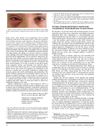
August 2011 in “Annals of Allergy Asthma & Immunology” This report describes a case of a 19-year-old woman experiencing severe recurrent angioedema with airway issues, leading to multiple emergency visits and unsuccessful treatment with typical steroid-sparing agents.
 November 2009 in “Reactions Weekly”
 Two women lost hair after mesotherapy for hair loss, with one having permanent and the other temporary hair loss.
 27 citations
,
August 2018 in “Therapeutic Delivery”
27 citations
,
August 2018 in “Therapeutic Delivery” In this study, researchers reviewed recent advances in using nanoencapsulation technology to improve the pharmacological treatment of alopecia, suggesting its potential to enhance drug delivery and reduce adverse effects compared to conventional methods.
 19 citations
,
March 2013 in “Journal of Cutaneous Pathology”
19 citations
,
March 2013 in “Journal of Cutaneous Pathology” This case report describes a 26-year-old female with linear morphea and unique alopecia characterized by atrophic follicular remnants, resembling telogen follicles but indicating permanent alopecia, unlike typical findings in morphea-related alopecia.
 July 2022 in “BMJ Case Reports”
 In this study, researchers identified and characterized three specific enzymes in root hair cells that play crucial roles in controlling root hair growth by affecting cell wall properties during expansion.
 17 citations
,
April 2002 in “Contact Dermatitis”
17 citations
,
April 2002 in “Contact Dermatitis” Minoxidil 5% caused skin discoloration in a man using it for hair loss.
 16 citations
,
July 1996 in “Dermatologic Clinics”
16 citations
,
July 1996 in “Dermatologic Clinics” This article discusses common dermatologic side effects of psychopharmacologic agents such as eruptions, urticaria, and photosensitivity, but it reports no new research findings.
 1 citations
,
September 2023 in “Rheumatology advances in practice”
1 citations
,
September 2023 in “Rheumatology advances in practice” This case report describes a 42-year-old woman with rheumatoid arthritis who developed extensive impetiginized pityriasis amiantacea potentially linked to her anti-TNF-α therapy with golimumab. Discontinuing the drug and other treatments led to significant clinical improvement within a month.
 1 citations
,
August 1946 in “Archives of dermatology”
1 citations
,
August 1946 in “Archives of dermatology” This case presentation describes an adult with tinea capitis and related symptoms who was found to have a Trichophyton gypseum infection.
 24 citations
,
September 2015 in “JAAD case reports”
24 citations
,
September 2015 in “JAAD case reports” This case report describes a patient with frontal fibrosing alopecia experiencing significant hair regrowth and reversal of cutaneous atrophy after treatment with the 5α-reductase inhibitor finasteride.
 3 citations
,
June 2022 in “Dermatology and therapy”
3 citations
,
June 2022 in “Dermatology and therapy” This case report found that a novel botanical treatment halted disease progression and promoted hair regrowth in four patients with lichen planopilaris, indicating potential for use as a safe alternative therapy.
 49 citations
,
July 2009 in “Journal of the American Academy of Dermatology”
49 citations
,
July 2009 in “Journal of the American Academy of Dermatology” This report highlights two cases where patchy alopecia developed after mesotherapy for androgenetic alopecia, indicating potential risks associated with this treatment.
 28 citations
,
December 2006 in “Clinical lung cancer”
28 citations
,
December 2006 in “Clinical lung cancer” This review outlines various non-rash skin toxicities associated with novel targeted anticancer therapies and provides guidelines for their early diagnosis and management, but reports no new clinical results.
 17 citations
,
December 2015 in “BMC Complementary and Alternative Medicine”
17 citations
,
December 2015 in “BMC Complementary and Alternative Medicine” This study found that Avicennia marina extract significantly inhibited 5α-reductase type 1 activity in human hair dermal papilla cells, suggesting its potential use for treating androgenic alopecia.
 14 citations
,
October 2020 in “Natural Products and Bioprospecting”
14 citations
,
October 2020 in “Natural Products and Bioprospecting” This review discusses current topical treatments, natural products, and complementary therapies for androgenetic alopecia, but it reports no new clinical results.
 4 citations
,
March 2020 in “Berkala Ilmu Kesehatan Kulit dan Kelamin”
4 citations
,
March 2020 in “Berkala Ilmu Kesehatan Kulit dan Kelamin” This case report noted that HIV-infected men who have sex with men are at a higher risk of syphilis, requiring careful staging and prolonged serologic monitoring to assess treatment success.
 2 citations
,
April 2025 in “Lasers in Medical Science”
2 citations
,
April 2025 in “Lasers in Medical Science” This study found that combining fractional CO₂ laser with halometasone cream improved chronic eczema more effectively than halometasone alone, with efficacy varying by laser parameters and showing better results at 4 weeks compared to 1 week. Pain was noted with higher energy treatments.
 1 citations
,
August 2004 in “Alternative & complementary therapies”
1 citations
,
August 2004 in “Alternative & complementary therapies” Non-drug methods like diet, supplements, and aromatherapy can help manage hair loss and its emotional impact.
 March 2026 in “Journal of South Asian Federation of Obstetrics and Gynaecology”
 This study found that prophylactic administration of autologous platelet-rich plasma during cesarean wound closure significantly improved wound quality and reduced the incidence of surgical site infections.
 July 2025 in “Archives of Toxicology”
 The study introduced an advanced skin model, ImmuSkin-MT, which effectively distinguished between different strengths of skin sensitizers by mimicking the interaction of immune cells in skin tissue.
 November 2023 in “Dermatology Research and Reports”
 This study reported that a 1% ivermectin topical cream for rosacea was stable over six months, showing no significant changes in key physical properties or microbial contamination, suggesting it may reduce chronic antibiotic use in rosacea treatment.
 August 2023 in “JOJ dermatology & cosmetics”
 This literature review found that antibiotics are a major cause of cutaneous adverse drug reactions, which represent up to 60% of all adverse drug reactions, and emphasized the need for clinicians to better understand and manage these reactions.
 January 2018 in “Springer eBooks”
 PDE inhibitors, especially PDE4 inhibitors like apremilast, are effective for certain inflammatory skin conditions but have side effects and can be costly.