This study reported that a topical hair tonic containing a 7.5% talok leaf and 2% pare leaf extract combination promoted hair growth in female Wistar rats similarly to minoxidil, showing a 64.71% increase in hair growth with no significant difference from minoxidil in statistical analysis.
July 2023 in “International journal of physiology” This article outlines hypertrichosis lanuginosa, emphasizing its rarity, potential congenital or acquired nature, association with malignancy, challenges in diagnosis, limited treatment options, and the need for more research to understand its mechanisms.
 1 citations
,
October 2021 in “Deleted Journal”
1 citations
,
October 2021 in “Deleted Journal” This case report details a 46-year-old woman with severe atopic dermatitis and alopecia areata universalis who experienced renewed hair growth and improved skin symptoms after starting dupilumab therapy.
This study suggests that pseudopelade may be an autonomous disease based on its distinctive clinical and histopathological features not present in other scarring alopecias.
July 1979 in “Archives of Dermatology” This case report describes a 68-year-old woman with benign mucous membrane pemphigoid and unusual keratotic plaques on her extremities, associated with longstanding mouth and eye symptoms and phalangeal swelling.
January 1992 in “Filosofia oggi” This article discusses the affordability and safety of platelet-rich plasma gel production but presents no new research findings.
February 2026 in “JEADV Clinical Practice” This report describes a rare case of scarring alopecia, diagnosed as lichen planopilaris (LPP), affecting solely the limbs, highlighting the necessity for thorough evaluation of LPP beyond the scalp.
January 2026 in “Dermatologic Therapy” In this retrospective study, dupilumab treatment in young children with alopecia areata and atopic features was linked to full hair regrowth without serious adverse events, though findings from this small cohort should be interpreted cautiously.
 July 2002 in “Australasian Journal of Dermatology”
 This announcement in the Australasian Journal of Dermatology provides no new research findings or study results.
January 2026 in “Journal of Dermatology & Dermatologic Surgery” In this case report, a 26-year-old man with alopecia universalis, resistant to multiple standard treatments, achieved complete and sustained hair regrowth with ruxolitinib, highlighting its potential as a promising option for patients with refractory AU.
 1 citations
,
January 2023 in “Przegląd Dermatologiczny”
1 citations
,
January 2023 in “Przegląd Dermatologiczny” This case report describes a 64-year-old man with advanced colorectal cancer developing cutaneous side effects from panitumumab, highlighting the importance of early diagnosis and treatment to improve quality of life and therapy continuation.
 July 2025 in “Jurnal Farmasi Sains dan Praktis”
 This study found that breast cancer patients treated with the docetaxel-doxorubicin regimen experienced various adverse drug reactions, with nausea being the most common and mainly mild in severity.
13 citations
,
August 1999 in “Journal of Investigative Dermatology” This study found that bikunin is expressed in human keratinocytes and may play a role in regulating keratinocyte function during mitosis or inflammation.
 September 2024 in “Cureus”
 In this study, researchers optimized a method for preparing platelet-rich plasma to improve light transmittance aggregometry testing in coronary artery disease patients on clopidogrel and ticagrelor, finding distinct differences in platelet aggregation and volumes among these patients compared to healthy controls.
 June 2023 in “Research Square (Research Square)”
 This study found that polycaprolactone (PCL) in facial fillers led to more cell proliferation and vascular activity than hyaluronic acid (HA) in Wistar rats, suggesting enhanced tissue regeneration effects with PCL.
 4 citations
,
April 2023 in “JURNAL FARMASI DAN ILMU KEFARMASIAN INDONESIA”
4 citations
,
April 2023 in “JURNAL FARMASI DAN ILMU KEFARMASIAN INDONESIA” This study evaluated green tea extract-loaded spanlastic formulations and found that a vesicle builder to edge activator ratio of 8:2 produced optimal characteristics, including a particle size of 419.70 nm, an entrapment efficiency of 60.85%, and a drug loading of 11.07%.
August 2025 in “JEADV Clinical Practice” In this case report, researchers documented a 71-year-old woman with both alopecia areata and bullous pemphigoid who showed significant improvement using dupilumab after other treatments failed, highlighting its potential for autoimmune diseases with overlapping inflammatory mechanisms.
January 2025 in “Indian Journal of Dermatopathology and Diagnostic Dermatology” In this case report, a rare instance of Graham–Little–Piccardi–Lassueur syndrome coexisting with linear lichen planus was identified in a 35-year-old male, highlighting the condition's rarity in males, with dermoscopy aiding diagnosis through distinctive scalp and trunk lesion features.
June 2025 in “Materials Today Bio” In diabetic mice, this study reported that the multifunctional hydrogel CPGel achieved complete wound closure in 21 days, showing promise in improving chronic wound healing through antibacterial, antioxidative, and tissue regeneration properties.
 1 citations
,
October 2018 in “International research journal of pharmacy”
1 citations
,
October 2018 in “International research journal of pharmacy” This study found that ethanol extract and n-hexane fraction of rampai leaves may stimulate hair growth in rabbits, showing potential as an anti-alopecia treatment.
4 citations
,
August 2025 in “Journal of Food Science” This review highlights that Tremella fuciformis polysaccharide exhibits various bioactivities, such as antioxidant and immune-modulating effects, and explores its potential applications in food, pharmaceutical, and cosmetic industries.
This case report describes successful treatment of a 21-year-old patient with lichen planopilaris using keratolytic lotions, a combination of corticosteroids, salicylic acid, and tacrolimus cream, which stopped disease progression.
 4 citations
,
August 2013 in “Case reports in dermatology”
4 citations
,
August 2013 in “Case reports in dermatology” This case report describes a patient in whom vitiligo was induced by diphenylcyclopropenone treatment for alopecia universalis, highlighting the potential overlap of susceptibility genes between the two conditions.
1 citations
,
January 2026 in “International Journal of Dermatology” In this study, a case of dissecting cellulitis of the scalp was reported in a man after starting dupilumab therapy, highlighting potential immune pathways involved and the importance of recognizing such paradoxical inflammatory reactions to prevent irreversible alopecia.
 March 2019 in “Nasza Dermatologia Online”
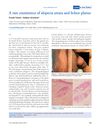
 A man had both alopecia areata and lichen planus, which is uncommon.
This study found that a hair mask made from bitter gourd effectively reduced hair loss and dandruff among participants, though the authors note the need for clinical trials and durability tests for further validation.
 1 citations
,
July 2021 in “Curēus”
1 citations
,
July 2021 in “Curēus” This case report describes a rare occurrence of lichen planopilaris in a nine-year-old child, emphasizing the need for awareness of this condition in the pediatric population.
January 1996 in “대한피부과학회지” This study found a significantly higher density of Demodex mites in sebaceous hyperplasia lesions compared to controls, suggesting a possible link between Demodex and the development of these skin lesions.
This study found that peptides from Lablab purpureus, particularly fraction 2, demonstrated potential anticancer effects by exhibiting significant antioxidant and apoptotic activities, selectively inhibiting cancer cells with minimal impact on healthy cells.
11 citations
,
January 2022 in “Journal of Healthcare Engineering” In this study, PRP and Yifu combined with ultrapulsed CO2 lattice laser were found to improve sunken acne scars more effectively than laser alone, enhancing patients' quality of life and reducing adverse events, with a higher effective rate compared to the laser-only group.