This laboratory study observed that Prunus Tomentosa Thumb Total Flavone significantly promoted hair growth and follicle maturation in a C57BL 6 mouse model of hair loss.
 124 citations
,
December 2016 in “Pharmaceuticals”
124 citations
,
December 2016 in “Pharmaceuticals” This review discusses the functions and potential therapeutic targeting of TRP ion channels in the skin, noting their involvement in both physiological processes and various pathological conditions, but reports no new experimental results.
 28 citations
,
August 2018 in “BMC genomics”
28 citations
,
August 2018 in “BMC genomics” This study found that the DNA methylation status of skin samples from cashmere goats was higher during the telogen stage compared to the anagen stage, identifying genes potentially important for hair follicle development and growth.
 28 citations
,
January 2010 in “Biological & pharmaceutical bulletin”
28 citations
,
January 2010 in “Biological & pharmaceutical bulletin” This study identified that rose, thyme geraniol, palmarosa, and tolu balsam essential oils activate TRPV1, with citronellol and geraniol as newly recognized agonists.
 March 2025 in “Journal of Cosmetic Dermatology”
 This study explored the effects of TTFE on male androgenic alopecia, finding that topical application increased hair density, follicular diameter, and scalp hydration while reducing water loss and sebum production in a 12-week trial.
 28 citations
,
July 2007 in “Development”
28 citations
,
July 2007 in “Development” In this study, inactivating the TAF4 subunit of transcription factor TFIID in mouse epidermis disrupted gene expression linked to skin and hair function, and increased tumor risk.
4 citations
,
August 2025 in “Journal of Food Science” This review highlights that Tremella fuciformis polysaccharide exhibits various bioactivities, such as antioxidant and immune-modulating effects, and explores its potential applications in food, pharmaceutical, and cosmetic industries.
 January 2021 in “Hair transplant forum international”
 This article describes a new T-Fast multi-implanter that potentially reduces operating costs and surgical time by implanting two follicular unit excision grafts simultaneously, which may encourage clinics to adopt this technique.
August 2025 in “BMC Pharmacology and Toxicology” The LTF gene may help predict and manage nonspecific orbital inflammation.
 2 citations
,
November 2007 in “Hair transplant forum international”
2 citations
,
November 2007 in “Hair transplant forum international” This abstract introduces the concept of follicular units (FUs) in the human scalp but presents no new research findings.
 10 citations
,
January 2011 in “Case reports in dermatological medicine”
10 citations
,
January 2011 in “Case reports in dermatological medicine” This report documented a successful and sustained hair restoration surgery using follicular unit transplantation for temporal triangular alopecia, lasting over six years.
March 2022 in “Oncology Times” In this study, tebentafusp-tebn improved overall survival in patients with metastatic uveal melanoma compared to standard therapies, despite higher rates of significant adverse events.
4 citations
,
September 2024 in “Development” This study investigated transcription factors in human trophectoderm cells during development, finding that GATA2 and GATA3 are essential for transforming stem cells into induced trophoblast stem cells, which display characteristics similar to placental progenitor cells, offering new methods for modeling placental-associated diseases.
May 2005 in “Faculty Opinions – Post-Publication Peer Review of the Biomedical Literature” In this study, transgenic mice with a truncated latent transforming growth factor-beta-binding protein showed reduced keratinocyte proliferation and alterations in the hair cycle due to mis-localization of transforming growth factor-beta.
 2 citations
,
February 2019 in “Anais brasileiros de dermatologia/Anais Brasileiros de Dermatologia”
2 citations
,
February 2019 in “Anais brasileiros de dermatologia/Anais Brasileiros de Dermatologia” Tufted folliculitis is common in patients with folliculitis decalvans.
March 2026 in “ACS Applied Bio Materials” In this study, a copolymer made from Tung oil and Tung free fatty acids demonstrated improved mechanical and thermal properties for hair repair, with enhanced resistance and flexibility observed in treated bleached hair, suggesting its potential as a sustainable biopolymer for cosmetic applications.
 6 citations
,
October 2012 in “Journal of Heredity”
6 citations
,
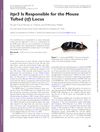
October 2012 in “Journal of Heredity” This study identified the Itpr3 gene as responsible for the tufted hair loss phenotype in the BTBR mouse strain.
 April 2012 in “Informa Healthcare eBooks”
 Temporal triangular alopecia is a lifelong condition with hairless patches on the side of the head that may be present from birth.
288 citations
,
January 2001 in “Journal of Biological Chemistry” In this study, the disruption of Gh/tissue transglutaminase in mice did not affect viability but reduced thymocyte viability and fibroblast adhesion, suggesting its role in cell stabilization and extracellular matrix interactions.
 13 citations
,
June 2012 in “Journal of Dermatological Case Reports”
13 citations
,
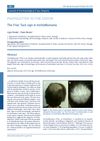
June 2012 in “Journal of Dermatological Case Reports” This report describes an 8-year-old male with trichotillomania, confirmed by trichoscopy showing characteristic hair damage and patterns.
344 citations
,
May 2018 in “EMBO journal” This review discusses the regulation of the MiT-TFE family transcription factors, particularly TFEB, through phosphorylation-mediated subcellular localization and reports no new clinical results.
 16 citations
,
June 2009 in “Dermatologic Surgery”
16 citations
,
June 2009 in “Dermatologic Surgery” This abstract does not contain research results or findings.
 55 citations
,
June 2014 in “Nature Communications”
55 citations
,
June 2014 in “Nature Communications” This study found that overexpression of the transcription factor Tcf3 accelerates keratinocyte migration and skin wound healing in mice, highlighting its potential as a therapeutic target for wound repair.
 82 citations
,
February 2017 in “Cold Spring Harbor Perspectives in Biology”
82 citations
,
February 2017 in “Cold Spring Harbor Perspectives in Biology” The TGF-β family helps control how cells change and move, affecting skin, hair, and organ development.
11 citations
,
March 2002 in “Pediatric Dermatology” Temporal triangular alopecia is a non-scarring hair loss seen in some Asian children.
1 citations
,
January 2016 in “Dermatology Online Journal” This case report documents a rare instance of triangular temporal alopecia in an adult woman, emphasizing the importance of correct diagnosis to avoid unnecessary treatments, and reviews the literature on TTA.
 1 citations
,
May 2021 in “Annals of the rheumatic diseases”
1 citations
,
May 2021 in “Annals of the rheumatic diseases” This study found that tofacitinib may be effective for treating pediatric rheumatic diseases, with especially promising results in patients with autoinflammatory diseases, arthritis and alopecia, and juvenile dermatomyositis.
5 citations
,
March 2021 in “Hepatitis Monthly” This study found that tenofovir alafenamide fumarate (TAF) is an effective and safer alternative to tenofovir disoproxil fumarate (TDF) for chronic hepatitis B, with fewer long-term side effects like nephrotoxicity and decreased bone density.
 10 citations
,
January 2008 in “Biological and Pharmaceutical Bulletin”
10 citations
,
January 2008 in “Biological and Pharmaceutical Bulletin” This study found that trans-3,4'-Dimethyl-3-hydroxyflavanone reduces active TGF-beta2 levels in human keratinocytes, suggesting it may enhance hair growth by suppressing the TGF-beta2 activation pathway.
 June 2021 in “bioRxiv (Cold Spring Harbor Laboratory)”
 This study discovered that the gene Tfap2b identifies a melanocyte stem cell population in zebrafish, essential for regenerating melanocytes with multi-fate potential into adult pigment cells.