August 2003 in “Oncology Times” This article discusses the considerations and challenges surrounding a proposed large-scale trial on testosterone-replacement therapy in older men and reports no new results.
 13 citations
,
December 2012 in “Canadian Urological Association Journal”
13 citations
,
December 2012 in “Canadian Urological Association Journal” This report from a consensus meeting concluded that while 5-alpha reductase inhibitors are beneficial for BPH treatment and prostate cancer risk reduction, their role in clinical practice should be more widely integrated into prostate management guidelines.
2 citations
,
January 2025 in “Journal of Nanobiotechnology” This study demonstrated that genetically engineered, ATP-responsive nanozymes effectively reduce cardiac fibrosis by targeting activated cardiac fibroblasts, resulting in decreased myofibroblast accumulation and improved cardiac function, suggesting that this approach has significant potential for therapeutic applications.
 March 2024 in “Frontiers in medicine”
 In this nonrandomized controlled trial, tenon capsule injection of platelet-rich plasma improved capillary perfusion and may enhance short-term vision in patients with acute nonarteritic anterior ischemic optic neuropathy.
 69 citations
,
December 2015 in “Journal of Controlled Release”
69 citations
,
December 2015 in “Journal of Controlled Release” This study found that nanocapsules formulated as a dispersion and applied with massage may enhance follicular uptake of clobetasol propionate while minimizing its skin penetration, offering a potential improvement over conventional treatments for scalp diseases.
 November 2023 in “Journal of Cosmetic Dermatology”
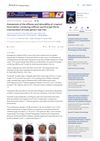
 This study found that a 12-week topical treatment with a caffeine and Procapil 3% formulation effectively reduced hair loss by 26.9% and improved hair growth in men with androgenetic alopecia, without any reported adverse effects.
2 citations
,
November 2016 in “Journal of Pakistan Association of Dermatologists” In this study, tacrolimus was as effective as clobetasol propionate in treating alopecia areata, suggesting it can serve as an alternative therapy option.
13 citations
,
November 2021 in “Frontiers in Molecular Biosciences” This review discusses the mechanisms of platinum-induced peripheral neuropathy related to reactive oxygen species and explores potential antioxidant therapies and nanotechnology approaches, but reports no new clinical results.
 February 2022 in “Scientia Pharmaceutica”
 This study validated that six out of seven tested topical formulations for alopecia are compatible for 6-month use, suggesting they may be practical for compounding pharmacies.
15 citations
,
December 2019 in “European Journal of Dermatology” This study identified new and recurrent missense mutations in the PHGDH and PSAT1 genes, implicating them in the pathogenesis of Neu-Laxova syndrome in Chinese patients.
 4 citations
,
February 2022 in “International Journal of Dermatology”
4 citations
,
February 2022 in “International Journal of Dermatology” This study observed that porocarcinoma exhibited a relatively low rate of local recurrence, nodal metastases, and mortality over a follow-up period exceeding five years.
18 citations
,
January 1988 in “Acta oncologica” This study found that retinol palmitate treatment in patients with stage Ia non-small-cell lung cancer may reduce cancer relapses, but longer follow-up is needed to confirm its efficacy.
 130 citations
,
February 2018 in “Journal of Investigative Dermatology”
130 citations
,
February 2018 in “Journal of Investigative Dermatology” This study found that tofacitinib led to ≥50% hair regrowth in eight out of twelve patients with moderate to severe alopecia areata, suggesting a potential benefit for using JAK inhibitors in treating this condition.
32 citations
,
June 2021 in “Frontiers in Pharmacology” This study reports that Cur@CMCTS-Tk hydrogel effectively accelerated wound healing and tissue regeneration in rats by scavenging excess reactive oxygen species and protecting human fibroblasts from oxidative damage.
2 citations
,
September 2025 in “Frontiers in Endocrinology” This review critically evaluates the evidence for SARMs' tissue selectivity and suggests their clinical benefits over traditional androgens are not yet well-supported by robust evidence, underscoring the need for further head-to-head trials.
This study found that P144 (Disitertide) significantly reduced collagen deposition and improved muscle organization in a rabbit model of post-radiotherapy fibrosis, suggesting potential antifibrotic effects.
December 2022 in “Molecular Pharmaceutics” This study found that encapsulating latanoprost in nanotransfersomes increased skin penetration and improved its cell proliferation effect in vitro, suggesting potential for treating hair growth disorders.
July 2017 in “OPAL (Open@LaTrobe) (La Trobe University)” In this study, researchers investigated the role of the ATX-LPA axis in asthma pathogenesis using human and mouse models and highlighted the potential for developing new ATX inhibitors as effective asthma treatments.
 1 citations
,
July 2019 in “Medicina Clínica (English Edition)”
1 citations
,
July 2019 in “Medicina Clínica (English Edition)” Tofacitinib partially improved hair regrowth in a patient with severe hair loss.
 2 citations
,
April 2022 in “Cutaneous and Ocular Toxicology”
2 citations
,
April 2022 in “Cutaneous and Ocular Toxicology” This systematic review reports promising efficacy and safety of Tofacitinib for treating Alopecia Areata in children, though further randomized studies are needed due to the low quality of existing evidence.
January 2024 in “Dermatologic Therapy” This retrospective study found that oral tofacitinib significantly reduced the severity of alopecia areata in children, achieving over a 50% reduction in hair loss severity, though relapse occurred during treatment tapering, and mild adverse effects were noted.
 78 citations
,
March 2017 in “JAMA Dermatology”
78 citations
,
March 2017 in “JAMA Dermatology” Tofacitinib helped regrow hair in people with severe alopecia, but side effects occurred and benefits stopped after treatment ended.
 November 2021 in “International journal of life science and pharma research”
 This study reported that a solid lipid nanoparticle-based gel formulation, specifically optimized for psoriasis, improved drug loading capacity and release properties using high-pressure homogenization, suggesting its potential efficacy as a topical treatment.
 12 citations
,
January 2011 in “Dermatologic Surgery”
12 citations
,
January 2011 in “Dermatologic Surgery” This entry contains only a placeholder abstract with no research findings described or summarized.
 June 2024 in “ESMO Gastrointestinal Oncology”
 The BAYONET trial is a phase II study designed to assess the efficacy and safety of combining encorafenib, binimetinib, and cetuximab for patients with BRAF V600E-mutant metastatic colorectal cancer that is resistant to encorafenib plus cetuximab; results are not yet reported.
3 citations
,
June 2025 in “Journal of Cellular and Molecular Medicine” This study using a mouse model reports that CuATSM treatment accelerates skin wound healing and reduces scar formation, with effects possibly mediated via the ferroptosis-induced Hippo/YAP signaling pathway and macrophage polarization, suggesting CuATSM as a potential therapy for scarless wound healing in clinical settings.
21 citations
,
March 2022 in “Pharmaceuticals” This study found that Brigatinib-loaded nanospanlastics demonstrated enhanced cytotoxicity against lung cancer cells and improved drug stability and release compared to free Brigatinib.
January 2007 in “Frontiers in Medicine” This study found that tofacitinib was an effective and better-tolerated treatment for moderate-to-severe AA compared to SCs, though its efficacy decreased in patients with disease episodes longer than two years.
 16 citations
,
September 2016 in “Neuropharmacology”
16 citations
,
September 2016 in “Neuropharmacology” This study suggests that in an ex vivo rat glaucoma model, TSPO activation is involved in Allopregnanolone synthesis and may help prevent retinal damage, with TSPO agonists as potential therapeutic agents.
6 citations
,
August 2025 in “Frontiers in Bioengineering and Biotechnology” This review discusses the evolution of platelet concentrates in regenerative medicine, highlighting a proposed function-driven classification that distinguishes three generations of PCs by biological activity rather than development order, with third-generation exosome-based therapies showing superior therapeutic efficacy over earlier formulations.