 27 citations
,
February 2017 in “Clinical, Cosmetic and Investigational Dermatology”
27 citations
,
February 2017 in “Clinical, Cosmetic and Investigational Dermatology” In this study, a topical formulation with compounds from the monoterpenoid family significantly improved hair growth indicators like anagen:telogen ratio, hair fall, and visual hair density in men and women with pattern hair loss.
 3 citations
,
January 2022 in “Precision medicine and clinical omics”
3 citations
,
January 2022 in “Precision medicine and clinical omics” This study reports that using molecular docking methods, beta-sitosterol and stigmasterol from Serenoa repens were identified as potential natural inhibitors of the 5AR1 enzyme, which could serve as novel treatments for androgenetic alopecia based on their inhibitory action observed in a laboratory setting.
January 2025 in “International Journal of Molecular Sciences” In this study, researchers found that fenugreek seed extract reduced prostate size, DHT levels, and cell proliferation in a testosterone-induced BPH rat model while modulating various genetic expressions, suggesting its potential as an alternative treatment for benign prostatic hyperplasia.
 3 citations
,
August 2014 in “Steroids”
3 citations
,
August 2014 in “Steroids” Fermentation of Finasteride with Ocimum sanctum L. creates new metabolite that inhibits tyrosinase.
 July 2026 in “Zenodo (CERN European Organization for Nuclear Research)”
 This study used a multi-layer in silico framework to evaluate Korean herbal compounds for androgenetic alopecia, identifying Biochanin A, Saponin Re, and Emodin as potential topical candidates with distinct safety and affinity profiles, although these findings remain purely computational without experimental validation.
 11 citations
,
August 2007 in “Bioorganic & Medicinal Chemistry Letters”
11 citations
,
August 2007 in “Bioorganic & Medicinal Chemistry Letters” This study found that among the tested analogs, compound 4e was the most effective in inhibiting wax esters in vivo in the Golden Syrian hamster ear model.
 May 2026 in “Open Science Framework”
 This study conducted an in silico evaluation of Korean herbal compounds against key targets involved in androgenetic alopecia, finding Biochanin A, Saponin Re, and Emodin as promising candidates for topical treatments, but highlighting safety and topical formulation challenges.
 April 2017 in “Journal of Investigative Dermatology”
 In this study, the novel isoprenylcysteine analog SIG-1451 was shown to inhibit pro-inflammatory cytokine release in various cell-based assays relevant to allergic dermatitis, acting on targets such as IL-4 and IL-6 with potential anti-inflammatory benefits.
 August 1994 in “Journal of dermatological science”
 Different substances affect hair and skin cell growth in various ways, with some promoting and others inhibiting cell proliferation.
 4 citations
,
December 2020 in “Scientific Reports”
4 citations
,
December 2020 in “Scientific Reports” This study found that a mixture of plant extracts significantly improved skin barrier function, reduced inflammation, and exhibited anti-aging effects in human skin cells.
 May 2026 in “Zenodo (CERN European Organization for Nuclear Research)”
 This study identified Saponin Re and Emodin as top candidates for treating androgenetic alopecia, suggesting future research in dermal papilla cell cultures and scalp organoids despite safety concerns.
April 2011 in “Cancer Research” In this study, ginsenoside 20(S)-protopanaxadiol-aglycone (PPD) was shown to downregulate androgen receptor expression and inhibit tumor growth in prostate cancer cells.
1 citations
,
October 2025 in “Journal of Microbiology and Biotechnology” This study suggests that phytochemicals from natural sources could be safer alternatives to conventional treatments for hair loss, as they may activate key pathways involved in hair growth.
This abstract introduces TrichoFoam™, a new foaming vehicle for compounding pharmacies, designed to be a gentle, non-irritating option for alopecia treatment, acknowledging that current topical treatments are limited and oral products may cause adverse effects.
14 citations
,
May 2005 in “Steroids” This study describes the synthesis of finasteride from 4-androstene-3,17-dione in a seven-step process with an overall yield of 18.6%.
May 2025 in “OPAL (Open@LaTrobe) (La Trobe University)” In this study, researchers used computational methods to identify six phytochemicals from nettle, saw palmetto, and fenugreek as effective binders to 5-alpha reductase, with Jamogenin showing enhanced stability when encapsulated in lipid nanoparticles.
33 citations
,
November 2020 in “AAPS PharmSciTech” January 1997 in “Cosmetics and toiletries” This article introduces a silicone derivative of meadowfoam seed oil and reports its ability to penetrate and repair human hair fibers, suggesting potential use in personal-care products.
 1 citations
,
August 2011 in “Planta Medica”
1 citations
,
August 2011 in “Planta Medica” This study reported that bimatoprost significantly increased hair growth in rat vibrissa follicles by enhancing dermal papilla cell proliferation and upregulating cell cycle proteins like CDK2, Cyclin E, and β-catenin.
 3 citations
,
May 2011 in “Journal of the American Academy of Dermatology”
3 citations
,
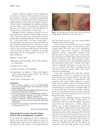
May 2011 in “Journal of the American Academy of Dermatology” This case report describes a 54-year-old woman who developed hypertrichosis around a leg ulcer while using PGE1 ointment, suggesting a potential side effect of the treatment.
 September 2023 in “Baylor University Medical Center Proceedings”
 This study reviewed the effectiveness of natural treatments like pumpkin seed oil and rosemary oil for androgenetic alopecia and found them potentially effective with minimal side effects compared to standard treatments like minoxidil. However, more research is needed to confirm their efficacy.
3 citations
,
October 1993 in “Endocrinology” In this study, finasteride inhibited progesterone synthesis in mouse-derived MA-10 Leydig tumor cells by blocking cholesterol side-chain cleavage, but human and rat cells showed minimal sensitivity.
 27 citations
,
July 1982 in “British Journal of Dermatology”
27 citations
,
July 1982 in “British Journal of Dermatology” The antiandrogen 11α-hydroxyprogesterone effectively reduces skin oil and cholesterol when applied to the skin.
5 citations
,
April 2023 in “Pharmaceuticals” This study found that cubosomes combined with dissolving microneedles enhanced transdermal penetration and hair growth efficacy of beta-sitosterol for treating alopecia.
7 citations
,
January 2021 in “Food & Function” In this animal study, Castanea sativa Mill. flower extract did not significantly affect prostate tumorigenesis but demonstrated antioxidant and anti-inflammatory effects on the prostate and liver.
 10 citations
,
May 2016 in “Polymer”
10 citations
,
May 2016 in “Polymer” This study reports that novel core-ABS nanocarriers efficiently loaded with dexamethasone and finasteride show potential for dermal drug delivery, exhibiting non-toxic interactions with human keratinocyte cells and skin penetration.
 5 citations
,
January 2005 in “Journal of Enzyme Inhibition and Medicinal Chemistry”
5 citations
,
January 2005 in “Journal of Enzyme Inhibition and Medicinal Chemistry” This study found that certain steroidal compounds, especially 10a–10c, demonstrated strong antiandrogenic activity by binding to the androgen receptor and reducing prostate weight in a hamster model.
November 2022 in “Journal of Investigative Dermatology” This study suggests that the Anetholea anisita extract improved scalp health by increasing specialized pro-resolving mediators and reducing pro-inflammatory markers, leading to decreased dandruff and enhanced hair brightness in dandruff sufferers.
December 2024 in “NATIONS UNIVERSITY INTERNATIONAL JOURNAL OF MULTI-DISCIPLINARY STUDIES” In this study, researchers reviewed non-pharmacological treatments for androgenetic alopecia, finding that substances like caffeine, rosemary oil, and saw palmetto may stimulate hair growth or inhibit dihydrotestosterone. They emphasize the need for multicenter clinical trials to further assess these natural products' efficacy in clinical practice.
 October 2025 in “International Journal of Cosmetic Science”
 This study explored the effects of USPlus® DERM, a bioactive fatty acid extract from Serenoa repens, in promoting hair growth and enhancing hair follicle stem cell stemness in an ex vivo setting, showing potential for both 5‐α reductase-dependent and independent hair loss treatments.