 9 citations
,
November 2012 in “Biomolecules & therapeutics”
9 citations
,
November 2012 in “Biomolecules & therapeutics” This study found that diphlorethohydroxycarmalol significantly increased prostaglandin $E_2$ synthesis in HaCaT human keratinocytes by upregulating COX-1 and COX-2 expression, suggesting potential benefits from elevated $PGE_2$ production.
 8 citations
,
February 2019 in “Journal of The European Academy of Dermatology and Venereology”
8 citations
,
February 2019 in “Journal of The European Academy of Dermatology and Venereology” This letter to the editor about prostaglandins in androgenetic alopecia in men and women reports no new research findings.
8 citations
,
July 1977 in “Lipids” This study found a negative correlation between dietary monoene levels, particularly oleic acid, and the capacity for PGE₂ synthesis in rat skin, with the most severe skin issues noted in those fed Zephyr rapeseed oil.
 7 citations
,
March 2013 in “British Journal of Dermatology”
7 citations
,
March 2013 in “British Journal of Dermatology” No genetic link between prostaglandins and hair loss found.
 6 citations
,
December 2013 in “Journal of Cutaneous Pathology”
6 citations
,
December 2013 in “Journal of Cutaneous Pathology” This study found that the distribution of mast cell prostaglandin d-synthase in the scalp spatially aligns with the pattern of androgenetic alopecia, suggesting a programmed vulnerability to hair loss.
 6 citations
,
July 2008 in “Clinical and experimental optometry”
6 citations
,
July 2008 in “Clinical and experimental optometry” This case report describes a rare complication of prostaglandin analogue eye drops for glaucoma, where a patient experienced extensive unwanted malar hair growth, leading to potential therapy discontinuation.
 5 citations
,
May 2019 in “Journal of the European Academy of Dermatology and Venereology”
5 citations
,
May 2019 in “Journal of the European Academy of Dermatology and Venereology” This case report discusses the use of a prostaglandin analogue for treating eyebrow loss in a patient with frontal fibrosing alopecia, but provides no new clinical results.
 5 citations
,
July 2014 in “Acta Crystallographica Section D-biological Crystallography”
5 citations
,
July 2014 in “Acta Crystallographica Section D-biological Crystallography” This study reports that mutations in human L-PGDS affect the entrance and exit of ligands in its binding cavity, suggesting these residues play a role in ligand interaction processes.
 4 citations
,
February 2021 in “International Journal of Dermatology”
4 citations
,
February 2021 in “International Journal of Dermatology” This study found that increased levels of PGD2 and prostacyclin and decreased levels of PGE2 and PGF2α were associated with baldness in androgenetic alopecia, suggesting potential targets for treatment.
3 citations
,
September 2025 in “Neural Regeneration Research” This review discusses the roles of prostaglandins in the nervous system and their therapeutic potential for neurological diseases, noting their complex interactions with immune cells and signaling pathways.
3 citations
,
October 2021 in “Indian Journal of Plastic Surgery” The authors concluded that pattern hair loss is a complex condition with limited treatment efficacy and two FDA-approved drugs, finasteride and minoxidil, to slow its progression.
 3 citations
,
May 2011 in “Journal of the American Academy of Dermatology”
3 citations
,
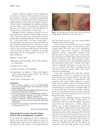
May 2011 in “Journal of the American Academy of Dermatology” This case report describes a 54-year-old woman who developed hypertrichosis around a leg ulcer while using PGE1 ointment, suggesting a potential side effect of the treatment.
 3 citations
,
July 2010 in “Archives of internal medicine”
3 citations
,
July 2010 in “Archives of internal medicine” A woman kept her eyelashes during chemotherapy possibly because of her glaucoma eye drops.
2 citations
,
September 2023 in “PubMed” The studies reviewed found favorable treatment outcomes for hypopigmented scars using PGF2α agonists with no adverse events reported. However, the authors highlight the need for larger randomized controlled trials to better understand their effectiveness and long-term safety.
2 citations
,
March 2021 in “Reproduction” This study found that finasteride may affect Ca 2+ signalling in human sperm by interacting with the PGE 1 -binding site, but its impact on fertilization requires further investigation.
 2 citations
,
February 2019 in “Journal of Investigative Dermatology”
2 citations
,
February 2019 in “Journal of Investigative Dermatology” This study suggests that the expression of the DP2 receptor is higher in balding scalp cells and that its knockdown could inhibit the transition to the catagen phase in cultured human hair follicles, potentially counteracting hair growth inhibition associated with male pattern baldness.
 2 citations
,
February 2014 in “Animal Biotechnology”
2 citations
,
February 2014 in “Animal Biotechnology” This study reported that the PTGER2 gene is strongly expressed in cashmere goat skin and its expression tends to decrease from the anagen to telogen stages of the hair follicle cycle.
 2 citations
,
April 2012 in “Science-business Exchange”
2 citations
,
April 2012 in “Science-business Exchange” Blocking a protein called prostaglandin D2 might help treat hair loss.
 1 citations
,
November 2022 in “Experimental cell research”
1 citations
,
November 2022 in “Experimental cell research” This study found that a PGE2 matrix, when injected subcutaneously, increased the proportion of developing hair follicles and improved hair follicle stem cell markers in a mouse model of hair loss.
 1 citations
,
April 2016 in “Journal of Investigative Dermatology”
1 citations
,
April 2016 in “Journal of Investigative Dermatology” In this study, PGD2 treatment in keratinocytes increased testosterone production via reactive oxygen species, suggesting a potential role for the NRF2 pathway in androgenic alopecia treatment strategies.
 1 citations
,
April 2016 in “Journal of Investigative Dermatology”
1 citations
,
April 2016 in “Journal of Investigative Dermatology” This study identified that blocking the PTGDR2 receptor in human hair follicles in vitro and in mice reversed the hair growth inhibition caused by PGD2, suggesting a potential approach for treating alopecia.
1 citations
,
January 2014 in “Turkish Journal of Ophthalmology” This case report highlights a rare side effect of prostaglandin analogues, detailing prostaglandin-associated periorbitopathy in three glaucoma patients treated with bimatoprost and travoprost.
1 citations
,
January 2013 This review explores the therapeutic applications of bimatoprost, including its role in glaucoma treatment, hair growth stimulation, and potential effects on fat deposition, but reports no new experimental findings.
August 2026 in “Prostaglandins & Other Lipid Mediators” This review suggests that imbalance in prostaglandin levels may contribute to androgenetic alopecia, highlighting prostaglandins as potential biomarkers and therapeutic targets for the condition.
July 2026 in “Journal of Investigative Dermatology” This study uncovered that bimatoprost, a prostaglandin analog, promotes hair growth by activating hair follicle progenitor cells through two pathways: the PTGFR-MAPK signaling axis and an unexpected IGF1R-PCAD-AKT signaling axis, suggesting new potential targets for treating hair disorders.
 July 2026 in “Pharmacological Reports”
 In this pilot study, topical latanoprost acid was observed to increase hair count and improve hair follicle structure in women with androgenetic alopecia, with no serious adverse events, suggesting potential for further investigation to confirm its efficacy and safety.
 June 2025 in “Frontiers in Physiology”
 This study demonstrated that PGF 2α significantly stimulates hair growth in human hair follicles via a receptor-driven mechanism, with a notably stronger response in intermediate follicles than in terminal ones, suggesting potential clinical significance for conditions like alopecia.
April 2025 in “International Journal of Dermatology” This review by St. Denis et al. highlights that prostaglandin E2 is overexpressed in several skin cancers and suggests targeting its pathway could offer potential treatments for these malignancies.
 September 2024 in “Egyptian Journal of Dermatology and Venerology”
 This study found that intralesional injection of triamcinolone acetonide combined with latanoprost (a PGF2α analog) was more effective in treating localized alopecia areata, showing higher treatment response rates and greater reduction in severity scores compared to other treatments.
 April 2023 in “The journal of investigative dermatology/Journal of investigative dermatology”
 This study found that local PGE2 injection may prevent radiotherapy-induced hair loss by protecting hair follicle cells and promoting hair follicle self-repair.