 55 citations
,
March 2009 in “Journal of The American Academy of Dermatology”
55 citations
,
March 2009 in “Journal of The American Academy of Dermatology” This study found that latanoprost and bimatoprost, when applied cutaneously to the eyelids, did not induce appreciable eyelash regrowth in patients with alopecia areata over 16 weeks.
 29 citations
,
May 2010 in “Ophthalmology”
29 citations
,
May 2010 in “Ophthalmology” Bimatoprost gel makes eyelashes grow longer, but may cause side effects and should be monitored by an eye doctor.
 March 2026 in “International Journal of Dermatology Venereology and Leprosy Sciences”
 This study describes vitiligo as an autoimmune disease marked by depigmented skin and mucosal patches, and reviews its complex pathogenesis and diagnostic features. Treatment aims for disease control and repigmentation through various topical and systemic therapies, phototherapy, and surgical options, emphasizing personalized, multimodal approaches.
 October 2018 in “InTech eBooks”
 This article reviews various treatments for alopecia, highlighting that minoxidil, finasteride, PRP therapy, and hair transplants are the most commonly used options, but it reports no new clinical results.
 22 citations
,
March 2019 in “European Journal of Ophthalmology”
22 citations
,
March 2019 in “European Journal of Ophthalmology” This study found that switching patients with glaucoma or ocular hypertension from benzalkonium chloride-latanoprost to preservative-free latanoprost maintained intraocular pressure control and improved tolerability, potentially enhancing treatment adherence and quality of life.
 20 citations
,
June 2007 in “Recent Patents on Endocrine, Metabolic & Immune Drug Discovery”
20 citations
,
June 2007 in “Recent Patents on Endocrine, Metabolic & Immune Drug Discovery” This review summarizes recent research and patents on 17β-HSD3, 17β-HSD5, and 3α-HSD3 inhibitors, suggesting their potential in treating androgen-dependent diseases, but reports no new clinical results.
 1 citations
,
August 2017
1 citations
,
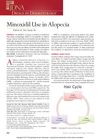
August 2017 This article reviews the mechanism, usage, and alternatives of the medication minoxidil in dermatology and reports no new clinical outcomes.
 165 citations
,
September 2003 in “Toxicology and applied pharmacology”
165 citations
,
September 2003 in “Toxicology and applied pharmacology” This review discusses the pharmacology and toxicology of cyclooxygenase in skin, highlighting its role in inflammation, wound healing, and tumorigenesis, without presenting new clinical results.
 February 2026 in “Frontiers in Pharmacology”
 This review suggests a shift toward genetically informed treatments for male pattern hair loss by integrating genetic insights and pharmacogenetic markers into therapeutic decision-making.
 October 2024 in “Journal of Education Health and Sport”
 This article reviews treatment options for Alopecia Areata, concluding that topical corticosteroids are effective for mild cases, while systemic therapies are advised for moderate to severe cases.
 November 2021 in “Austin therapeutics”
 This review discusses the impact of chemotherapy-induced alopecia on cancer patients, the current use of scalp cooling for prevention, and potential future treatments, but presents no new clinical results.
 28 citations
,
December 2019 in “Skin appendage disorders”
28 citations
,
December 2019 in “Skin appendage disorders” This review discusses medication-induced gray hair repigmentation, highlighting that certain anti-inflammatory drugs and melanogenesis stimulators can cause diffuse repigmentation, though evidence remains low-quality and these medications are not currently indicated for this purpose.
 15 citations
,
January 2015 in “Skin Pharmacology and Physiology”
15 citations
,
January 2015 in “Skin Pharmacology and Physiology” This study indicates that targeting the PTH/PTHrP receptor may potentially stimulate hair growth, particularly for chemotherapy-induced alopecia, as observed in hairless and cyclophosphamide-treated mice.
 2 citations
,
January 2023 in “International journal of biological sciences”
2 citations
,
January 2023 in “International journal of biological sciences” This review discusses the mechanisms of hair repigmentation and reports no clinical results; the authors suggest further research into topical treatments for reversing gray hair.
 27 citations
,
July 2018 in “Journal of optometry”
27 citations
,
July 2018 in “Journal of optometry” This review discusses the biology, pathophysiology, and management of eyelash anomalies, highlighting the need for more research into eyelash mechanisms and care, and reports no new clinical results.
 19 citations
,
January 2013 in “Pediatrics in review”
19 citations
,
January 2013 in “Pediatrics in review” This review discusses the onset of menstruation and related challenges in young women, with a focus on primary amenorrhea, its diagnosis, and management strategies, and reports no new clinical findings.
 1 citations
,
January 2015 in “Journal of Aesthetic & Reconstructive Surgery”
1 citations
,
January 2015 in “Journal of Aesthetic & Reconstructive Surgery” This review discusses techniques for harvesting follicular units, medical treatments for androgenetic alopecia, and potential future advancements in hair restoration therapy, but it reports no new clinical results.
 119 citations
,
January 2012 in “Nutrition & Metabolism”
119 citations
,
January 2012 in “Nutrition & Metabolism” This article suggests that modern lifestyle changes, including diet, stress, and chronic anti-inflammatory medication use, may disrupt the natural process of inflammation resolution, increasing vulnerability to chronic disease.
 23 citations
,
December 2013 in “Regenerative Medicine”
23 citations
,
December 2013 in “Regenerative Medicine” This review discusses advancements in cell culture techniques for hair growth treatments and provides insights into the potential and challenges of follicular cell implantation, reporting no new clinical results.
 3 citations
,
March 2014 in “TURKDERM”
3 citations
,
March 2014 in “TURKDERM” This review discusses the pathogenesis, clinical properties, and management of alopecia areata, highlighting the need for future treatment strategies, and reports no new clinical results.
 2 citations
,
March 2015 in “Expert opinion on orphan drugs”
2 citations
,
March 2015 in “Expert opinion on orphan drugs” This review discusses recent advances in the treatment of alopecia areata, highlighting new potential therapies like JAK inhibitors and PRP, and reports no new clinical results.
 1 citations
,
January 2014 in “Hair therapy & transplantation”
1 citations
,
January 2014 in “Hair therapy & transplantation” This review discusses various treatment options for Alopecia Areata, focusing on both medical and psychological approaches, and reports no new clinical results.
 July 2024 in “Forum Dermatologicum”
 This review evaluates various topical treatments for androgenetic alopecia but does not provide new clinical findings, emphasizing the need for selecting therapies with limited systemic side effects.
 April 2024 in “Medical & clinical research”
 This study reviews the range of both conventional and unconventional treatments for Alopecia Areata, highlighting the promise of biological therapies like JAK inhibitors, but notes more research is needed to optimize treatment effectiveness and personalization.
 February 2021 in “Journal of pharmaceutical and biological sciences”
 This article reviews multiple treatments for alopecia areata, highlighting their variable efficacy and safety without any being curative; it reports no new clinical findings.
 July 2018 in “Elsevier eBooks”
 This study reviews drug-induced hair changes, noting that hair loss often reverses after stopping the drug, but permanent alopecia cases post-chemotherapy are rising.
 April 2016 in “Plastic and reconstructive surgery. Global open”
 This article from the PRS Global Open and ASPS Education Network does not present any new research findings; it likely serves as an introductory or descriptive overview.
 45 citations
,
August 2019 in “Dermatologic Therapy”
45 citations
,
August 2019 in “Dermatologic Therapy” This review discusses the physiopathology of androgenetic alopecia and evaluates various traditional and emerging treatments, reporting no new clinical results but highlighting the need for enhanced treatment strategies.
 May 2026 in “Scientific Reports”
 This study found that kukui nut oil (AMS oil) promotes hair growth in human hair follicle cultures by increasing PGF2α levels and activating Nrf2 signaling, and a human trial confirmed its efficacy in enhancing eyelash growth.
 March 2025 in “HAL (Le Centre pour la Communication Scientifique Directe)”
 This thesis investigates the underlying mechanisms and treatment options for androgenetic alopecia, highlighting the molecular roles of androgens and genetic predispositions, and evaluates current and emerging therapies, such as PROTACs and Janus Kinase inhibitors, to enhance patient management.