 4 citations
,
August 2018 in “Facial Plastic Surgery Clinics of North America”
4 citations
,
August 2018 in “Facial Plastic Surgery Clinics of North America” This review discusses the use of platelet-rich plasma in treating androgenetic alopecia and alopecia areata, observing overall positive clinical responses without identifiable complications, and reports no new clinical results.
 4 citations
,
May 2014 in “Journal of Cutaneous Medicine and Surgery”
4 citations
,
May 2014 in “Journal of Cutaneous Medicine and Surgery” Platelet-rich plasma may help with wound healing, hair growth, and skin rejuvenation, but more research is needed to prove its effectiveness.
 3 citations
,
March 2023 in “National Journal of Health Sciences”
3 citations
,
March 2023 in “National Journal of Health Sciences” This article reviews the potential of platelet-rich plasma therapy in managing diabetic foot ulcers but reports no new clinical findings, highlighting the need for further controlled trials to evaluate its effectiveness.
This study reported that autologous platelet-rich plasma injections significantly improved stress urinary incontinence symptoms in women without affecting sexual function, suggesting it as a promising minimally invasive treatment option.
 2 citations
,
July 2024 in “Cureus”
2 citations
,
July 2024 in “Cureus” This review discusses the potential benefits of using autologous endometrial cells and PRP via hysteroscopic injections to improve pregnancy outcomes in ART, particularly in individuals with refractory thin endometrium, but reports no new clinical results.

In this study, women with stress urinary incontinence who received a platelet-rich plasma injection experienced significant improvement in symptoms without significant adverse reactions.
In this interventional study, researchers observed that women with stress urinary incontinence experienced significant symptom improvement one and three months after receiving autologous platelet-rich plasma injections, with no notable impact on sexual function or adverse reactions reported.
 2 citations
,
November 2020 in “Ciencia Tecnología y Salud”
2 citations
,
November 2020 in “Ciencia Tecnología y Salud” This review discusses the potential application of platelet-rich plasma (PRP) therapy as a regenerative treatment approach, particularly as an alternative and complementary therapy for severe respiratory conditions, though clinical protocols are needed to verify its efficacy.
 2 citations
,
January 2020 in “Libri Oncologici Croatian Journal of Oncology”
2 citations
,
January 2020 in “Libri Oncologici Croatian Journal of Oncology” In this study, PRP injections into the muscular layer of rabbits' intestinal walls improved anastomosis regeneration with less adhesion compared to PRP soaking, though further research is needed to determine the best application method.
 2 citations
,
December 2019 in “Electronic Journal of General Medicine”
2 citations
,
December 2019 in “Electronic Journal of General Medicine” This study found that combining microfocused ultrasound with autologous blood cell factors significantly improved skin rejuvenation compared to using microfocused ultrasound alone.
 2 citations
,
January 2018 in “Journal of clinical & experimental dermatology research”
2 citations
,
January 2018 in “Journal of clinical & experimental dermatology research” This study suggests that AT-ASCs significantly improve terminal and intermediate hair counts and hair caliber in androgenetic alopecia more than PRP, though with more side effects like headache and erythema.
This study reported that women with stress urinary incontinence experienced significant symptom improvement at one and three months following autologous platelet-rich plasma injections, highlighting this minimally invasive treatment as effective and safe.
 1 citations
,
December 2019 in “Archives of the Balkan Medical Union”
1 citations
,
December 2019 in “Archives of the Balkan Medical Union” In this study, injecting platelet-rich plasma into the muscular layer of the intestinal wall in rabbits significantly reduced adhesion development compared to soaking methods, suggesting an improvement in anastomosis regeneration.
 1 citations
,
June 2018 in “Advances in Cosmetic Surgery”
1 citations
,
June 2018 in “Advances in Cosmetic Surgery” PRP might help with hair growth and skin rejuvenation, but more research is needed to prove its effectiveness.
 1 citations
,
May 2017 in “InTech eBooks”
1 citations
,
May 2017 in “InTech eBooks” This review discusses various treatments for noncicatricial alopecias, such as androgenetic alopecia and alopecia areata, including mesotherapy, microneedling, and platelet-rich plasma therapy, noting that outcomes vary across these procedures.
 March 2026 in “IP Indian Journal of Conservative and Endodontics”
 This review discusses the use of platelet-rich plasma in regenerative dentistry, highlighting its biological principles, clinical applications, and the challenges encountered in PRP-based strategies for oral tissue engineering, but reports no new results.
 March 2026 in “Trends in Sciences”
 This review suggests that while platelet-rich plasma has the most robust clinical evidence, platelet-rich fibrin and concentrated growth factors are gaining favor due to their ease of use and absence of additives.
 January 2026 in “Forum Dermatologicum”
 This article reviews the regenerative benefits of platelet-rich plasma in various medical fields, particularly in dermatology and aesthetic medicine, without presenting new clinical data.
 January 2026 in “Journal of Cosmetics Dermatological Sciences and Applications”
 This review reports that while platelet-rich plasma shows promise as a safe treatment for various types of hair loss, variability in studies limits definitive conclusions on its effectiveness.
 December 2025 in “Eastern Ukrainian Medical Journal”
 This study reviews current methods for making and using platelet-rich plasma and fibrin, emphasizing the variability in clinical outcomes due to differences in preparation protocols, and calls for standardized guidelines and large-scale studies for better effectiveness in regenerative medicine.
 December 2025 in “Journal of AI”
 This study bibliometrically evaluated 5741 articles on PRP from 1980 to 2024, highlighting Türkiye's contribution and identifying prominent research areas such as orthopedics and wound healing.
 December 2025 in “Lviv clinical bulletin”
 This review found that platelet-rich plasma therapy may enhance ovarian repair and fertility outcomes in ovarian insufficiency, but notes that optimal usage and long-term effects require further investigation.
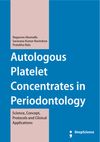
In this book, the authors provide an accessible overview of platelet concentrates and their dental applications, highlighting their role in tissue healing and regeneration, and reviewing recent studies on their efficacy in periodontal therapy, implant dentistry, and oral surgery.
 December 2025 in “VNU Journal of Science Medical and Pharmaceutical Sciences”
 This review synthesizes evidence supporting the efficacy of PRP in dermatological conditions like wound healing and alopecia, but emphasizes the need for standardized protocols and larger randomized controlled trials.
 September 2025 in “Dermatology and Therapy”
 This systematic review and meta-analysis found that platelet-rich plasma (PRP) therapy is effective in increasing hair density and reducing hair loss for alopecia, with variations in response based on activation status.
 September 2025 in “Drug Design Development and Therapy”
 This study suggests that while platelet-rich products show promise in treating dermatological conditions like chronic wounds and skin aging, there is still a need for standardized methodologies and extensive trials to confirm their long-term clinical benefits.
 June 2025 in “Journal of medical and dental science research.”
 This article explores the potential of platelet-rich fibrin therapies for androgenetic alopecia and highlights their possible advantages over traditional treatments without reporting new clinical results.
 May 2025 in “Journal of medical and dental science research.”
 This article discusses the potential role and mechanisms of platelet-rich fibrin therapies in androgenetic alopecia management, exploring their possible benefits over existing treatments but reports no new clinical results.
In this narrative review, researchers evaluated existing literature on the treatment of frontal fibrosing alopecia, finding that while no curative treatment exists, clinical improvements can be achieved through personalized and combined therapy approaches.
 January 2025 in “International Research Journal of Innovations in Engineering and Technology”
 This review discusses the biological mechanisms, preparation techniques, and clinical applications of platelet-rich plasma therapy, highlighting its variable outcomes and potential improvements for efficacy and standardization; it reports no new clinical results.