August 2021 in “Acta Medica Philippina” This study found that complementary and alternative medicine use is common among Filipino adults with psoriasis vulgaris and is linked to poorer quality of life despite adjusting for confounding variables.
 66 citations
,
January 2010 in “Journal of The American Academy of Dermatology”
66 citations
,
January 2010 in “Journal of The American Academy of Dermatology” This study reported that mycophenolate mofetil was effective in reducing signs and symptoms of active lichen planopilaris in 83% of patients who had failed multiple prior treatments.
 September 2024 in “Cureus”
 This case report describes how changing treatment from adalimumab to guselkumab successfully controlled both pustulotic arthro-osteitis and paradoxical skin reactions in a patient with palmoplantar pustulosis.
August 2016 in “Anaplastology” This study reports that controlled release PRP therapy using dalteparin and protamine micro-particles may be effective for hair growth and skin rejuvenation in women.
 September 2022 in “British Dental Journal”
 Platelet-rich fibrin is becoming popular for medical and cosmetic uses like hair growth and natural fillers.
September 2023 in “Journal of the American Academy of Dermatology” This study evaluated the effect of guselkumab on moderate to severe plaque psoriasis and found that median PASI improvements increased from around 60% at week 4 to over 90% by week 12 of treatment across multiple clinical trials.
 May 2024 in “Open Repository of the University of Porto (University of Porto)”
 This report details the experiences gained during a pharmacy internship in both hospital and community settings, highlighting the preparation of sildenafil suspensions for hospital use, patient consultations on autoimmune conditions, and educational material creation in community pharmacy, alongside insights into diabetes and ADHD treatments.
 4 citations
,
July 2005 in “International Journal of Dermatology”
4 citations
,
July 2005 in “International Journal of Dermatology” This article does not contain an abstract and presents no new clinical findings, instead discussing prior cases and literature on infant alopecia universalis and the potential role of topical PUVA therapy.
 September 2011 in “Urology”
 This study aimed to estimate the value of urine prostate specific antigen (uPSA) as a marker for benign prostatic hyperplasia (BPH) but reported no new clinical findings.
November 2024 in “Journal of Investigative Dermatology” This study identified PTEN as a key regulator in non-healing venous leg ulcers, suppressing immune responses and lymphangiogenesis, suggesting its potential as a therapeutic target for promoting VLU healing.
January 2026 in “China CDC Weekly” This study explored using large language models to automatically identify monkeypox cases from electronic medical records, finding that models based on DeepSeek features performed better than traditional methods, with logistic regression showing high accuracy in detecting key symptoms like fever and rash.
 April 2018 in “The journal of investigative dermatology/Journal of investigative dermatology”
 This phase 2a trial evaluated Samcyprone for common wart treatment and found that while a sensitization reaction is necessary for therapeutic response, its level does not predict wart clearance.
 November 2022 in “The journal of investigative dermatology/Journal of investigative dermatology”
 In this case study, a 26-year-old female with PLEC mutations and features of muscular dystrophy and myasthenia gravis showed significant improvement in symptoms following steroid treatment.
This study found that human placental extract significantly improved melasma, chronic ulcers, and alopecia areata without major adverse effects, suggesting its effectiveness and safety for these conditions.
 26 citations
,
May 2012 in “Pharmaceutical Development and Technology”
26 citations
,
May 2012 in “Pharmaceutical Development and Technology” PEVs effectively deliver minoxidil through skin.
 6 citations
,
August 1993 in “Archives of Dermatology”
6 citations
,
August 1993 in “Archives of Dermatology” This study found that polymorphous light eruption (PLE) may include a wide range of conditions, requiring careful differentiation from similar skin disorders such as benign summer light eruption.
 11 citations
,
September 2010 in “American Journal of Medical Genetics - Part A”
11 citations
,
September 2010 in “American Journal of Medical Genetics - Part A” This study reports a mutation in the U2HR gene causing Marie Unna hereditary hypotrichosis in a Turkish family and notes eyebrow loss as a diagnostic clue.
September 2025 in “Frontiers in Pharmacology” This study found that the meropenem-loaded spanlastic formulation showed strong potential as an effective topical therapy for bacterial skin infections in non-diabetic mice, demonstrating superior therapeutic activity and wound healing compared to free meropenem.
 9 citations
,
July 2018 in “European Journal of Dermatology”
9 citations
,
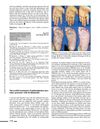
July 2018 in “European Journal of Dermatology” Brodalumab effectively treated a man's severe hand and foot psoriasis.
 October 2025 in “Open Repository of the University of Porto (University of Porto)”
 This report details a six-month pharmacy internship in Portugal, where the author engaged in hospital and community pharmacy settings, and discusses scientific topics including obesity medication risks and alopecia treatment options. Results and conclusions are not explicitly reported.
May 2020 in “Business Innovation & Entrepreneurship Journal” This study discusses the development of a turmeric-based herbal hair removal product named PASIKULA, highlighting its potential to increase the economic value of turmeric and acceptance by consumers.
 February 2026 in “Archives of Dermatological Research”
 In this study, microneedle-assisted delivery of polyglutamate significantly improved hair parameters, scalp symptoms, and quality of life in androgenetic alopecia patients, with no serious adverse reactions reported.
 November 2024 in “Open Repository of the University of Porto (University of Porto)”
 Tailored medication preparation and ongoing education are crucial for effective treatments.
 1 citations
,
December 2014 in “Scanning”
1 citations
,
December 2014 in “Scanning” This study used multiphoton microscopy to successfully visualize rabbit skin microstructure, highlighting its noninvasive potential for future skin research related to diseases and wound healing.
 January 2026 in “Clinical Cosmetic and Investigational Dermatology”
 This study found that mesotherapy with placenta polypeptide injection significantly reduced skin inflammation and improved aesthetic outcomes in adults with moderate-to-severe sensitive skin, without increasing adverse events compared to controls.
3 citations
,
July 2023 in “International Journal of Trichology” This study found that treatment with diphenylcyclopropenone led to more than 75% hair regrowth in 33.3% of patients with alopecia totalis or alopecia universalis, despite notable side effects.
 2 citations
,
March 2021 in “Journal of Cosmetic Dermatology”
2 citations
,
March 2021 in “Journal of Cosmetic Dermatology” This pilot study found that among male androgenetic alopecia patients, 2.5 mg oral minoxidil with platelet-rich plasma led to higher patient satisfaction than 1.25 mg, though hair count improvements were not statistically significant.
 51 citations
,
January 2004 in “Domestic animal endocrinology”
51 citations
,
January 2004 in “Domestic animal endocrinology” This study concluded that an endogenous circannual rhythm of prolactin secretion in mouflon influences their seasonal hair growth and moulting cycle, which varies under different photoperiodic and melatonin treatments.
 January 2025 in “Annals of Dermatology”
 This study observed that although most patients recognize SMP as a medical procedure requiring physician oversight, many still receive treatment outside medical settings, underscoring the need for expanded access to physician-led services, enhanced public education, and strengthened regulatory enforcement for patient safety.
 October 2014 in “Faculty Opinions – Post-Publication Peer Review of the Biomedical Literature”
 Adding dalteparin and protamine microparticles to platelet-rich plasma can boost hair growth more than using platelet-rich plasma alone.