November 2025 in “OPAL (Open@LaTrobe) (La Trobe University)” This study developed a new method using ultrahigh-power sonication and mass spectrometry to improve protein extraction from hair shafts, identifying 239 differentially expressed proteins related to fetal growth restriction, which were validated as potential noninvasive biomarkers for perinatal diagnostics.
 April 2016 in “Journal of Investigative Dermatology”
 In this study, ALP knockdown significantly impaired the hair follicle-inducing capacity of human dermal papilla spheres, highlighting a critical role for ALP in hair follicle neogenesis.
July 2022 in “Journal of Investigative Dermatology” This study suggests that using a non-medicated, hypo-allergenic scalp clarifying shampoo may improve hair volume and reduce shedding in women with lichen planopilaris and female pattern hair loss.
July 2024 in “Skin Appendage Disorders” This review discusses the role of trichoscopy in diagnosing lichen planopilaris and reports no clinical results; the authors emphasize early recognition to potentially prevent permanent scarring.
 39 citations
,
July 2008 in “Dermatologic Therapy”
39 citations
,
July 2008 in “Dermatologic Therapy” This review provides a practical approach to diagnosing pseudopelade of Brocq and updates on treatment options but reports no new clinical results.
 April 2017 in “Journal of Investigative Dermatology”
 In this pilot study, researchers observed a correlation between clinical severity and histologic severity of lichen planopilaris, suggesting that an immunohistochemical scoring system could aid in grading disease activity.
 October 2022 in “International journal of medical science and clinical research studies”
 In this study, the combination of Poly-D,L-Lactic Acid and Platelet-Rich Plasma was reported to be effective for improving wrinkle severity and skin brightness in a 45-year-old woman.
 November 2022 in “Journal of Investigative Dermatology”
 This study identified 15 Iranian patients with PLEC variants linked to various plectinopathies and highlighted a novel association between a homozygous nonsense variant in PLEC and a rare combination of disorders including EB pruriginosa, muscular dystrophy, and congenital myasthenic syndrome.
3 citations
,
December 1975 in “PubMed” This study found that acid and alkaline phosphatases serve different functions in Beagle dog skin, with ALP primarily involved in growth processes and ACP in phospholipid breakdown.
1 citations
,
October 2025 in “PLoS ONE” In this study, researchers found that overexpression of LncRNA RP11-818O24.3 in hair follicle stem cells promotes their proliferation, self-renewal, and differentiation while inhibiting apoptosis through the FGF2-mediated PI3K/AKT signaling pathway, suggesting potential therapeutic applications for hair loss treatment.
January 2026 in “Case Reports in Dermatological Medicine” This report identified a family of Iranian siblings with diverse clinical forms of Lichen Planus, suggesting potential genetic and environmental involvement in its pathogenesis.
 June 2017 in “Journal of The American Academy of Dermatology”
 Women in Australia report different signs of facial aging compared to women in the US, UK, and Canada; men with Lichen planopilaris often have hormonal abnormalities and thyroid disease.
9 citations
,
July 2022 in “Journal of Biological Chemistry” This study in mice found that WWP2 facilitates odontoblast differentiation and dentin formation by targeting PTEN for degradation, thereby enhancing KLF5 activity, which may suggest its crucial role in dental development.
December 2024 in “Skin Appendage Disorders” This bibliometric analysis revealed important studies on LPP, noted essential trichoscopic features, and identified significant evidence gaps. The researchers emphasized a need for more robust and diverse studies to improve diagnostics and treatment strategies.
July 1999 in “Journal of the American Academy of Dermatology” This review discusses valproic acid as a common antiseizure medication associated with alopecia and highlights the need for its inclusion in relevant medical guides, without presenting new clinical findings.
31 citations
,
September 2011 in “European journal of pharmaceutics and biopharmaceutics” This study found that biodegradable PLA particles released fluorochromes in a time-dependent manner on human skin, with BP-PLA particles releasing rapidly and DiAsp-PLA particles providing sustained release and accumulation in hair follicles.
64 citations
,
April 2005 in “Journal of Investigative Dermatology” This study observed that topical oligonucleotide penetration in mouse skin involves a follicular route, suggesting potential suitability for targeting hair follicle-related structures.
 15 citations
,
April 2020 in “Journal of The American Academy of Dermatology”
15 citations
,
April 2020 in “Journal of The American Academy of Dermatology” This article discusses the challenges of treating lichen planopilaris, reviews various therapeutic options including minoxidil, and reports no new clinical findings.
 1 citations
,
October 2014 in “Skin Pharmacology and Physiology”
1 citations
,
October 2014 in “Skin Pharmacology and Physiology” This study found that osteopontin expression was significantly higher in alopecia areata lesions compared to healthy controls, suggesting it may play a role in the disease's pathogenesis.
July 2024 in “Journal of Investigative Dermatology” Reactive lipids from aging cells change the extracellular matrix, affecting cell function and inflammation.
2 citations
,
November 2024 in “International Journal of Pharmaceutics X” In this study, desmopressin-loaded elastic liposomes (ODEL1) showed improved permeation and drug deposition across rat skin by altering the skin's cohesive energies and causing reversible changes on its surface.
 March 2026 in “Dermatology Reports”
 This study found that frontal fibrosing alopecia had higher long-term remission rates compared to lichen planopilaris, highlighting differences in their clinical presentations and outcomes.
July 2025 in “Case Reports in Dermatology” This case report highlights that early signs like pili torti may precede lichen planopilaris in some patients, emphasizing the importance of timely intervention to prevent permanent hair loss.
1 citations
,
January 2026 in “JDDG Journal der Deutschen Dermatologischen Gesellschaft” In this study, LC-OCT was used to distinguish between subtypes of scarring alopecia, laying the groundwork for further hypotheses and future research in larger and longitudinal studies to examine treatment responses.
19 citations
,
January 2015 in “International Journal of Cosmetic Science” This study reports that optimized PLA nanoparticles can effectively target hair follicles to deliver both lipophilic and hydrophilic compounds, suggesting potential applications in hair cosmetics and treatments.
30 citations
,
February 2010 in “The journal of investigative dermatology/Journal of investigative dermatology” This study found that the orphan protein Plet-1 is expressed in specific keratinocytes of mouse hair follicles and may regulate keratinocyte interactions with inert tissues by affecting migration and adhesion.
3 citations
,
August 2024 in “Skin Research and Technology” In this study, LC-OCT imaging was found to noninvasively identify specific features of cicatricial alopecia due to lupus erythematosus, such as hyperreflective collagen fibers, which may aid in distinguishing it from other types of scarring alopecia.
 January 2018 in “Skin appendage disorders”
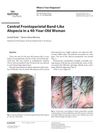
 A woman's hair loss was correctly diagnosed as Lichen planopilaris after initial misdiagnosis, highlighting the usefulness of trichoscopy in diagnosing hair disorders.
 94 citations
,
October 2017 in “International Journal of Dermatology”
94 citations
,
October 2017 in “International Journal of Dermatology” This narrative review discusses lichen planus pigmentosus, including its variations, associated triggers, and management strategies, but reports no new clinical results.
 3 citations
,
May 2022 in “Clinical and experimental dermatology”
3 citations
,
May 2022 in “Clinical and experimental dermatology” This review discusses potential EMT-targeting drugs for treating lichen planopilaris and emphasizes the need for clinical trials, as current evidence is limited to individual cases or case series.