3 citations
,
January 2023 in “Agronomy” This research reported that KDML105 bran extract demonstrated antioxidant activities, reduced nitric oxide production, and influenced gene expression related to the hair cycle in cultured dermal papilla cells, suggesting potential as an anti-hair loss agent by supporting the anagen phase and angiogenesis.
2 citations
,
March 2025 in “Industrial Crops and Products” This study found that peach kernel oil extracted via supercritical fluid extraction had higher quality and antioxidant properties than oil obtained by other methods, effectively protecting human hair follicle keratinocytes from oxidative damage.
 23 citations
,
January 2017 in “Journal of Oleo Science”
23 citations
,
January 2017 in “Journal of Oleo Science” This review discusses the use of supercritical carbon dioxide for extracting rice bran oil, noting its advantages over conventional methods for preserving nutrients and antioxidants, but provides no new experimental results.
December 2021 in “Jurnal Farmanesia” This study compared the effects of palm kernel oil and virgin coconut oil to pure coconut oil on hair growth in rabbits, noting measurements over a 30-day period.
6 citations
,
October 2011 in “InTech eBooks” This article reviews carbohydrate metabolism in plants, focusing on enhancing soybean product diversity and quality, and reports no new research results.
 36 citations
,
January 2018 in “Clinical and Medical Reports”
36 citations
,
January 2018 in “Clinical and Medical Reports” Rare earth elements are crucial in medical imaging and cancer treatment.
 10 citations
,
January 2016 in “Global Dermatology”
10 citations
,
January 2016 in “Global Dermatology” This study observed that zinc deficiency in humans and mice was associated with diminished allergic contact dermatitis but increased severity and duration of irritant contact dermatitis.
 5 citations
,
January 2015 in “Global Dermatology”
5 citations
,
January 2015 in “Global Dermatology” This study provides baseline measurements of length, density, form, and angle of eyelashes in Japanese adults in their 20s, which may aid in eyelash reconstruction or treatment for eyelash issues.
 4 citations
,
January 2020 in “Obstetrics and Gynecology Reports”
4 citations
,
January 2020 in “Obstetrics and Gynecology Reports” This study found that obese Egyptian women with polycystic ovary syndrome had significantly lower serum 25-OH vitamin D levels compared to non-obese women with the condition.
 January 2020 in “Clinical Case Reports and Reviews”
 This study observed that the coexistence of Frontal Fibrosing Alopecia and lupus erythematosus in a patient may suggest a shared pathogenic background.
December 2025 in “Journal of Food and Pharmaceutical Sciences” This study found that extracts and crude protein from the white oyster mushroom demonstrated significant thrombolytic activity compared to a positive control, suggesting their potential as natural thrombolytic agents for thromboembolism therapy.
 June 2024 in “Okayama University Scientific Achievement Repository (Okayama University)”
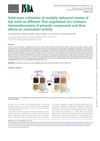
 In this study, methanol extracts from Thai-colored rice fermented with Aspergillus molds exhibited an increase in polyphenolic content and antioxidant activity, outperforming Thai white and Japanese white rice, notably transforming key polyphenols like quercetin and ferulic acid.
1 citations
,
August 2024 in “Animals” This study suggests that variations in α-keratin proteins influence the structure and characteristics of wool fibers, indicating that keratin genes could serve as useful markers for identifying different wool traits.
 February 2024 in “International Journal of Health and Pharmaceutical”
 In this study, black rice extract ointment was found to enhance hair follicle growth in Wistar rats, with 10% to 30% formulations showing progressively greater hair growth after 21 days, attributed to the high antioxidant content.
 23 citations
,
June 2010 in “Journal of Investigative Dermatology”
23 citations
,
June 2010 in “Journal of Investigative Dermatology” This study found that the hair interior defect in AKR/J mice is linked to a mutation in the Soat1 gene, which disrupts SOAT1 protein expression and affects lipid metabolism critical for normal hair formation.
1 citations
,
April 2025 in “International Journal of Morphology” In this study, Apricot Kernel Oil treatment in Wistar rats showed dose-dependent improvements for seborrheic dermatitis induced by DNFB, including reduced inflammation and oxidative stress and enhanced skin structure.
January 2007 in “Journal of Inner Mongolia University” This study achieved successful cloning of the ovine keratin associated protein 6-1 gene, which may facilitate future research on transgenic animals and hair follicle gene regulation.
5 citations
,
January 2018 in “Thai Journal of Pharmaceutical Sciences (TJPS)” This study found that extracts from riceberry broken rice and crude riceberry rice oil contain bioactive compounds with antioxidant and tyrosinase-stimulating activities, suggesting potential use in hair product development.
612 citations
,
February 2004 in “Nature” This study found that the OXI1 gene in Arabidopsis thaliana is vital for activating key protein kinases and is necessary for oxidative burst signal responses like pathogen resistance and root hair growth.
1 citations
,
January 2008 in “China Journal of Bioinformatics” This study identified that a significant number of expressed sequence tags from Cashmere goat skin with anagen hair follicles were genes coding for keratin or keratin-associated proteins.
 May 2022 in “Research Square (Research Square)”
 In this study, components like vitamin E, β-sitosterol, and linoleic acid in the kernel of Prunus mira Koehne were reported to promote hair growth in mice, possibly through the Wnt/β-catenin pathway.
 22 citations
,
August 2011 in “Journal of Supercritical Fluids”
22 citations
,
August 2011 in “Journal of Supercritical Fluids” In this study, fraction No. 3 of Oryza sativa bran extract demonstrated high unsaturated fatty acid content and significant 5α-reductase inhibition, suggesting potential for developing anti-androgenic alopecia products.
14 citations
,
February 1991 in “FEBS Letters” This study found that introducing rat ornithine transcarbamylase gene into spf-ash mice improved liver and intestinal enzyme activity and normalized some metabolic indicators.
 1 citations
,
May 2022 in “International Journal of Health Sciences (IJHS) (En línea)”
1 citations
,
May 2022 in “International Journal of Health Sciences (IJHS) (En línea)” This research reports the presence of various physicochemical constituents and nutrients in glycine max (soybean) milk and okara, highlighting its potential medicinal and nutritional benefits.
In this study, introducing the rat OTC gene into spf-ash mice led to increased OTC activity and normalized hair growth and biochemical markers like urinary orotic acid and serum citrulline, partially correcting the symptoms of OTC deficiency.
 January 2018 in “General internal medicine and clinical innovations”
 In this review, the researchers found no statistically significant difference in overall survival and disease-free survival between busulfan/cyclophosphamide and total bone irradiation conditioning regimens for acute myeloid leukemia patients.
 1 citations
,
January 2010 in “Journal of Oriental Medicine”
1 citations
,
January 2010 in “Journal of Oriental Medicine” Black bean, wheat, and rice bran extracts can boost hair growth and improve hair quality.
 2 citations
,
February 2022 in “Research Square (Research Square)”
2 citations
,
February 2022 in “Research Square (Research Square)” This study found that the ethanolic root extract of Onosma dichroantha exhibits antioxidant activity and significant antimicrobial effects against 11 bacterial species.
 20 citations
,
October 2013 in “British Journal of Dermatology”
20 citations
,
October 2013 in “British Journal of Dermatology” The document concludes that clinicians should be aware of common hair and scalp disorders in women of African descent and that more research is needed to develop effective treatments.
26 citations
,
March 2020 in “Antioxidants” This study found that microwave-assisted Opuntia humifusa extract improved antioxidant and anti-inflammatory properties to counteract particulate matter's harmful effects on HaCaT keratinocytes.