 42 citations
,
November 2002 in “The American journal of pathology”
42 citations
,
November 2002 in “The American journal of pathology” This study observed that nuclear β-catenin expression in non-small-cell lung carcinomas correlates with increased proliferation and loss of key cell-cycle checkpoints, suggesting an oncogenic advantage.
16 citations
,
January 2019 in “Pharmaceutical biology” This study found that Lespedeza cuneata aqueous extract reduced serum dihydrotestosterone levels and 5α-reductase mRNA expression in testosterone-induced prostatic hyperplasia in rats, suggesting potential as a treatment for prostatic hyperplasia.
 1 citations
,
November 2021 in “American Journal of Clinical Pathology”
1 citations
,
November 2021 in “American Journal of Clinical Pathology” In this study, autopsies of children who suffered fatal abuse revealed stress-associated markers like telogen effluvium and thymus involution, which may help pathologists identify chronic abuse cases.
56 citations
,
February 2013 in “International Journal of Molecular Medicine” This study found that human hair follicle-derived mesenchymal stem cells maintained their proliferation and differentiation potential when cultured with acidic fibroblast growth factor, basic fibroblast growth factor, or epidermal growth factor.
30 citations
,
November 2019 in “Genetics selection evolution” This study found that in Chinese goat breeds, specific genetic variations, particularly in Tibetan Cashmere goats, are associated with traits like hair growth and adaptation to high-altitude environments.
10 citations
,
July 2019 in “Advances in Wound Care” This study suggests that Flightless I may inhibit the activation of epidermal stem cells during wound repair by disrupting Wnt/β-catenin signaling, potentially delaying wound reepithelialization.
 6 citations
,
April 2022 in “Journal of diabetes research”
6 citations
,
April 2022 in “Journal of diabetes research” This study found that type II diabetes inhibited hair follicle regeneration and skin cell proliferation in mice, potentially explaining reduced skin renewal and chronic wound formation in diabetes.
5 citations
,
July 2022 in “Genes” This study found that EGR1 promotes the proliferation of dermal papilla cells, suggesting its close association with hair follicle growth and development.
 October 2023 in “Benha Journal of Applied Sciences”
 This review evaluates the role of the nuclear receptor PPAR- in skin diseases, highlighting its regulation of inflammation, lipid metabolism, and immune response, and suggests that PPAR-agonists could be promising therapies for conditions like psoriasis and atopic dermatitis.
 7 citations
,
January 2015 in “Genetics and molecular research”
7 citations
,
January 2015 in “Genetics and molecular research” This study suggests melatonin may promote cashmere growth in Inner Mongolian cashmere goats through the nuclear receptor RORα, with a noted mRNA expression difference in December compared to other months.
 May 2025 in “Journal of Experimental Pharmacology”
 This study found that Allium ascalonicum L. extract may improve insulin resistance by increasing insulin tolerance test values and lowering blood glucose levels, though more research is needed to understand its effects on metabolic disorders.
 11 citations
,
October 2018 in “Nucleic Acid Therapeutics”
11 citations
,
October 2018 in “Nucleic Acid Therapeutics” This study suggests that transfection with modified KGF-mRNA enhances keratinocyte reepithelialization in wound therapy by temporarily increasing growth factor expression without affecting nuclear DNA.
 8 citations
,
March 2018 in “Expert Review of Respiratory Medicine”
8 citations
,
March 2018 in “Expert Review of Respiratory Medicine” This article reviews the potential of inhalation therapy to restore pulmonary elastin fibers in COPD patients and highlights the need for studies to test its feasibility; it reports no new research findings.
 23 citations
,
January 2005 in “Nihon Ishinkin Gakkai zasshi”
23 citations
,
January 2005 in “Nihon Ishinkin Gakkai zasshi” This case study identified Trichophyton rubrum as the cause of trichophytia profunda acuta in a patient using nested PCR, suggesting an alternative diagnostic approach when KOH tests and cultures fail.
 4 citations
,
January 1974 in “The BMJ”
4 citations
,
January 1974 in “The BMJ” All medications can cause skin rashes, often without a clear cause, and better tests are needed to identify these drug-related skin issues.
 1 citations
,
January 2021 in “Clinical Dermatology Open Access Journal”
1 citations
,
January 2021 in “Clinical Dermatology Open Access Journal” This study observed that the Aptamin C® and vitamin C complex had effective ROS-scavenging and anti-inflammatory effects on human skin in both in vitro and clinical tests.
 October 2020 in “System Dynamics Review”
 This study models the pathways of nandrolone and its metabolites in the body and suggests methods to counteract finasteride's role in enabling PED users to cheat drug tests.
 January 2017 in “Clinical approaches and procedures in cosmetic dermatology”
 This research outlines how retinoids, compounds based on vitamin A, activate nuclear receptors to influence cellular processes such as differentiation and carcinogenesis, with benefits like anti-inflammatory properties but requiring careful management of dose-dependent side effects.
 42 citations
,
March 2010 in “Endocrinology”
42 citations
,
March 2010 in “Endocrinology” This study reports the development of the first rodent model for androgenetic alopecia, demonstrating that overexpression of androgen receptors in mice delays hair regeneration and can be used to test new treatments.
 6 citations
,
January 2012 in “Breast cancer”
6 citations
,
January 2012 in “Breast cancer” This study suggests that breast cancer-associated phospholipids may alter the X-ray diffraction pattern of hair, potentially enabling the development of a sensitive and specific screening test for breast cancer.

In this study, researchers developed isotretinoin-loaded Delonix polymeric nanoparticles that target hair follicles and found they effectively sustained drug release, reduced IL-6 production in vitro without inhibiting P. acnes, and may prevent isotretinoin-related skin irritation in vivo in Wistar rats.
7 citations
,
January 1995 in “The Indian Journal of Animal Sciences” This study observed that buffalo teats have a melanin-rich epidermis, no hair follicles, and a complex structure with specific epithelial and muscular characteristics.
5 citations
,
December 2018 in “Frontiers in Endocrinology” This study found that nuclear androgen receptor expression was enhanced by dihydrotestosterone in rat gubernacular mesenchyme, but this did not affect muscle morphology or matrix composition during fetal development.

This study found that elastin-like recombinamer (ELR) wound dressings promote tissue regeneration and stability without rejection in ex vivo and in vivo models, indicating potential for hard-to-heal wound treatment.
88 citations
,
December 2003 in “Journal of Biological Chemistry” This study identified epiprofin as a highly tissue-specific nuclear protein that promotes cell proliferation, mainly expressed in the developing teeth, hair follicles, and limbs of embryonic mice.
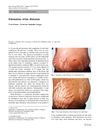 3 citations
,
April 2012 in “Internal and Emergency Medicine”
3 citations
,
April 2012 in “Internal and Emergency Medicine” In this case report, a 14-year-old girl with nephrotic syndrome developed large edematous striae distensae due to high-dose steroid use and rapid body size increase from edema fluid accumulation.
 April 2026 in “Journal of Dermatological Science”
 This study highlights that hair-bearing organoids derived from embryonic stem cells can effectively model androgenic alopecia conditions and test the efficacy of anti-hair loss treatments.
 February 2025 in “International Journal of Molecular Sciences”
 This study found that melatonin may enhance hair follicle stem cell viability by downregulating the nuclear receptor RORA, which otherwise inhibits cell proliferation and promotes apoptosis.
 26 citations
,
March 2007 in “Clinical and experimental dermatology”
26 citations
,
March 2007 in “Clinical and experimental dermatology” Pimecrolimus cream is not effective for treating alopecia areata.
 17 citations
,
August 2001 in “Australasian journal of dermatology”
17 citations
,
August 2001 in “Australasian journal of dermatology” This case report describes a 50-year-old woman who developed drug-induced hepatitis after using spironolactone for androgenetic alopecia, with symptoms resolving upon discontinuation.