 November 2023 in “Journal of medical and health studies”
 In this study, combining low-level laser therapy with microneedling showed statistically significant improvement in hair growth for three adult patients with androgenetic alopecia over three months, suggesting it may be a promising management approach.
May 2005 in “Molecular Carcinogenesis” This study found that mrp/plf-mRNA expression in murine skin increases in response to different tumor promoters, suggesting its potential as a short-term biomarker for chemical carcinogenesis.
 April 2023 in “Indian journal of paediatric dermatology”
 In this case study, a 12-year-old boy with isolated nail lichen planus showed significant improvement after receiving intramuscular triamcinolone acetonide and topical tacrolimus treatment, although his great toenails were less responsive.
January 2026 in “JPRAS Open” In this pilot study, PDLLA scalp microinjections showed improvement in physician-rated Global Aesthetic Improvement Scale scores over 12-24 weeks for 90% of patients with non-scarring alopecia, with no serious adverse events reported, although findings remain preliminary due to methodological limitations.
2 citations
,
November 2023 in “Indian Dermatology Online Journal” In this case report, a 4-year-old Indian girl with linear and annular lupus panniculitis of the scalp achieved complete remission and hair regrowth with oral corticosteroids, showing no relapse after 6 months of follow-up.
2 citations
,
September 2020 in “bioRxiv (Cold Spring Harbor Laboratory)” This study demonstrated that ablation of individual somatostatin-expressing interneurons increased activity in nearby neurons of the mouse motor cortex during motor learning.
 September 2024 in “arXiv (Cornell University)”
 This study evaluated various NLP models for detecting bias in medical curricula, finding that fine-tuned BERT models perform well, whereas LLMs, despite being state-of-the-art in many tasks, are unsuitable for this application.
4 citations
,
November 2019 in “Dermatology - Open Journal” This study reports that Lichen planus pigmentosus is present in Moroccan patients but remains challenging to treat, with only some experiencing complete resolution of lesions after therapy.
 2 citations
,
March 2023 in “Biomedicine & pharmacotherapy”
2 citations
,
March 2023 in “Biomedicine & pharmacotherapy” This study found that platelet lysate significantly improved hair growth and follicle performance in both experimental settings and AGA patients, showing results comparable to platelet-rich plasma.
 February 2024 in “International Journal For Multidisciplinary Research”
 This review examines the advances in nanostructured lipid carriers for treating hyperpigmentation but presents no new clinical results; the authors highlight their potential benefits and applications.
3 citations
,
January 2016 in “Dermatology online journal” This review discusses the potential relationship between lichen planus pigmentosus and frontal fibrosing alopecia, presenting a case study but reporting no new clinical findings.
 1 citations
,
September 2013 in “The Journal of Dermatology”
1 citations
,
September 2013 in “The Journal of Dermatology” An 8-year-old girl developed a rare skin condition in a linear pattern on one side of her body after a lung infection, which improved with treatment.
 August 2023 in “The journal of investigative dermatology/Journal of investigative dermatology”
 This study reports that a patient with rare linear lichen planopilaris experienced complete hair regrowth after 12 weeks of treatment with the antibody ixekizumab, suggesting it as a potential targeted therapy.
 17 citations
,
October 2016 in “Artificial Cells Nanomedicine and Biotechnology”
17 citations
,
October 2016 in “Artificial Cells Nanomedicine and Biotechnology” This study found that arginine-loaded lipidic nanoparticles improved hair follicle growth in male hamsters more effectively than an aqueous arginine solution.

This study found that liquid nitrogen cryotherapy resulted in good responses in 33% of patients with recalcitrant alopecia areata, although nearly 30% showed no response.
2 citations
,
April 2014 in “PubMed” This rat study found that a PLGA conduit filled with neural crest stem cells derived from hair follicles showed promising results in repairing peripheral nerve injuries, partially restoring sensory function and improving nerve structure.
 March 2018 in “International journal of basic and clinical pharmacology”
 This study found that while the carboplatin-paclitaxel regimen for advanced lung cancer is more affordable than newer treatments and maintains a good performance status, it significantly increases risks of alopecia and peripheral neuropathy.
 105 citations
,
December 2009 in “Archives of dermatology”
105 citations
,
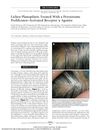
December 2009 in “Archives of dermatology” This overview discusses primary cicatricial alopecias, focusing on lichen planopilaris, and highlights the challenges in treatment and the progressive nature of hair loss despite symptom management, without providing new clinical results.
1 citations
,
August 2016 in “Pan Stanford Publishing Pte. Ltd. eBooks” This chapter reviews low-level light therapy for hair growth and loss prevention but reports no new clinical results, providing an overview of mechanisms, treatments, and future perspectives.
 4 citations
,
January 2019 in “Dermatology Online Journal”
4 citations
,
January 2019 in “Dermatology Online Journal” This article discusses the potential of low-dose naltrexone as an adjuvant therapy for trichodynia in alopecias, noting its anti-inflammatory properties and need for further research.
May 2024 in “JDDG Journal der Deutschen Dermatologischen Gesellschaft” This case study describes a middle-aged woman diagnosed with a proliferating trichilemmal tumor on her scalp, emphasizing the importance of comprehensive diagnostic approaches and highlighting surgical excision as the primary treatment.
 August 2019 in “bioRxiv (Cold Spring Harbor Laboratory)”
 This study developed the CATNIP computational model, which uses biological and chemical information to successfully identify drug repurposing opportunities for various conditions, including Parkinson’s disease and Type 2 Diabetes.
This study found that in a rat model of alopecia, combining low-level laser therapy with Neoptide treatment resulted in better hair regrowth compared to either treatment used alone.
December 2024 in “Skin Appendage Disorders” This bibliometric analysis revealed important studies on LPP, noted essential trichoscopic features, and identified significant evidence gaps. The researchers emphasized a need for more robust and diverse studies to improve diagnostics and treatment strategies.
43 citations
,
March 2009 in “Archives of dermatology” No treatment showed clear superiority for lichen planopilaris.
3 citations
,
August 2018 in “Medical Journal Armed Forces India/MJAFI” In this study, IPL treatment for six months significantly reduced hair growth in females with faun tail nevus linked to spinal abnormalities.
 September 2017 in “Springer eBooks”
 Low-level laser therapy seems to promote hair growth but requires more research to confirm its effectiveness.
September 2023 in “Journal of the American Academy of Dermatology” CTP-543 significantly improved eyebrow and eyelash regrowth and patient satisfaction in adults with alopecia areata.
October 2025 in “Our Dermatology Online” This study suggests that combining tranexamic acid with low-dose oral retinoids may offer moderate to good improvements for lichen plan pigmentosus, although larger trials are needed for confirmation.
 January 2017 in “Clinical approaches and procedures in cosmetic dermatology”
 This review explores clinical studies on low-level laser therapy (LLLT) for alopecia and suggests it may benefit patients unresponsive to conventional treatments, but larger studies are needed to confirm efficacy.