 April 2023 in “The journal of investigative dermatology/Journal of investigative dermatology”
 This study found that an E-cadherin mutant preserved normal cadherin levels and prevented inflammation and lethality in mouse skin lacking p120, highlighting p120's role in regulating cadherin-mediated cell adhesion and inflammation.
December 2021 in “Morphologia” This article reviews the characteristics and therapeutic potential of neural crest cells from various sources, including embryonic and mature stem cells, but reports no new experimental results.
5 citations
,
May 2023 in “Microbial Cell Factories” This study found that a newly produced version of KGF-1 with 135 residues maintained biological activity and could serve as an alternative to the standard 140-residue KGF-1.
79 citations
,
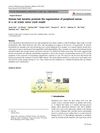
October 2003 in “PubMed” In this study, PKCepsilon transgenic mice showed increased TNFalpha shedding during skin tumor promotion, which may contribute to the development of metastatic squamous cell carcinoma.
 36 citations
,
July 2019 in “Journal of Materials Science Materials in Medicine”
36 citations
,
July 2019 in “Journal of Materials Science Materials in Medicine” This study demonstrated that keratin derived from human hair can improve axon extension and alleviate motor deficits from sciatic nerve injuries, highlighting its potential as a promising biomaterial for peripheral nerve regeneration.
9 citations
,
June 2025 in “Frontiers in Pharmacology” This review highlights recent advancements in microneedle technology, noting its ability to enhance transdermal drug delivery, biosensing, cancer treatment, and skin disease repair, while emphasizing its potential for improving patient compliance and reducing side effects.
58 citations
,
December 2000 in “Experimental Dermatology” This study found that new rabbit antisera against recombinant mouse involucrin effectively marked keratinocyte differentiation, with comparable expression patterns to human involucrin.
 January 2012 in “조직공학과 재생의학”
 This study demonstrated the potential of newly fabricated epithelial cell scaffolds to enhance hair regeneration, showing promise for future alopecia treatments.
 211 citations
,
October 2001 in “The FASEB Journal”
211 citations
,
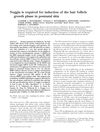
October 2001 in “The FASEB Journal” This study found that the BMP antagonist noggin induces hair growth in postnatal skin by neutralizing BMP4's inhibitory activity, potentially mediated by changes in Shh expression.
 October 2024 in “Frontiers in Oncology”
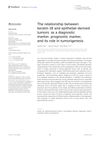
 This review examines the potential of K18 as a diagnostic and prognostic marker in epithelial-derived tumors, highlighting its specific expression in tumor tissues and interaction with proteins involved in tumor progression, without reporting new clinical findings.
January 2006 in “Chieh P'ou Hsueh Pao” This study established a method for selecting human hair follicle stem cells through quick-adherence to collagen, and found that β-catenin plays a role in their proliferation and differentiation.
 1 citations
,
July 2016 in “Livestock science”
1 citations
,
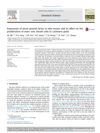
July 2016 in “Livestock science” This study suggests that nerve growth factor may support hair follicle growth in Liaoning cashmere goats through pathways involving its receptor, TrkA, particularly during the anagen phase.
June 2025 in “Materials Today Bio” In this study, a silk fibroin hydrogel containing recombinant NT3 was found to promote scar-less wound healing in a mouse skin injury model by enhancing type III collagen expression and inducing hair follicle formation.
 July 2023 in “Письма в Вавиловский журнал генетики и селекции”
 This review article discusses studies showing that extracellular nucleic acids play a role in tissue regeneration by triggering sterile inflammation through endosomal toll-like receptor activation, but notes that the regulatory transition from inflammation to proliferation phases remains incompletely understood.
 29 citations
,
July 2014 in “PLoS ONE”
29 citations
,
July 2014 in “PLoS ONE” This study suggests that inactivation of β-catenin is necessary for chick retina regeneration, as it allows cells to enter the cell cycle during injury and promotes regeneration without needing FGF2.
 4 citations
,
January 2014 in “BioMed Research International”
4 citations
,
January 2014 in “BioMed Research International” This special issue reviews advancements in engineering cell microenvironments for tissue engineering, highlighting various studies on interventions like silk fibroin and platelet-rich plasma, but presents no new empirical findings.
 1 citations
,
March 2023 in “bioRxiv (Cold Spring Harbor Laboratory)”
1 citations
,
March 2023 in “bioRxiv (Cold Spring Harbor Laboratory)” This study found that AtCEPs in Arabidopsis thaliana play a role in controlling root hair growth by processing EXT proteins, with NAC1 acting to regulate their expression and influence elongation.
 March 2011 in “European Urology Supplements”
 The document concludes that a new biosensor can efficiently detect prostate cancer cells and that standardized referrals help find significant cancers effectively.
November 2024 in “bioRxiv (Cold Spring Harbor Laboratory)” This study introduced a novel scarless healing material called pgPE, made from a porous UHMWPE nanomembrane, and found that it promotes complete skin reconstruction and hair follicle regeneration by alleviating hypoxia and modulating immune responses to foster scar-free wound healing.
 August 2026 in “Mendeley Data”
 In this study, researchers explored how hair follicle neural crest stem cell-derived exosomes, particularly those carrying miR-214-3p, promote neurite outgrowth and aid peripheral nerve regeneration, supported by detailed in vitro and in vivo data on nerve repair and functional recovery in rat models.
42 citations
,
February 2000 in “Journal of Investigative Dermatology” This study found that Gelatinase A activity is linked to the absence of type VII collagen during human fetal skin development, indicating its role in remodeling the basement membrane zone.
18 citations
,
June 2016 in “PeerJ” In this study, testosterone increased the expression of epithelial sodium channel proteins and mRNAs in rat kidneys, suggesting a potential mechanism for its effect on blood pressure through enhanced sodium reabsorption.
 February 2025 in “Journal of Clinical Investigation”
 This study found that RNase L acts as a regeneration repressor gene in mammals, as seen in Rnasel-/- mice which showed increased regenerative capacity and elevated Wound Induced Hair Neogenesis through enhanced IL-36α signaling, suggesting a tradeoff between regeneration and immune regulation.
32 citations
,
May 2018 in “The Plant Cell” This article discusses the crucial role of root hairs in water and nutrient uptake from soil and reports no new findings.
 101 citations
,
November 2011 in “Nature Communications”
101 citations
,
November 2011 in “Nature Communications” Wnt/β-catenin signaling is crucial for cell fusion in placental development.
May 2006 in “The Journal of Cell Biology” In this study, researchers at Johns Hopkins University found that Keratin 17 plays a signaling role in cell growth during a wound response by aiding mTOR pathway activation, beyond its structural functions.
 February 2024 in “Journal of Cellular and Molecular Medicine”
 In this study using rat models, researchers developed a Pluronic@F-127 hydrogel to deliver the flavonoid pectolinarin, finding it accelerates wound healing and reduces scar formation by enhancing cell migration, proliferation, and antioxidant activity.
September 2025 in “Genes & Diseases” This study explores the role of Lgr6+ cells in tissue development and repair across different organs and associates abnormal Lgr6 expression with major diseases, including tumors, noting its potential as a therapeutic target for cancer and other conditions.
April 2023 in “Journal of Investigative Dermatology” In this study, a mouse model of scarring alopecia demonstrated significantly reduced CD200R expression in affected skin, which may contribute to immune attacks on hair follicles.
 1 citations
,
May 2025 in “Natural Products and Bioprospecting”
1 citations
,
May 2025 in “Natural Products and Bioprospecting” In this study, PEVIII, a nanocomposite chitosan-coated vesicle containing both α-hederin and hederacoside C, demonstrated notable antibacterial activity against Pseudomonas aeruginosa in a keratitis model, showing significant lesion reduction, tissue improvement, and decreased bacterial load and inflammatory markers compared to other treatments.