 4 citations
,
July 2023 in “Pharmaceutics (Basel)”
4 citations
,
July 2023 in “Pharmaceutics (Basel)” This study reviews various skin models and methodologies used to assess the follicular penetration of nanoparticle-based drugs, highlighting inconsistencies that complicate comparisons and aims to establish more uniform protocols for clearer study outcomes.
2 citations
,
December 2021 in “Pharmaceutics” This study demonstrated that a finasteride-loaded proniosome significantly enhanced transfollicular delivery and hair growth in mice without causing skin irritation, with effects comparable to a 2% minoxidil solution.
September 2025 in “Current Issues in Molecular Biology” This study highlights IGF-1's role in promoting hair follicle proliferation, vascularization, and growth, suggesting its potential as a treatment target for hair loss disorders like androgenetic alopecia, though more research on delivery methods and long-term effects is needed.
April 2007 in “CRC Press eBooks” This article discusses various vitamin deficiencies and their neurological implications without providing new clinical results; it serves as an informative chapter on nutrient-related neurological conditions.
 1 citations
,
August 2024 in “Polymers”
1 citations
,
August 2024 in “Polymers” This study observed that dissolving microneedles made from PVP-K90 and HPMC E50, incorporating Oryza sativa L. extract complex, showed enhanced transfollicular skin penetration and maintained safety for keratinocytes, with the P25H5 formulation demonstrating faster dissolution and greater effectiveness.
 356 citations
,
December 1986 in “The journal of cell biology/The Journal of cell biology”
356 citations
,
December 1986 in “The journal of cell biology/The Journal of cell biology” This study found that specific human hair keratins are differentially expressed in the hair follicle, suggesting a shared pathway of epithelial differentiation between hair cortex and nail plate cells.
187 citations
,
May 1988 in “Differentiation” This study found that trichocytic cytokeratins, typically found in hair, are also present in nails, filiform papillae of the tongue, and the epithelial reticulum of the thymus.
139 citations
,
October 2005 in “Journal of Investigative Dermatology” This study describes previously unknown immune characteristics of the normal human nail, highlighting its similarities to the hair follicle immune system and suggesting an immune privilege in the proximal nail matrix that both provides autoimmunity protection and presents infection susceptibility.
 138 citations
,
February 2007 in “European journal of cancer”
138 citations
,
February 2007 in “European journal of cancer” This review discusses the classification, pathogenesis, and management of skin, hair, nail, and mucosal changes due to EGFR inhibitors, emphasizing the importance of informing patients to improve therapy compliance.
119 citations
,
January 2000 in “British Journal of Dermatology” This study found that keratin expression patterns vary within nail unit structures, with the nail matrix uniquely expressing the acidic hair-type keratin Ha1.
101 citations
,
August 2001 in “The Journal of Cell Biology” This study found that while most mice lacking MK6a and MK6b genes died from tongue epithelium disintegration, about 25% survived and showed no hair or nail defects due to a newly discovered MK6hf gene.
84 citations
,
October 2005 in “Annals of Clinical Psychiatry” This review examines the existing research on pathologic hairpulling, skin picking, and nail biting, suggesting these behaviors are underrecognized and may benefit from a unified diagnostic categorization; it reports no new clinical findings.
76 citations
,
March 2008 in “Journal of the American Academy of Dermatology” This study found that videodermoscopy can help diagnose nailbed psoriasis by revealing distinctive hyponychial capillary patterns, which correlated with disease severity and response to treatment.
74 citations
,
October 2012 in “The American Journal of Human Genetics” This study found that loss-of-function mutations in the HOXC13 gene cause autosomal-recessive pure hair and nail ectodermal dysplasia, emphasizing its role in hair and nail development.
68 citations
,
February 2011 in “European Journal of Pharmaceutics and Biopharmaceutics” This study found that keratin films made from human hair can potentially substitute for human nail plates in drug permeability studies, but they show higher sensitivity to penetration enhancers compared to bovine hooves.
68 citations
,
December 2010 in “The journal of investigative dermatology/Journal of investigative dermatology” This study suggests a regulatory model where HOXC13 activates Foxn1, affecting hair and nail differentiation, supported by similarities in Hoxc13(tm1Mrc) and Foxn1(nu) mice phenotypes and gene expression patterns.
 56 citations
,
August 2020 in “American Journal of Clinical Dermatology”
56 citations
,
August 2020 in “American Journal of Clinical Dermatology” This study concluded that the ClinRO and PRO measures, along with their photoguides, offer clear and meaningful assessments for patients with alopecia areata concerning eyebrow, eyelash, and nail appearance, as well as eye irritation.
55 citations
,
February 2013 in “The Anatomical Record” This study found that the mouse nail unit structurally resembles the human nail unit, indicating it could be useful for researching nail diseases and biology.
51 citations
,
May 2008 in “Mycoses” This study found that terbinafine HCl nail solutions with or without DDAIP HCl significantly outperformed ciclopirox nail lacquer in treating guinea pig dermatophytosis, suggesting potential effectiveness for human nail infections.
45 citations
,
January 2018 in “International Journal of Dermatology” This review explores nail changes associated with alopecia areata, noting their prevalence and impact on appearance and function, but reports no new clinical findings; the authors call for larger controlled trials.
 42 citations
,
October 2009 in “The journal of investigative dermatology/Journal of investigative dermatology”
42 citations
,
October 2009 in “The journal of investigative dermatology/Journal of investigative dermatology” In this study, researchers identified two distinct homozygous mutations in the KRT85 gene among consanguineous Pakistani families with pure hair and nail ectodermal dysplasia, highlighting variations in severity and potential impacts on the K85 protein function.
42 citations
,
June 1998 in “The journal of investigative dermatology/Journal of investigative dermatology” This study observed that PAI-2 is consistently expressed in differentiating cells of murine hair and nail, suggesting it may function as a marker of differentiation and possibly protect against premature cell death.
 41 citations
,
December 2015 in “JAMA Dermatology”
41 citations
,
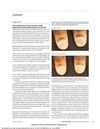
December 2015 in “JAMA Dermatology” Tofacitinib citrate improved nail dystrophy and pain in patients with alopecia universalis without causing side effects.
32 citations
,
May 2016 in “European journal of dermatology/EJD. European journal of dermatology” In this study, researchers found that targeted therapies for metastatic melanoma often cause hair and nail side effects, with hair changes more common in patients treated with BRAF inhibitors like vemurafenib.
31 citations
,
April 2004 in “Journal of Investigative Dermatology” This study found that a newly identified gene, mK17n, may explain the lack of nail issues in mK17 null mice by compensating for mK17's function in the nail bed.
30 citations
,
January 2013 in “Human Mutation” This study identified a homozygous frameshift mutation in the HOXC13 gene associated with pure hair and nail ectodermal dysplasia in a consanguineous Syrian family, suggesting crucial roles for HOXC13 in hair and nail development.
29 citations
,
August 2011 in “PubMed” This study describes how shotgun proteomics can identify over 300 proteins in hair shafts, potentially allowing for the diagnosis of diseases through noninvasive human proteome sampling.
28 citations
,
September 2021 in “JAAD Case Reports” This study reports that the Pfizer-BioNTech COVID-19 vaccine showed 52% protection against COVID-19 after the first dose and 95% after the second in phase 3 trials.
26 citations
,
February 1991 in “PubMed” This case report highlights trichotillomania's distinguishing "tonsure pattern" and nail-biting, emphasizing the need to differentiate it from other hair loss types due to differing treatments.
25 citations
,
January 2003 in “Plastic & Reconstructive Surgery” This study indicates that nail-matrical fibroblasts can induce hard keratin expression in non-nail-matrical keratinocytes, suggesting potential for using non-nail-matrical epidermal grafts to treat nail injuries.