 8 citations
,
November 1990 in “Archives of Dermatology”
8 citations
,
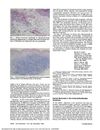
November 1990 in “Archives of Dermatology” This case report details a woman with eosinophilia-myalgia syndrome associated with L-tryptophan ingestion, highlighting skin lesions with abundant dermal mucin.
23 citations
,
February 2025 in “Advanced Materials” This study found that a new autonomous, moisture-driven flexible electrogenerative dressing significantly accelerated chronic wound healing in a diabetic mouse model compared to the control group.
 2 citations
,
August 2019 in “Turkish Journal of Chemistry”
2 citations
,
August 2019 in “Turkish Journal of Chemistry” This study reported that CoFe2O4 magnetic nanoparticles efficiently catalyzed the synthesis of minoxidil from 2,6-diamino-4-chloro-pyrimidine N-oxide, achieving a 95% yield with sustained reusability.
9 citations
,
October 1989 in “Australian Journal of Agricultural Research” This study found that infused mouse epidermal growth factor induced wool follicle involution through a quasi-physiological process similar to catagen and a separate pathological action, resulting in fleece 'break' or shedding.
September 2025 in “OPAL (Open@LaTrobe) (La Trobe University)” In this study, researchers investigated the formation of spherical crystals of minoxidil in various alcoholic solvents, discovering new types like spherulite aggregates and a unique butterfly-shaped crystal, with the spherulite aggregates showing improved powder flow properties compared to other forms.
January 2011 in “Junshi yixue” This study found that high-power millimeter wave exposure can cause skin injury in mice, with the severity of damage correlating to the duration of radiation.
9 citations
,
March 1993 in “Biochemical Pharmacology” This study suggests that rat skin may synthesize minoxidil sulphate independently, implying the skin could contribute to minoxidil's hair growth promotion without help from the liver or other organs.
 13 citations
,
January 2015 in “Molecular Pharmaceutics”
13 citations
,
January 2015 in “Molecular Pharmaceutics” This study suggests that minoxidil may serve as a suitable reference drug for high permeability classification in the Biopharmaceutics Classification System due to its consistent permeability across different intestinal segments and pH levels.
 September 2025 in “Journal of the American Academy of Dermatology”
 Sublingual minoxidil significantly improves hair growth in transgender individuals on testosterone therapy.
10 citations
,
March 2022 in “Frontiers in Oncology” This study found that the overexpression of the lncRNA HOTTIP in glioma cells increased resistance to the chemotherapy drug temozolomide, suggesting a key role for miR-10b and EMT processes in this resistance.
 1 citations
,
July 2024 in “Syntax Literate Jurnal Ilmiah Indonesia”
1 citations
,
July 2024 in “Syntax Literate Jurnal Ilmiah Indonesia” In this study, topical application of 5% minoxidil significantly increased hair follicle density in a mouse model of androgenetic alopecia, as evidenced by a rise in density from 24.00 in the control group to 40.14 in the treatment group.
 October 2019 in “DOAJ (DOAJ: Directory of Open Access Journals)”
 In this study, N-MXD (minoxidil nanoparticles) was shown to deliver more drug into hair bulbs and enhance IGF-1 and VEGF levels more effectively than commercial formulations, resulting in higher therapeutic efficiency for hair growth in C57BL/6 mice.
 February 2023 in “Journal of medical primatology”
 In this study, pair housing of rhesus macaques after intrafacility transfer reduced some undesirable behaviors and diarrhea compared to single housing, although no cortisol level differences were observed.
December 2007 in “한국미용학회지” This study found that a complex oriental medicine extract applied topically promoted hair regrowth in mice with alopecia at a similar rate to 3% minoxidil.
March 2023 in “Clinical Toxicology” This correspondence highlights a case of intradermal minoxidil injection in a patient but does not report new research findings.
 2 citations
,
August 2024 in “Animal Bioscience”
2 citations
,
August 2024 in “Animal Bioscience” This study suggests that m6A-circHECA may influence the physiology of cashmere goats' SHFs both through miRNA pathways and interactions with target proteins, with promoter methylation potentially inhibiting its gene expression.
 December 2024 in “Journal of the European Academy of Dermatology and Venereology”
 This study found that both sublingual and oral minoxidil at 5 mg per day increased hair density similarly in men with androgenetic alopecia over 24 weeks, but sublingual administration was associated with fewer palpitations.
July 2021 in “Indian journal of drugs in dermatology” In this study, the combination of intradermal meso-solution and topical 5% minoxidil significantly increased hair re-growth in men with androgenetic alopecia compared to minoxidil alone.
12 citations
,
July 1993 in “In Vitro Cellular & Developmental Biology - Animal” Minoxidil enhances hair growth and preserves the root sheath in cultured follicles.
 August 2026 in “Archives of Dermatological Research”
 Low-dose oral minoxidil is effective and satisfying for treating hair loss in young people.
 October 2018 in “Exercise Biochemistry Review”
 In this mouse study, aerobic exercise was found to protect the intestinal mucosal barrier in obstructive jaundice by inhibiting the HMGB1 / TLR4 / NF-κB signaling pathway through the H2S / CSE system.
April 2025 in “International Journal of Pharmaceutics” Liposomes improve minoxidil delivery to hair follicles, enhancing treatment for hair loss.
 May 2025 in “BMJ Case Reports”
 In this case report, a young man's vision problems, including blurred vision and difficulty with color perception, were suspected to be an adverse reaction to oral and topical minoxidil used for alopecia; his symptoms resolved after discontinuing the medication.
15 citations
,
June 2019 in “Biochemical Journal” This study identified a heterozygous de novo mutation in the ODC1 gene causing a new disorder characterized by overgrowth and developmental delay, and suggests that DFMO treatment may help manage elevated ODC activity and putrescine levels.
 25 citations
,
January 1983 in “Analyst”
25 citations
,
January 1983 in “Analyst” Method measures minoxidil in tablets accurately and easily.
 May 2026 in “Journal of the American Academy of Dermatology”
 In this study, sublingual minoxidil was found to be a safe and effective treatment for increasing hair growth in transgender individuals with mild androgenetic alopecia who are undergoing full-dose testosterone therapy.
5 citations
,
October 2020 in “Food Science and Technology” This study identified nine fungal genera, including Aspergillus, Penicillium, and Cladosporium, in dry salted shrimp samples from Rio Branco, Acre, highlighting the need for improved hygienic practices in processing to prevent potential public health risks from mycotoxin producers.
11 citations
,
July 2023 in “Applied Nanoscience”  1 citations
,
July 2009 in “Journal of dermatology”
1 citations
,
July 2009 in “Journal of dermatology” This case report describes a 29-year-old Japanese man with follicular mucinosis, suggesting nestin-positive, multipotent hair follicle stem cells may be involved in reticular epithelial degeneration of the outer root sheath.
13 citations
,
December 1987 in “British Journal of Dermatology” This study suggests that increased T cell blastogenesis may predict a positive response to topical 5% minoxidil treatment in patients with severe alopecia areata.