PO-105 Exercise Regulates HMGB1/TLR4/NF-κB Pathway by H2S to Improve OJ Intestinal Injury
October 2018
in “
Exercise Biochemistry Review
”
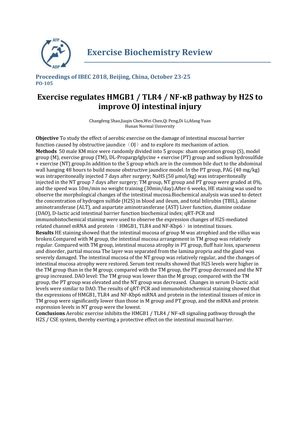
Studysummary In this mouse study, aerobic exercise was found to protect the intestinal mucosal barrier in obstructive jaundice by inhibiting the HMGB1 / TLR4 / NF-κB signaling pathway through the H2S / CSE system. Our plain-language summary of this paper — not a Tressless recommendation.
The study investigated the impact of aerobic exercise on intestinal mucosal barrier damage caused by obstructive jaundice in 50 male KM mice. The mice were divided into five groups, including a sham operation group and various treatment groups involving exercise and chemical interventions. Results indicated that aerobic exercise improved the condition of the intestinal mucosa, as seen in the TM group, compared to the model group. The exercise group showed higher levels of hydrogen sulfide (H2S) and lower levels of diamine oxidase (DAO) and D-lactic acid, indicating better intestinal barrier function. The study concluded that aerobic exercise inhibited the HMGB1 / TLR4 / NF-κB signaling pathway via the H2S / CSE system, providing a protective effect on the intestinal mucosal barrier.